The AP (associated press) photo below was the first nationwide photographic exposure in the United States to the Moriones. It could be found in almost every newspaper during April of 1979.

The History of Marinduque from Ulong Beach

The AP (associated press) photo below was the first nationwide photographic exposure in the United States to the Moriones. It could be found in almost every newspaper during April of 1979.
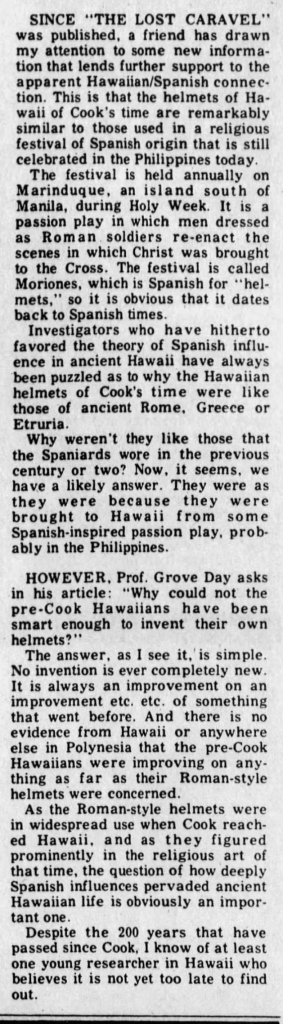
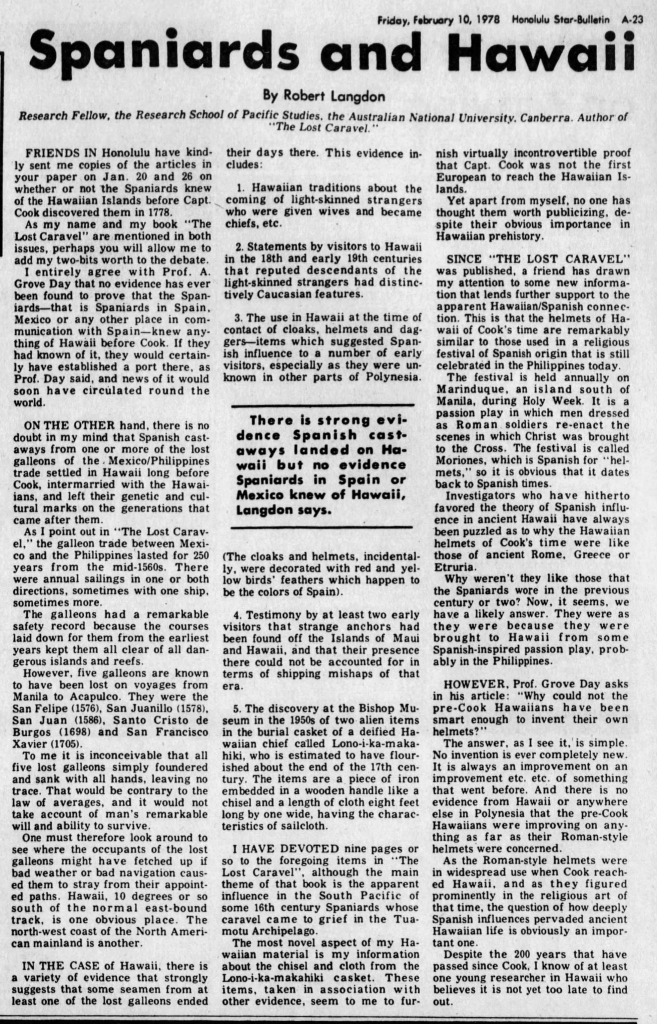
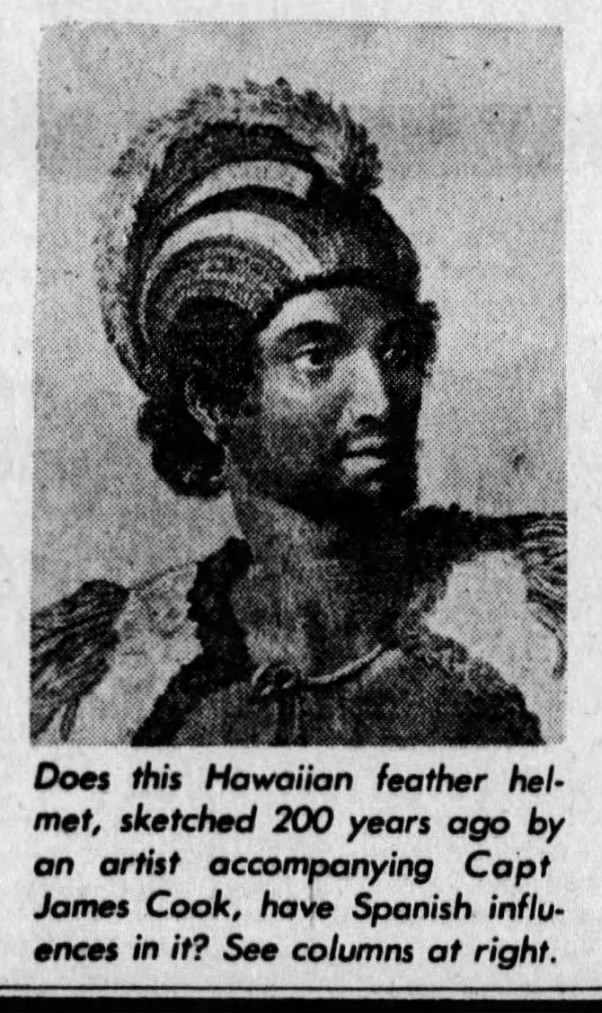
From a article entitled Spaniards and Hawaii by Robert Langdon
Honolulu Star Bulletin February 10, 1978.
In the attached newspaper article Langton puts forth the theory that the Roman helmets of the Moriones in Marinduque resemble helmets found in Hawaii to support his Hawaiian-Spanish Connection belief.
NAIROBI, 22 May 2024
On the occasion of the Philippine National Heritage Month and the World Day for Cultural Diversity for Dialogue and Development (21 May), the Philippine Embassy in Nairobi participated in the “Masks of the World” exhibition at the Nairobi National Museum, organized by the Embassy of Romania in Nairobi and the Kenya National Commission for UNESCO (KNATCOM).
Officials from the Kenyan Parliament, Ministry of Foreign and Diaspora Affairs, National Museums of Kenya, and KNATCOM, as well as members of the diplomatic corps and students joined the opening ceremony on 21 May 2024.
The Philippine Embassy showcased a Morion head mask crafted by Mr. Gilbert Monsanto, a local artist from Mogpog town in Marinduque.
The Morion mask is an important piece of Philippine cultural heritage that is worn during the Moriones Festival, which takes place annually in Marinduque during Holy Week. Participants in the festival wear these masks and reenact the story of Saint Longinus, a Roman centurion who purportedly pierced Jesus Christ’s side during the crucifixion and converted to Christianity after being cured of blindness by Christ’s blood, symbolizing both penance and celebration.
In Mogpog, a Morion mask is traditionally worn with a bulaklakan turban. It is named after the flowers made from various colors of Japanese paper and attached to the headgear. The number of flowers on the turban indicates how many years a person will participate in the Moriones. Each year, they remove a flower from their turban after completing the ritual. Removing the last flower signifies the fulfillment of their vow.
Other masks featured at the exhibition include those from Romania, Thailand, Mexico, and Costa Rica. The exhibition will run from 21 to 26 May 2024. END
PH Ambassador Marie Charlotte G. Tang (wearing a light blue blazer) presents the Morion head mask to the guests and briefly informs them of its origin.
A Morion mask is typically made from the wood of dapdap, dita, or santol trees, which are abundant in Marinduque. The mask painting and drying process takes about two weeks.


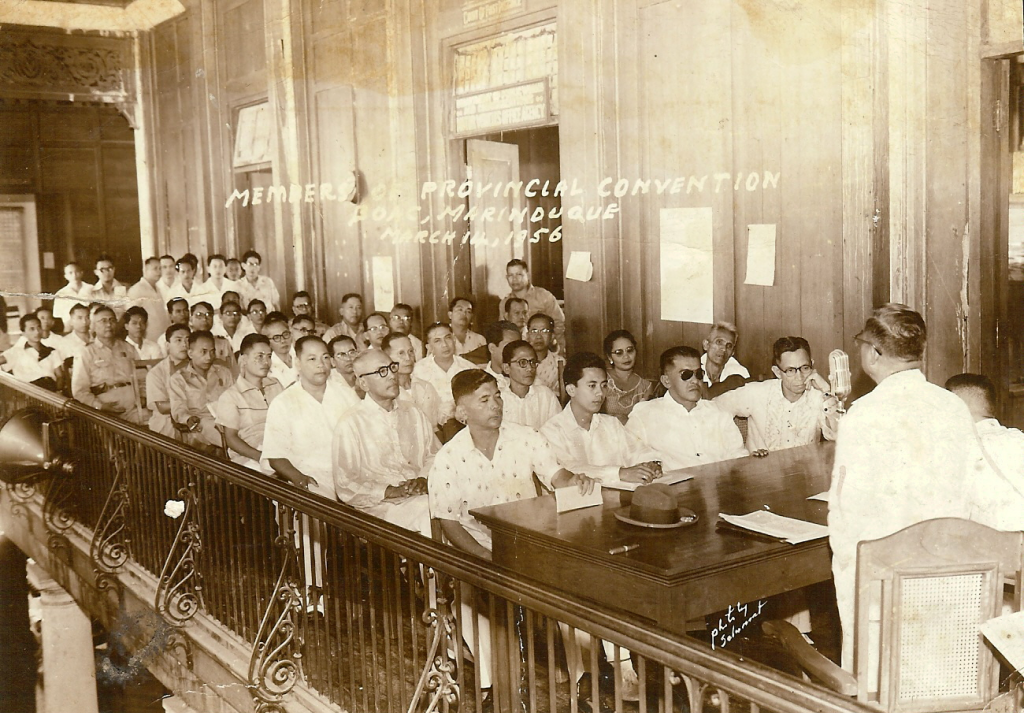
Members of Provincial Convention, Boac Marinduque. March 14, 1956. Who is the lone woman in the crowd, seated in the second row? Note the cigar on the table next to the hat.
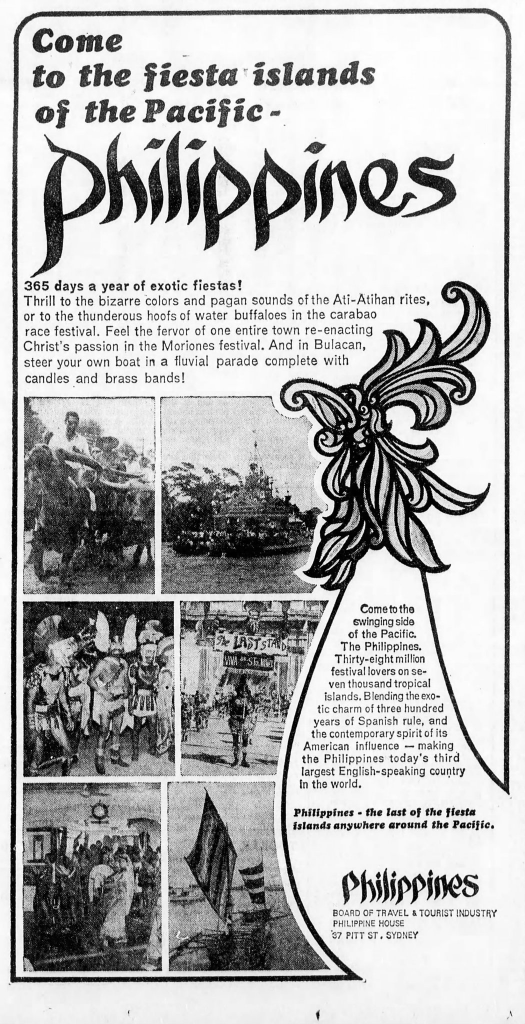
Moriones advertisement is in the Age Magazine, February 19, 1973. The ad is sponsored by the Philippines Board of Travel and Tourist Industry, Philippine House, Sydney, Australia.
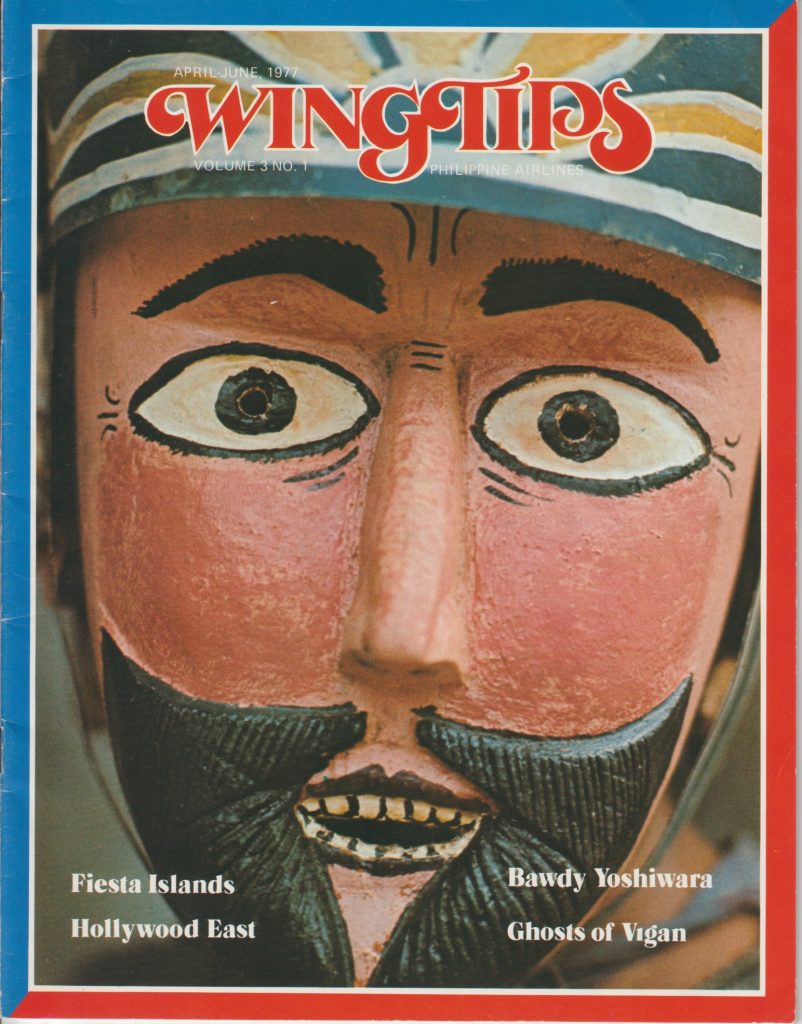
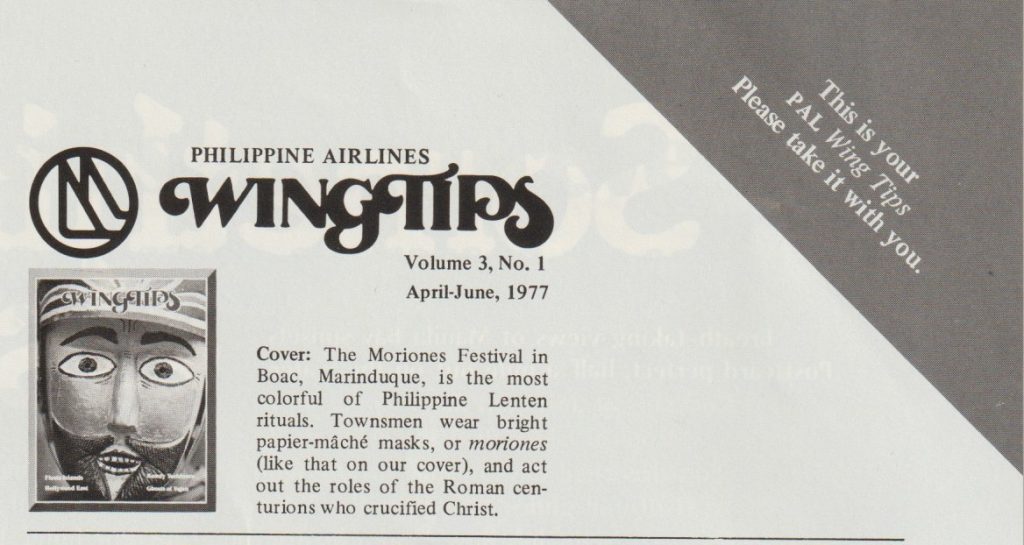
Philippine Airlines April-June 1977 edition of their Wingtips magazine featuring the Moriones Festival on the cover.
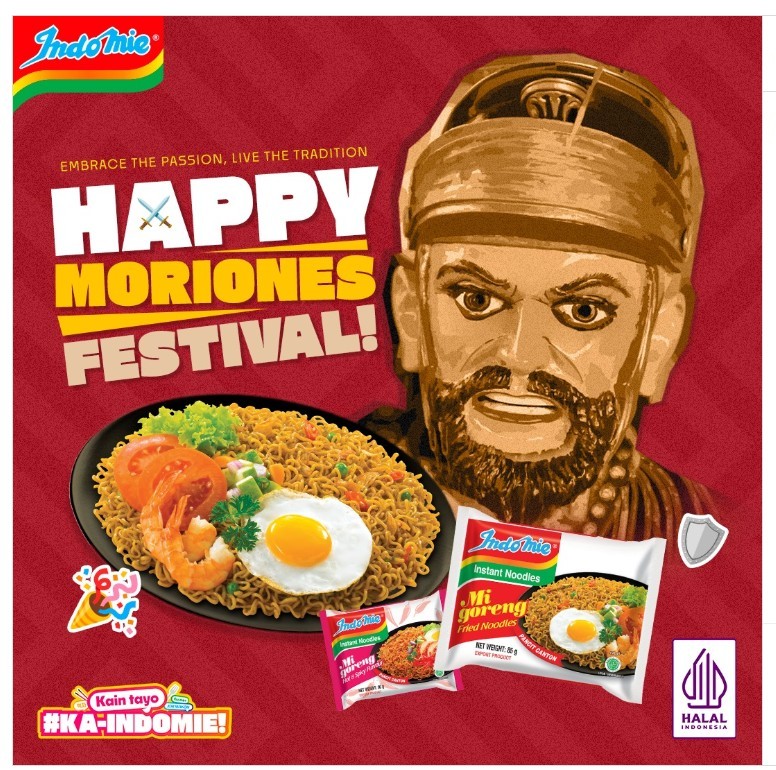
From the 2025 Indomie PH Instagram account.
Taglines for the advertisement:
Feel the heartbeat of the Moriones Festival as tradition comes alive with every best of the drum.
Let’s revel in the vibrant parades, the colorful masks, and the fiery passion that fills the streets. And what better way to fuel our Kalndomie spirts that with bold savory taste of IndomieMiGoreng?
Ignite your fiesta with a pack of Indomie! Grab yours now via link in bio and savor the flavor that matches the festival’s energy!
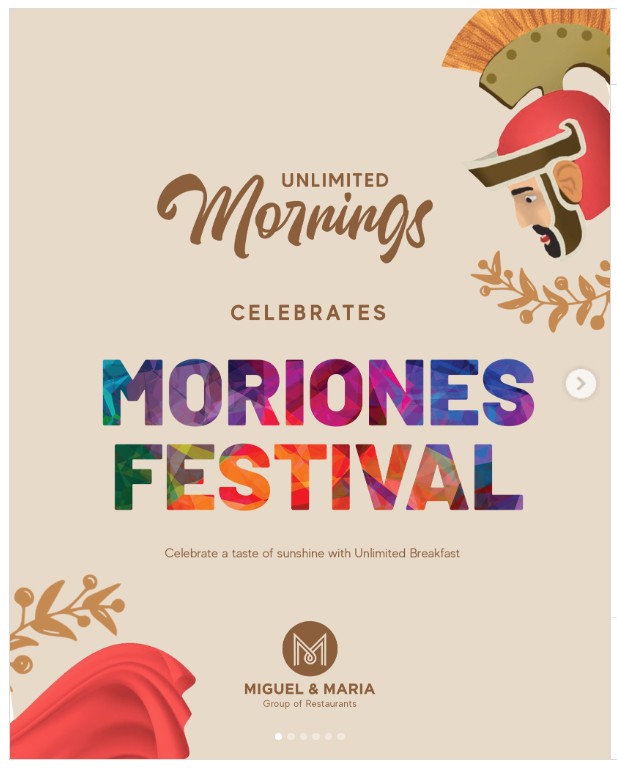
From the 2024 Instagram account of Miguel and Maria group of restaurants.
Discover a world of rich culture and one-of-a-kind cuisine with our take on Marinduque classics, available at Unlimited Mornings for all weekends of April. Take a trip into the flavorful history of the Moriones Festival for 598/head.
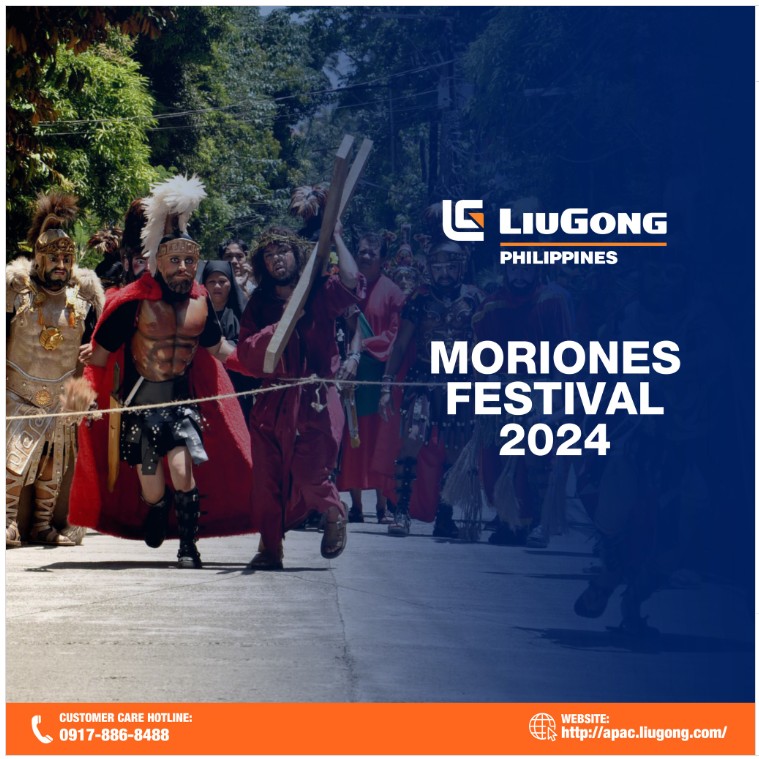
lFrom the Liugong_ph instagram account
HAPPY MORIONES FESTIVAL 2024!
March marks the beginning of Holy Week this year, and for those seeking a place to contemplate the occasion, the Moriones Festival in Marinduque province is an ideal destination. The religious festival commences on Holy Monday and concludes on Easter Sunday. The people of Marinduque have the opportunity to take part in the reenactment of the search for Saint Longinus by Roman soldiers. During the festival, participants wear costumes, helmets, or masks that resemble those worn by Imperial Roman soldiers.
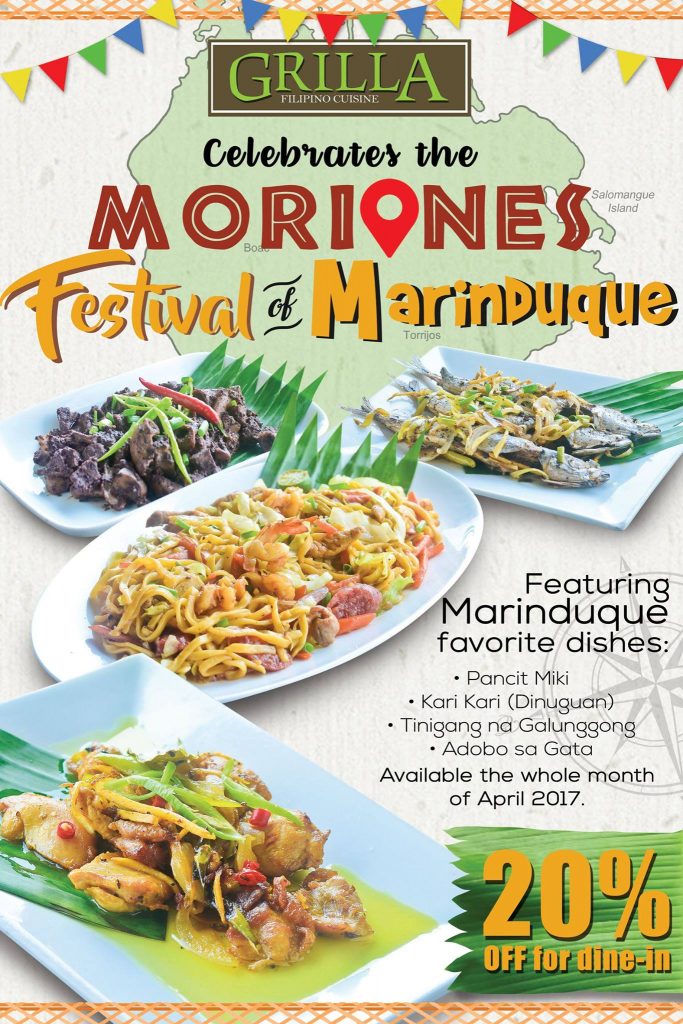
Grilla Philipine Cusine 2017 Facebook page
Let’s celebrate the Moriones Festival of Marinduque here at Grilla. See you there!
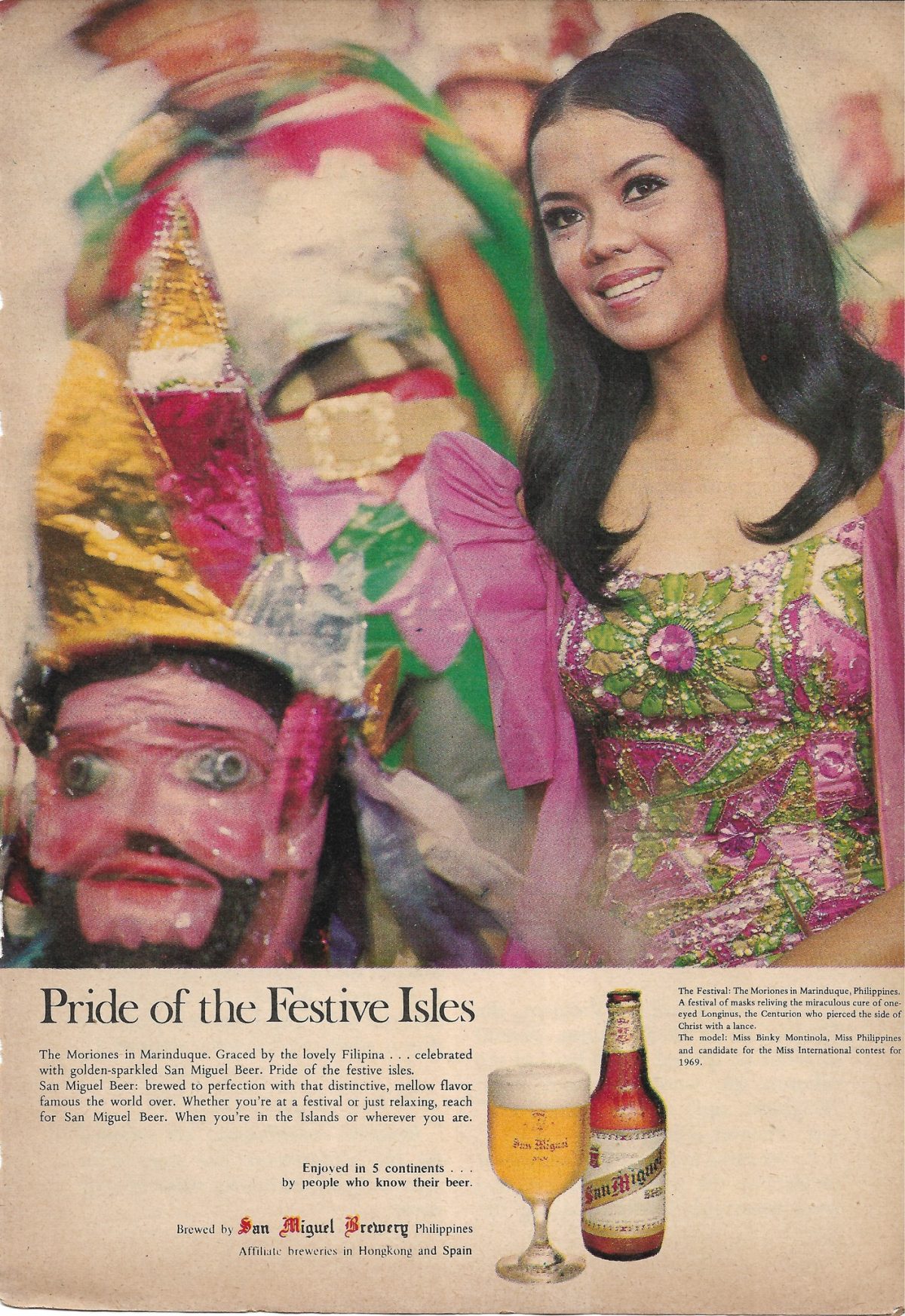
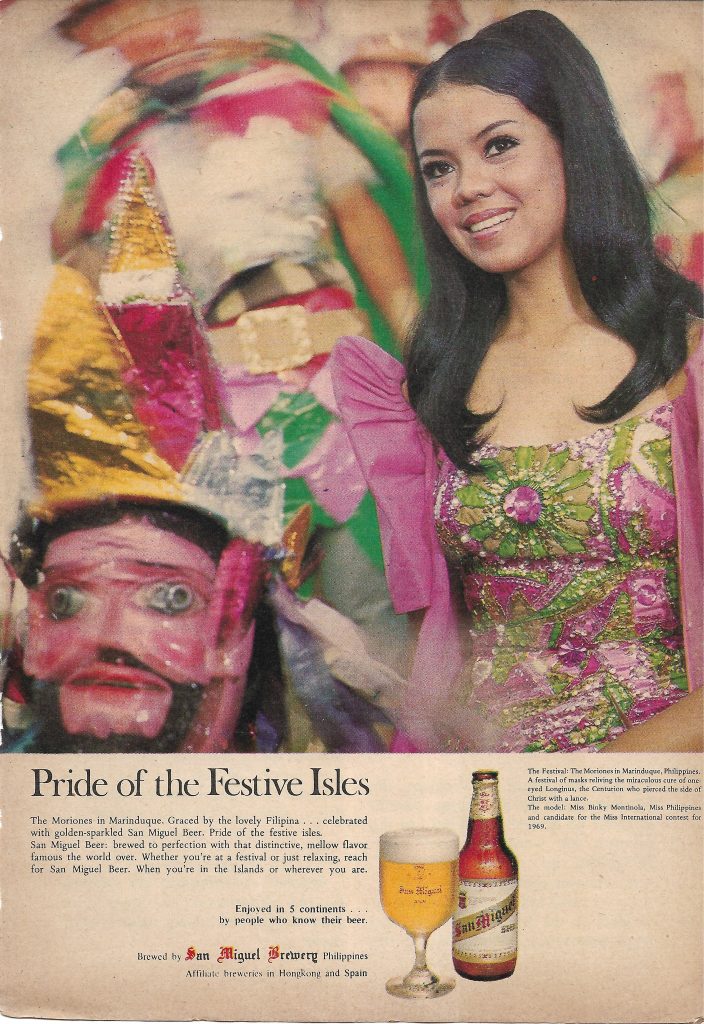
Beer, a beauty queen and the Moriones.
From:
B & W copy -Papua New Guinea Post Courier October 26 1970 Color copy Readers Digest Philippines 1970
Pride of the Festive Isles
The Moriones in Marinduque. Graced by the lovely Filipina . . . celebrated with golden-sparkled San Miguel Beer, Pride of the festive isles. San Miguel Beer: brewed to perfection with that distinctive, mellow flavor famous the world over. Whether you’re-at a festival or just relaxing, reach for San Miguel Beer. When you’re in the Islands or wherever you are.
Enjoyed in 5 continents . . .by people who know their beer.
Brewed by, San Miguel Breweries Philippines Affiliate breweries in Hongkong and Spain Morgan, Perth fit Co., Ltd. DISTRIBUTOR
Small print under picture
The festival in Marinduque Philippines. A festival of masks reliving the miraculous cure of the on eyed Longinus, the centurion who pierced the side of Christ with a lance. The model: Binky Montinola, Miss Philippines, candidate for the Miss International Contest for 1969.
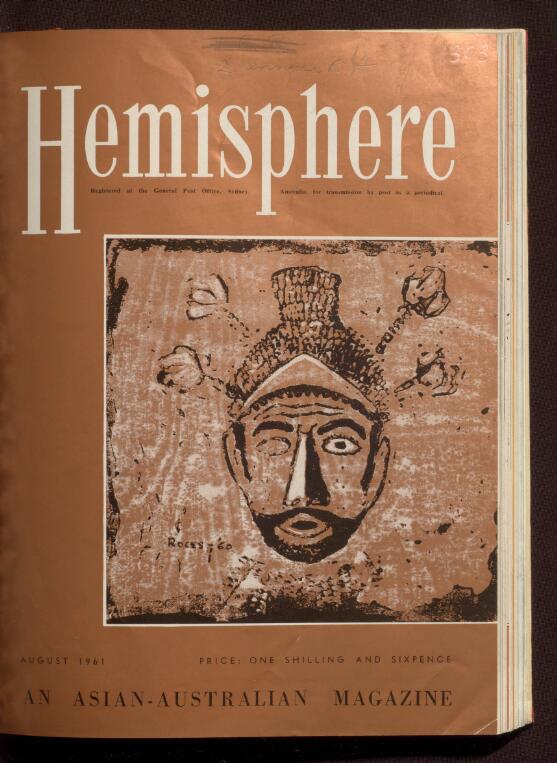
August 1961 edition of Hemisphere, an Australian publication. Following up on yesterday’s post we have on the cover a line cut of a Morione’s mask by the Philippine artist Alredo Roces. The article detailing the magazine cover further describes a mask that is of the Mogpog variety.

The first of articles to be presented this month. An early piece entitled “The Mask of Longinus” by Alfredo R Roces, April 1961 Philippine Studies Vol 9. The article was written after a field trip by Roces and others.
Be sure to check out the photos of old masks and participants at the end, especially the photo from Tiguion, Gasan from 1960.
Filipino Alfredo Roces is an award-winning veteran journalist who has worked in newspapers, magazines and also authored several books on the Philippines and its art. He holds a Bachelor of Fine Arts from the University of Notre Dame in the USA. …For more on his career visit:
https://rocesfamily.com/sm2002/rocesphils/ding.htm





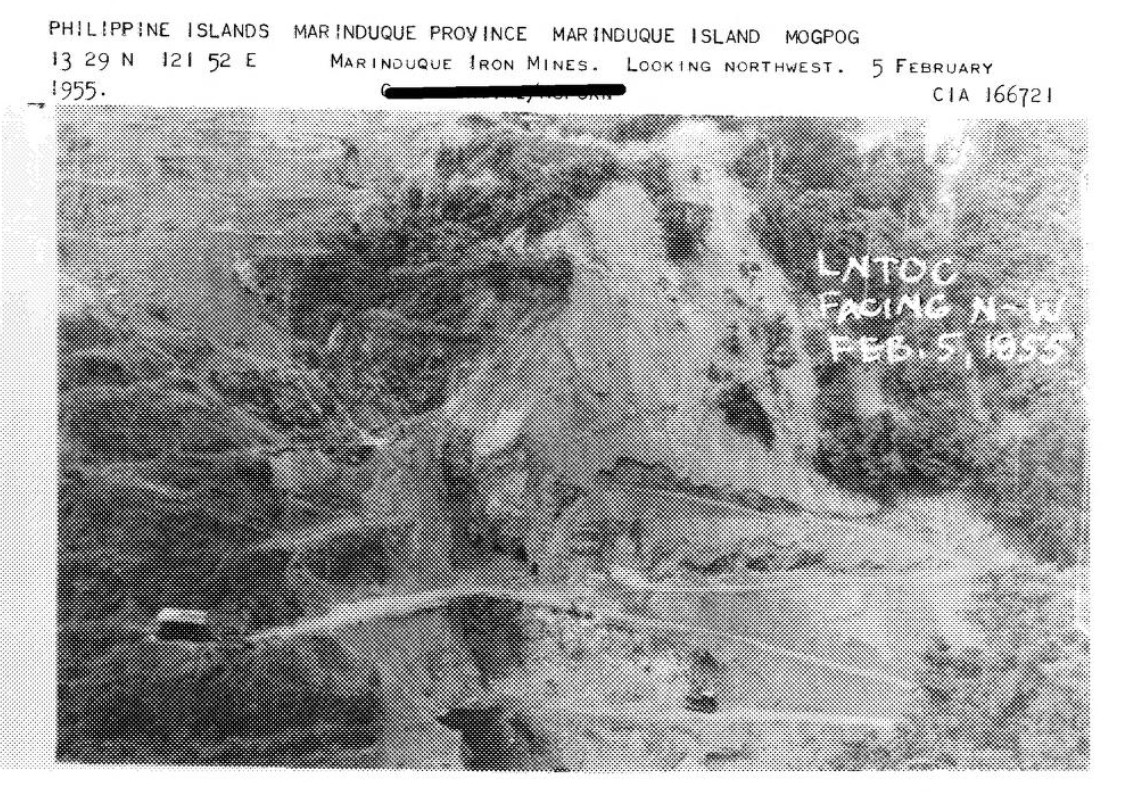
CIA Reading Room cia-rdp83-00423r001900700001-3: GOLD AND IRON MINING By CIA Reading Room Publication date 1955-05-11. 4. Landscape shot of Marinduque Iron Mines deposits.
NOTE: This has been declassified.

The queen of Garden Day is one of the famous Lardizabel sisters from Boac, Juanita. I do not know of any modern day celebration labeled as Garden Day anywhere in Marinduque. Sharp eyes will notice the spelling of Boac as Boak.