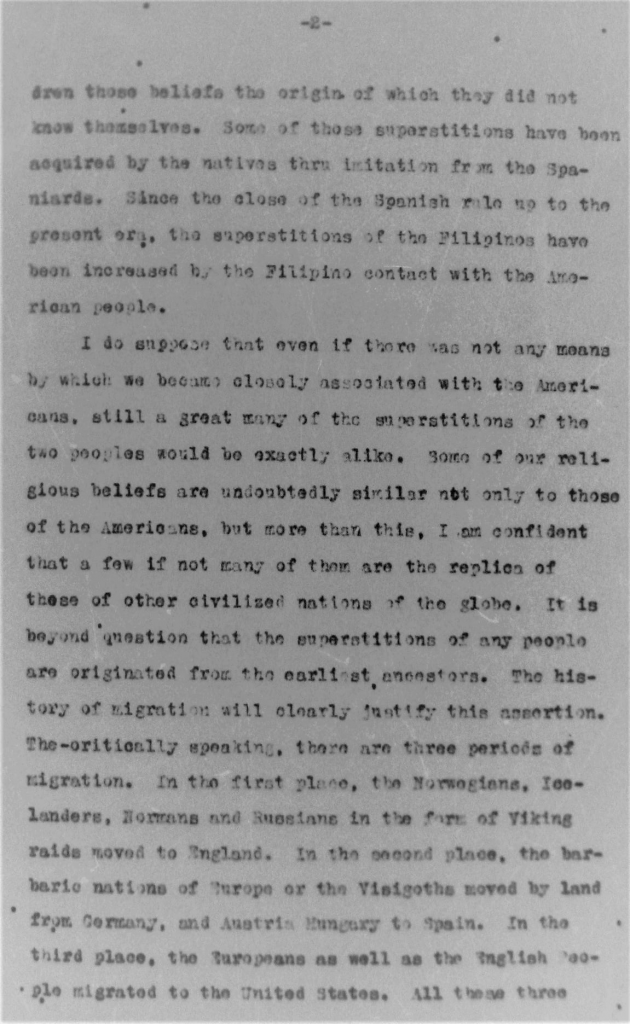
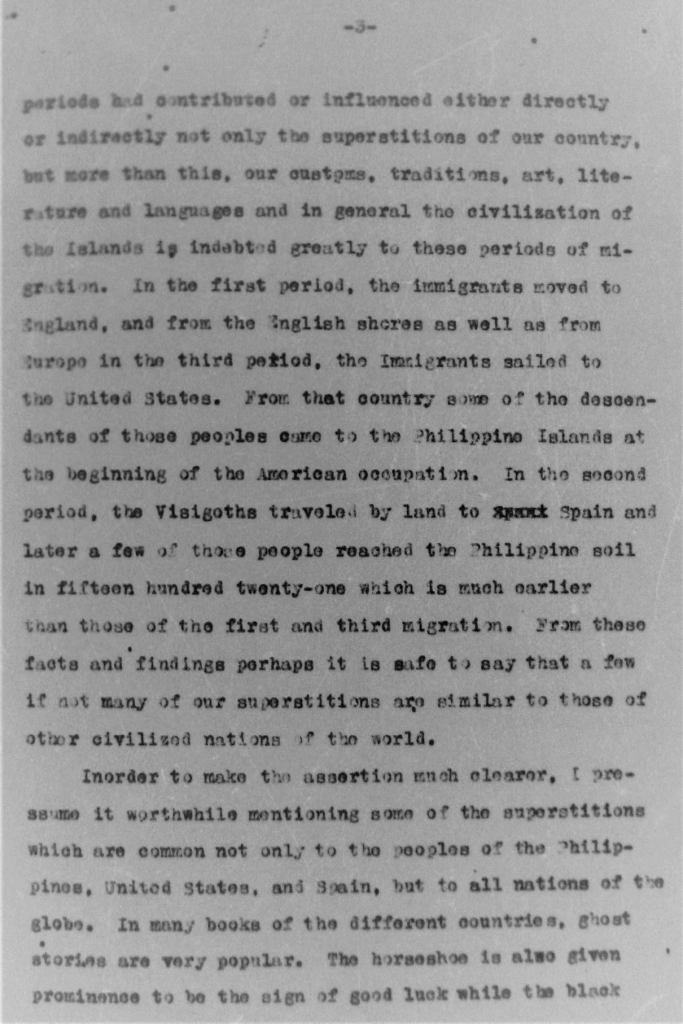
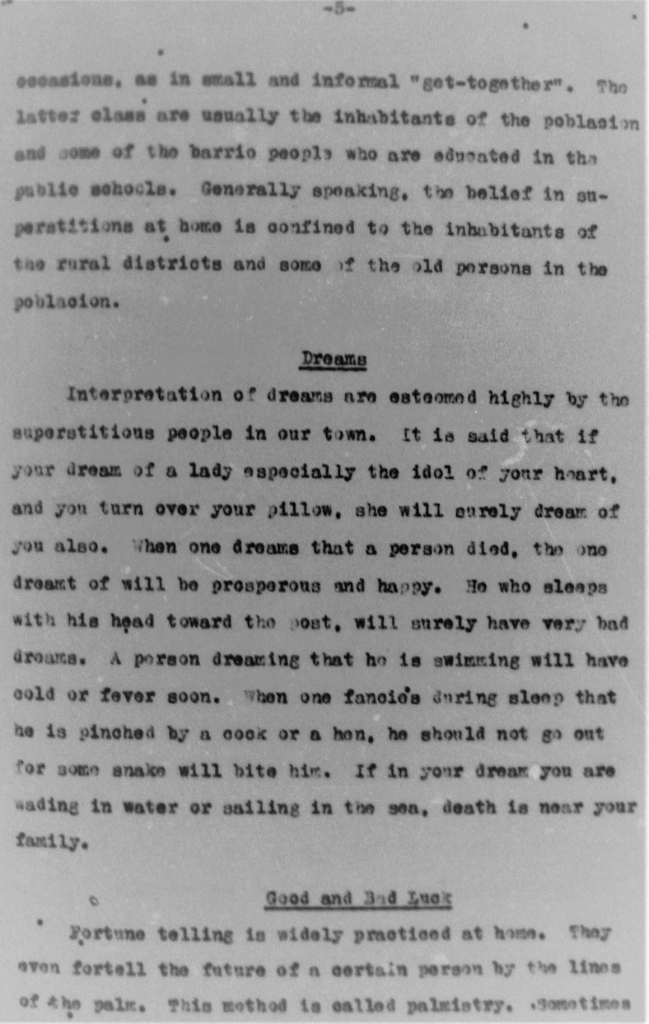
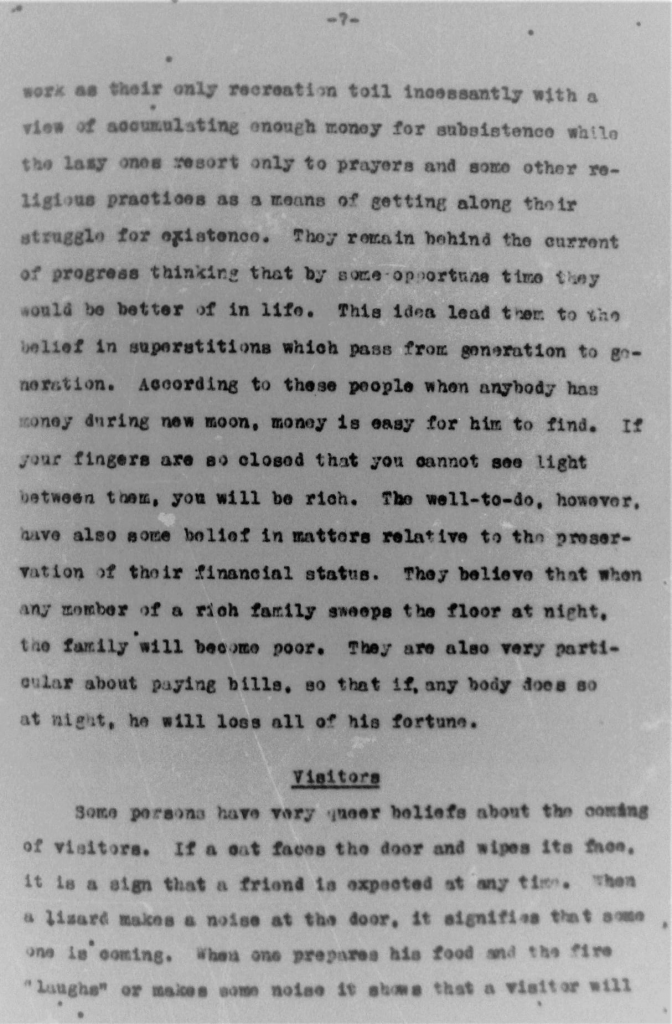
Beliefs and Superstitions in and around Santa Cruz, Island of Marinduque. 1924

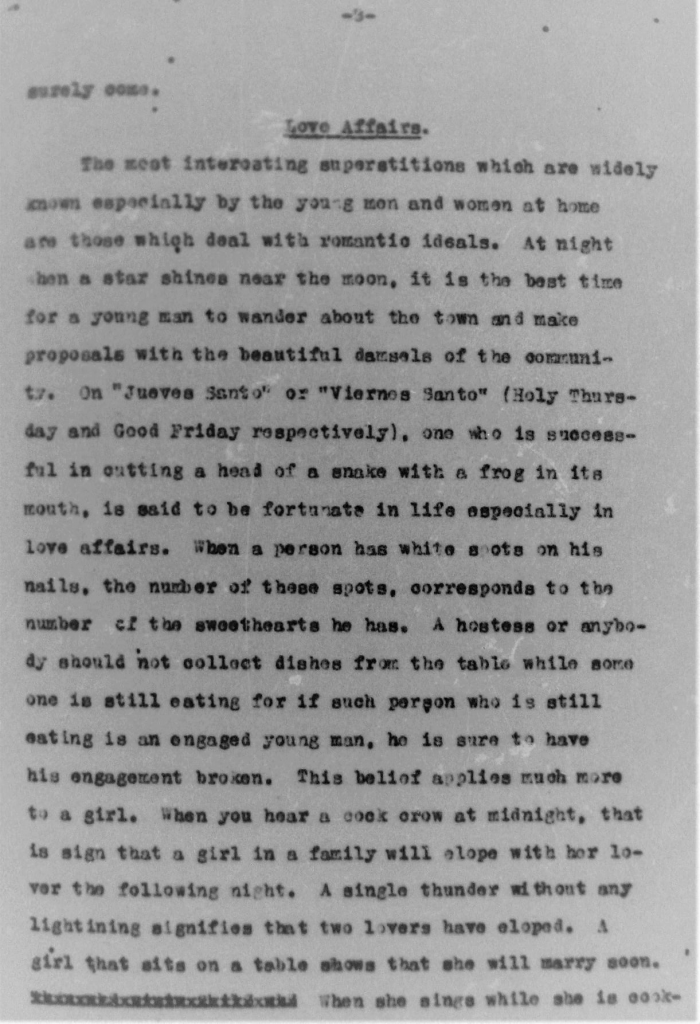
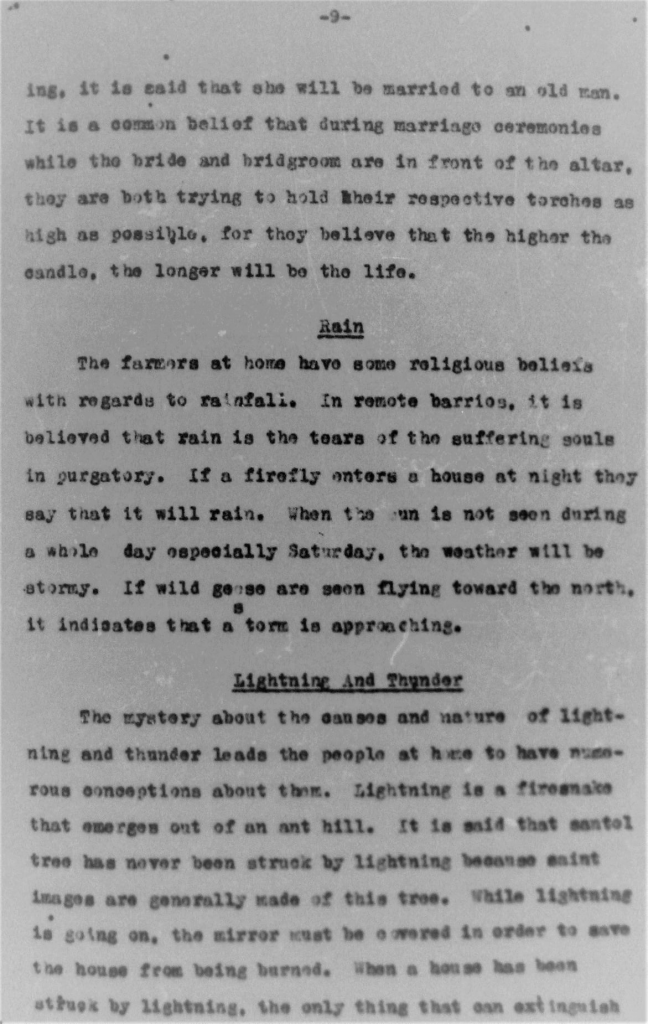
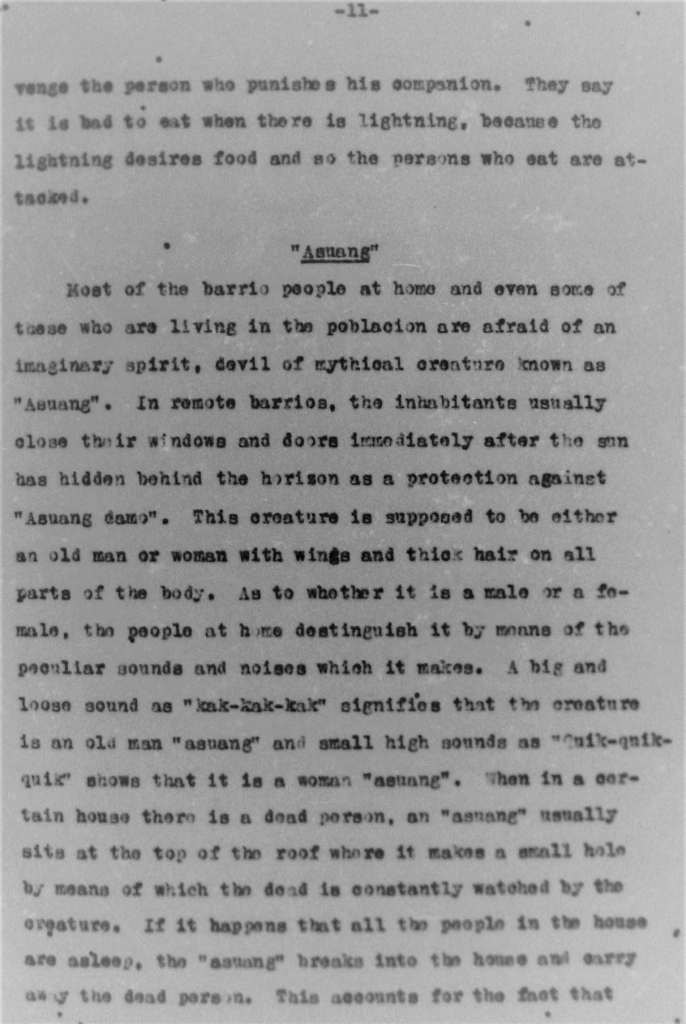
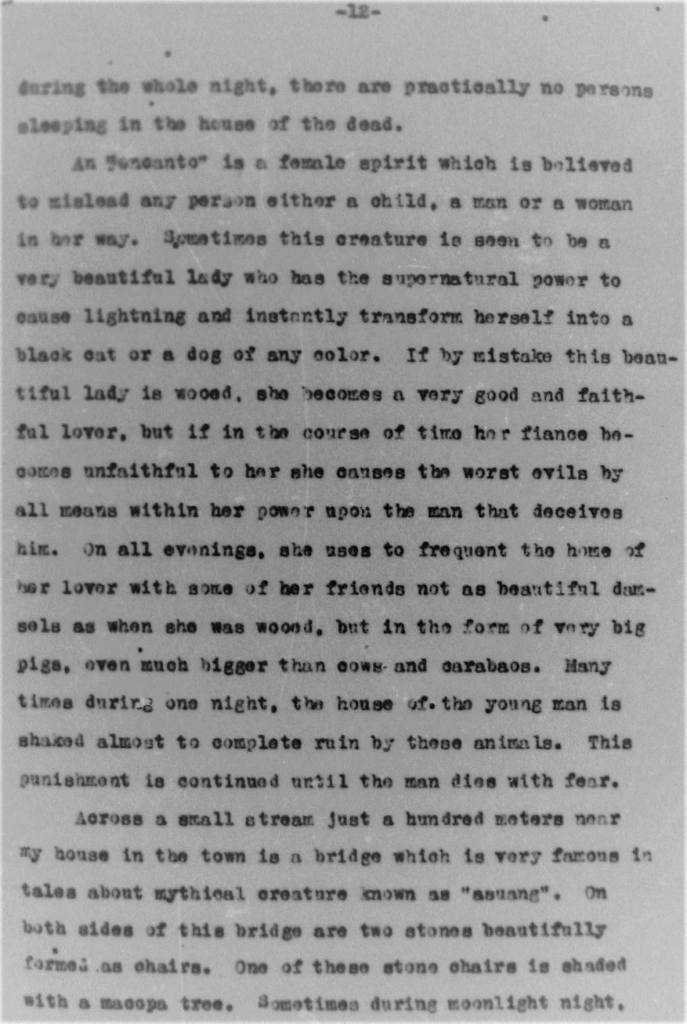
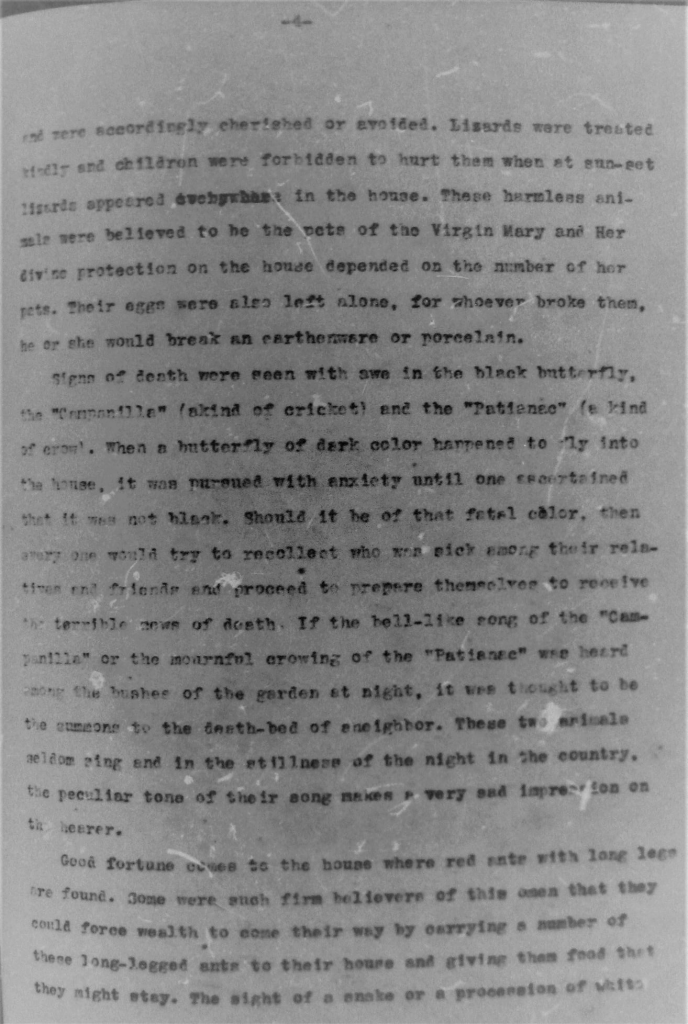
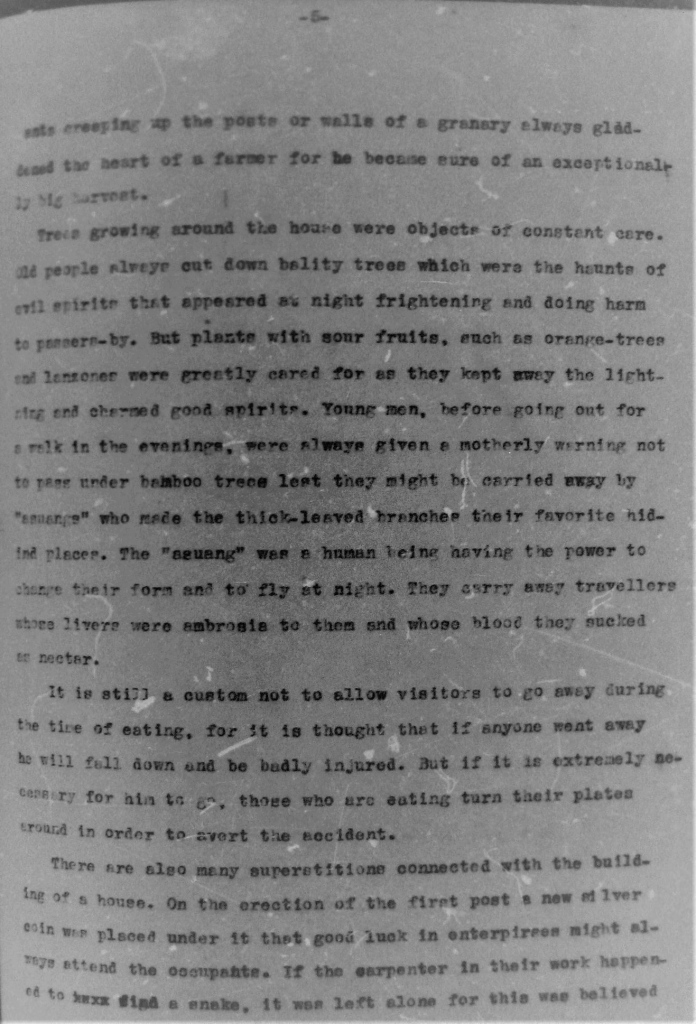
To our friends and neighbors in Santa Cruz, Do you still fear the Asuang or Caffre? What can you do or not do during thunder and lightning? In 1924 Serapio Rolluqui, a student at the University of the Philippines and Santa Cruz resident, published the above paper.

Topics include: Asuang, Death, Dreams, Ghosts, Good and Bad Luck, Lightning and Thunder, Love Affairs, Money, Rain, Sickness and Visitors

“Superstitions of the People of Boac, Marinduque” 1917

Written in 1917 by a then college student Nieves Hidalgo of Boac, Marinduque. Later in life to be known as a famous Philippine feminist.

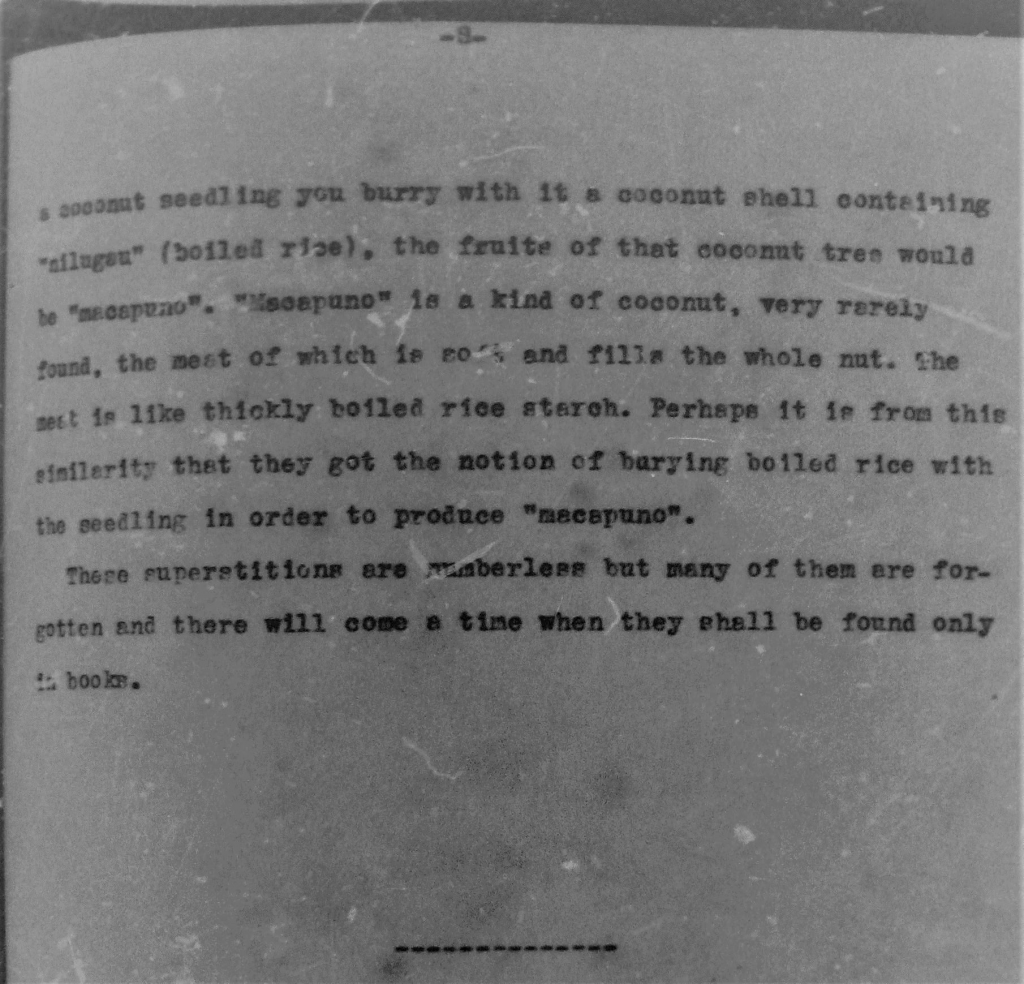
She ends her paper writing “These superstitions are numberless but many of them are forgotten and there will come a time when they shall be found only in books”. And today we can add on the internet……

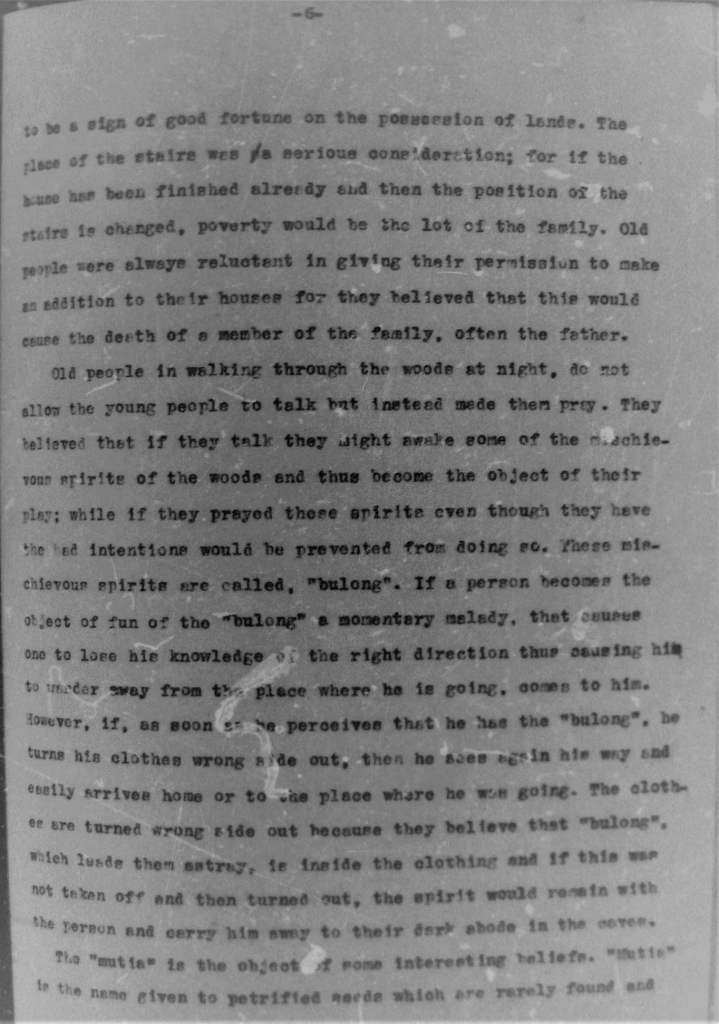
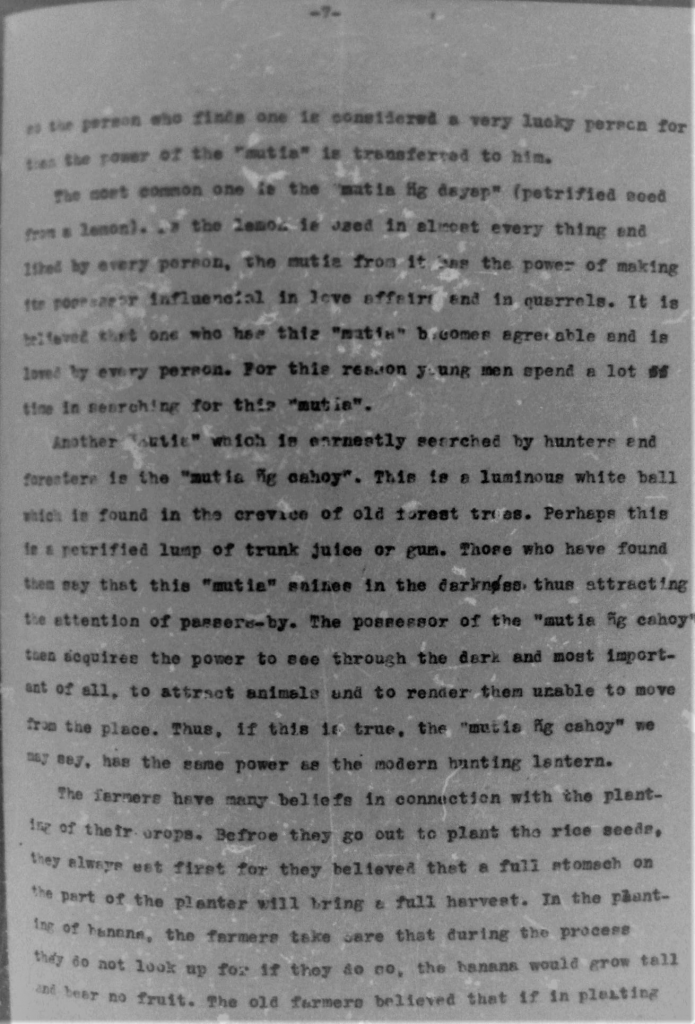
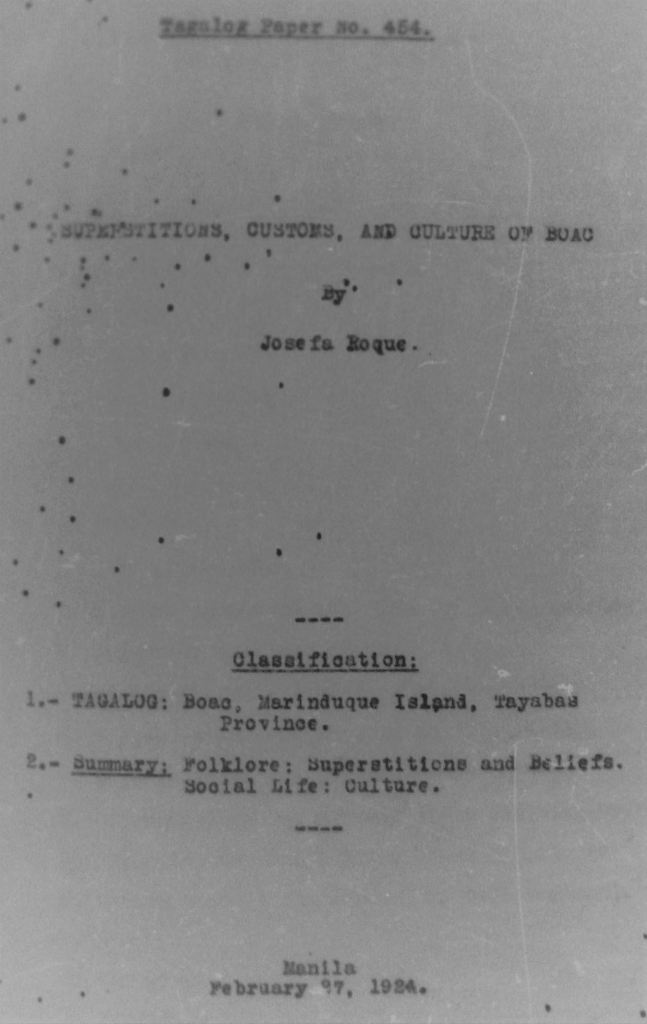
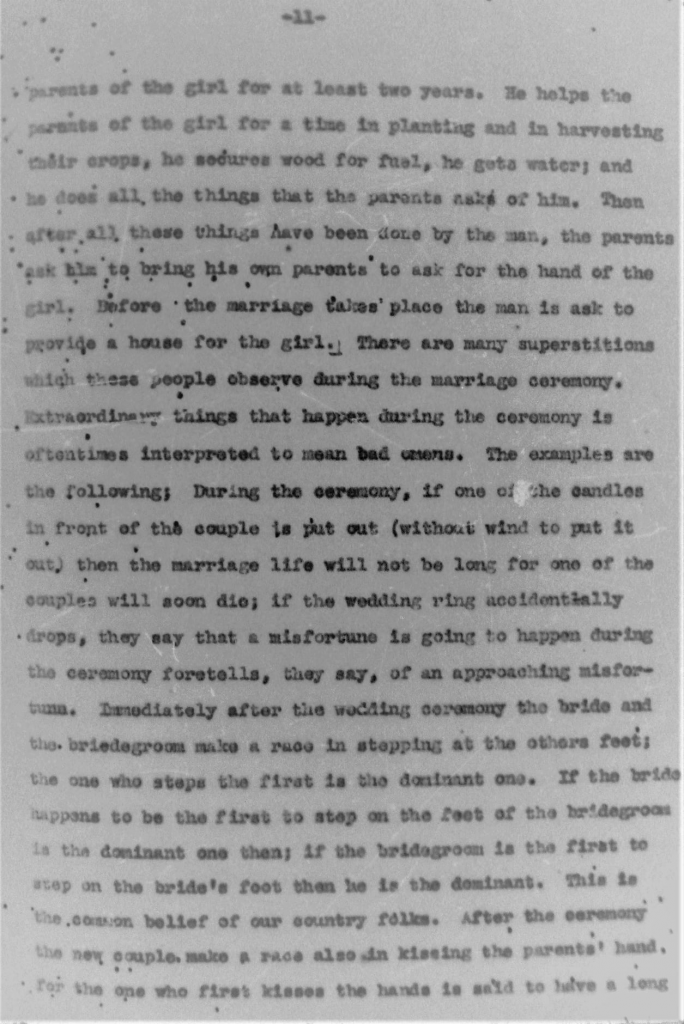
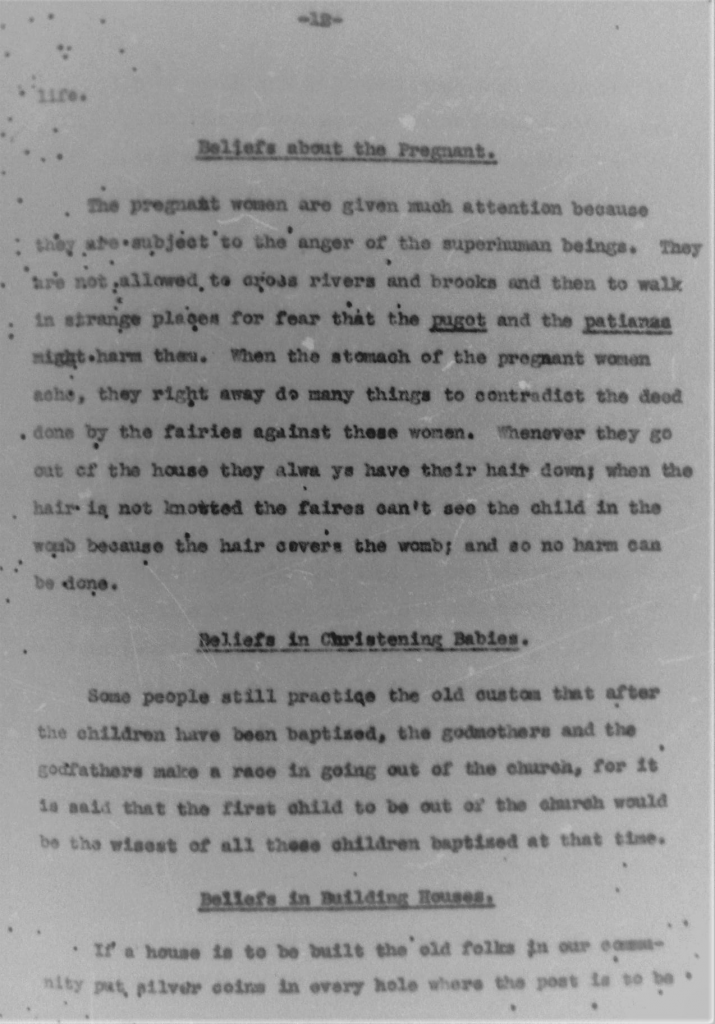
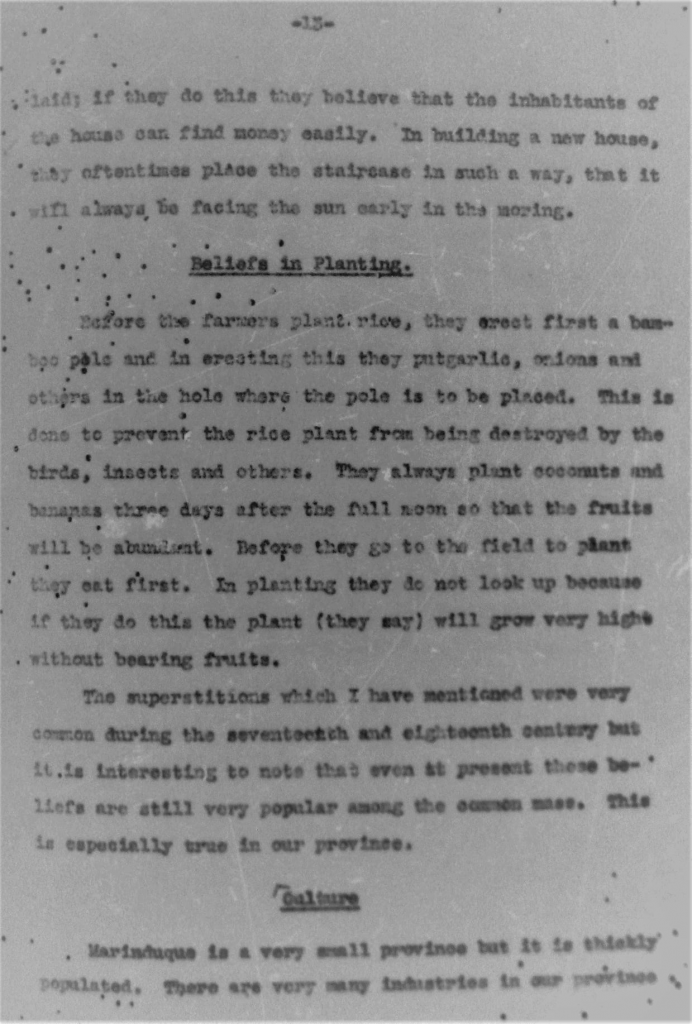
And we have another paper written about Boac, from 1924 and is entitled “Superstitions, Customs and Culture of Boac” by Josefa Roque.

Josefa graduated the University of the Philippines in 1924 with a Degree of Bachelor of Science in Education.

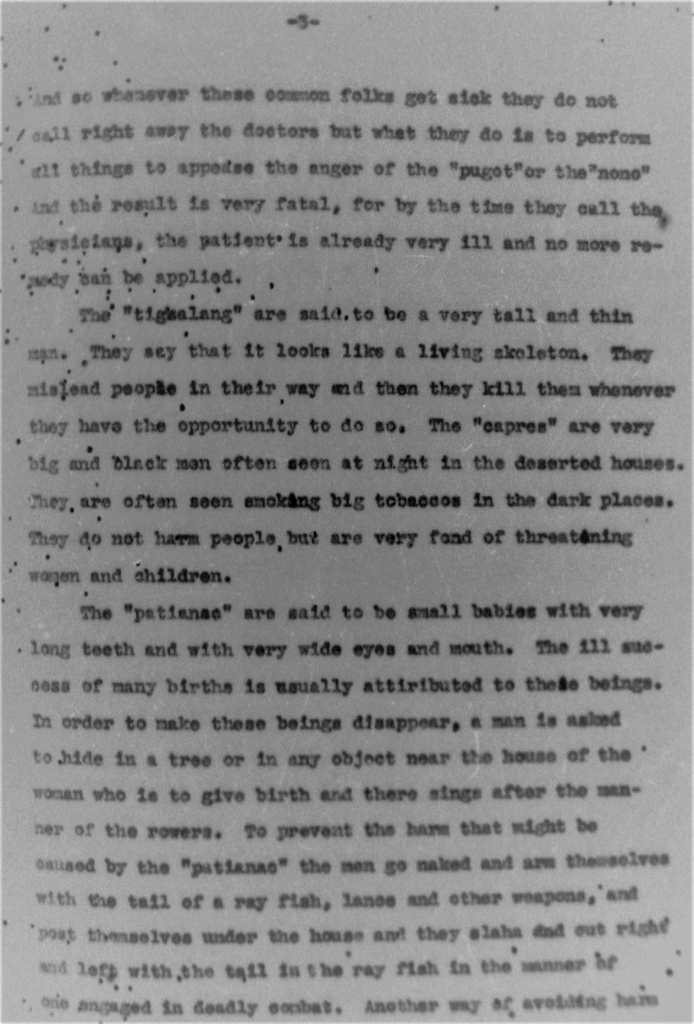
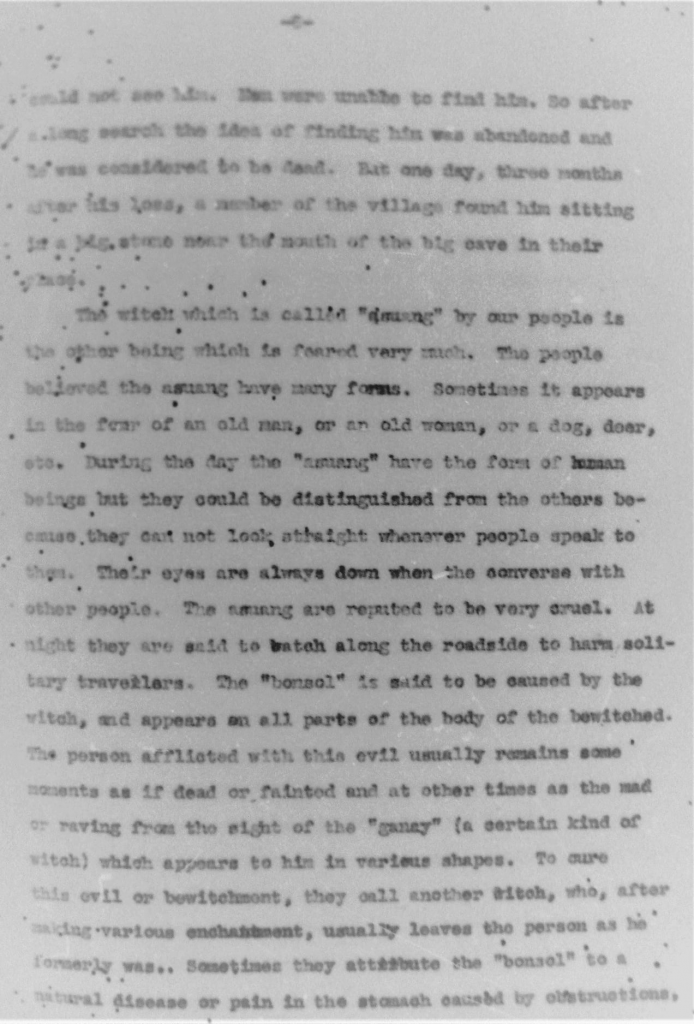
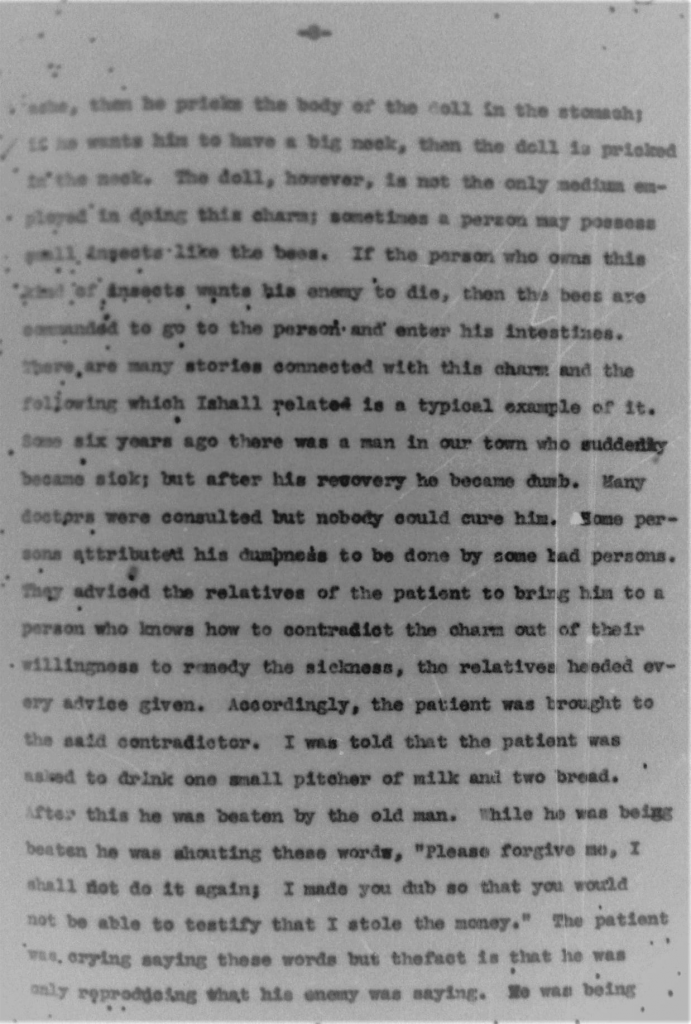
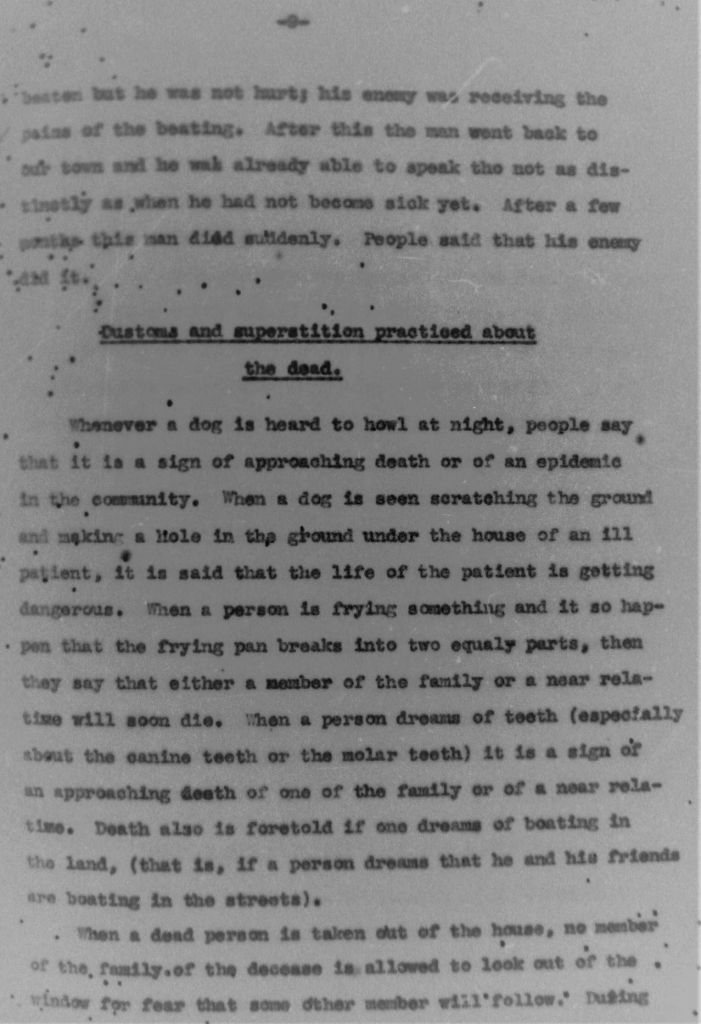
Some of the topics covered in her paper are: Asuang, Beliefs about the Pregnant, Beliefs in Building Houses, Beliefs in Christening Babies, Beliefs in Planting, Capre, Culture, Customs and Superstitions about Marriage, Customs and superstitions practiced about the dead, Encantades, Fairies, Patianac, Tigbalang

She culminated her paper by saying, ” Our province is rapidly progressing not only in agriculture and commerce but also in education; and the time is fast approaching when the masses will all be educated and these superstitions which I mentioned will soon be effaced.

Was she correct or do will still have these in our memories today?

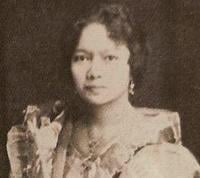
Let us not forget about one of the famous ladies of Gasan, Asuncion Arriola.

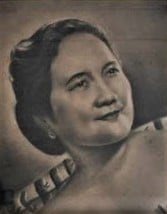
Asuncion Arriola-Perez was born on August 15, 1895 in the Gasan, Marinduque province of the Philippines. She was the oldest child in a family of six children. Her parents were Quirico Arriola and Severina Mandac. After graduating from high school in 1915, she completed her bachelor’s degree at the University of the Philippines in 1917. In 1926 she completed a master’s degree in sociology at the University of Wisconsin. Arriola-Perez began her career in 1920 as a high school teacher. From 1926 to 1930 she was Executive Secretary of Associated Charities. From 1941 to 1942, she was director of the Bureau of Public Welfare. After the Second World War, she held this position again until she was appointed Commissioner of Social Welfare in 1947. This position was upgraded in 1951 to Administrator of Social Welfare, a position at cabinet level. She was the first Filipino woman at that level. After President Elpidio Quirino lost the election, she resigned from the government. Asuncion Arriola-Perez died in 1967. She was married to Cirilo B. Perez, who was held captive by the Japanese in Fort Santiago during World War II and eventually executed. Together they had two sons and a daughter.

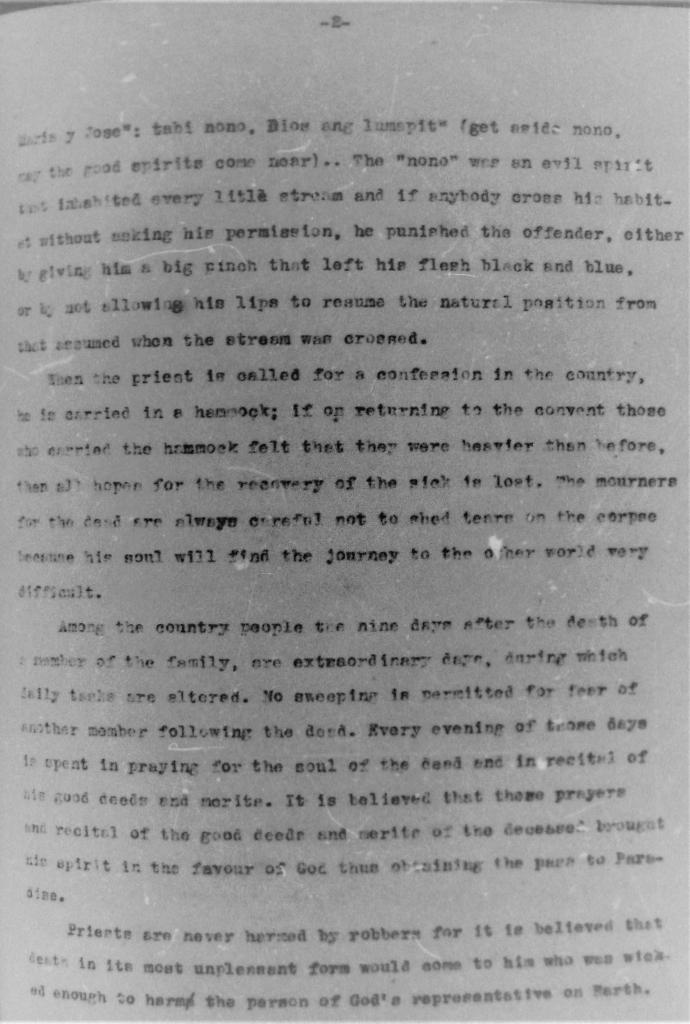
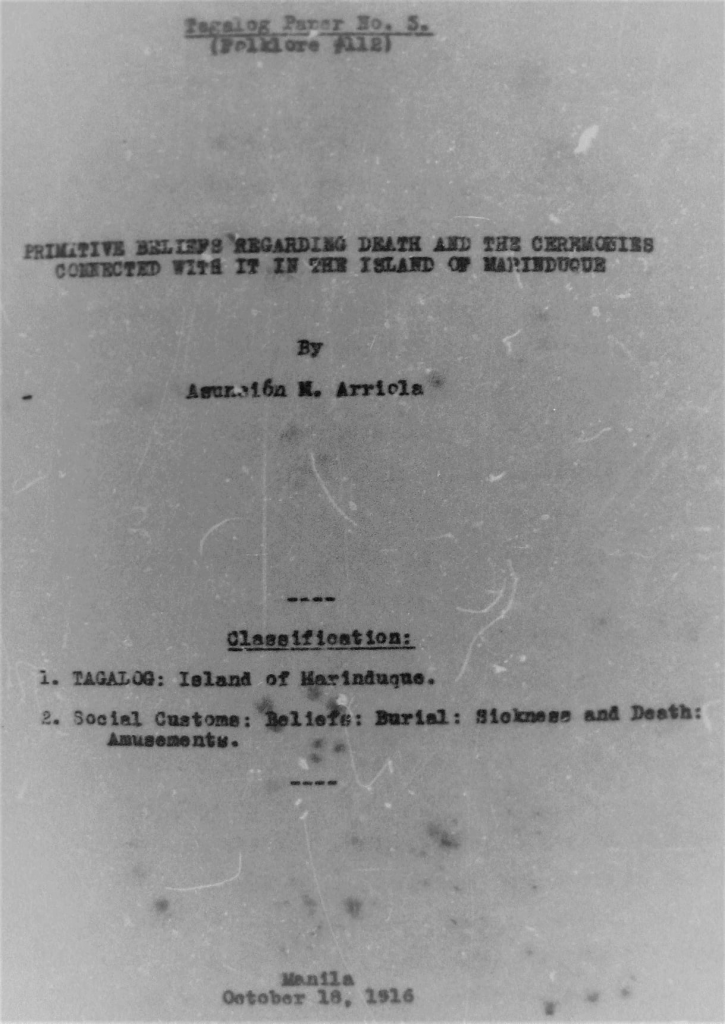
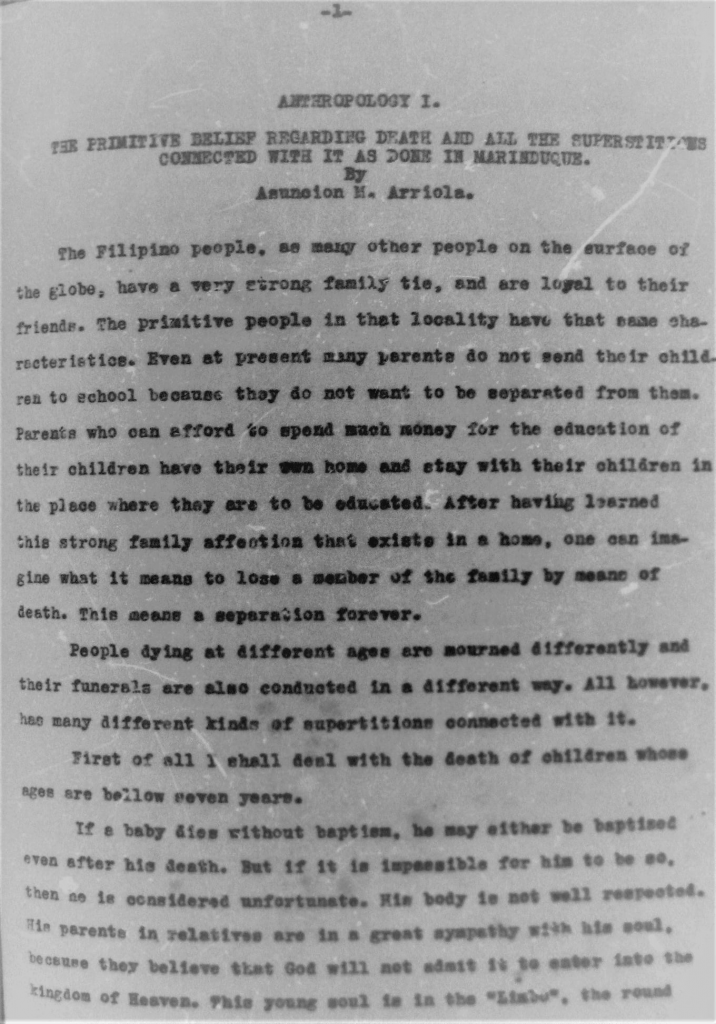
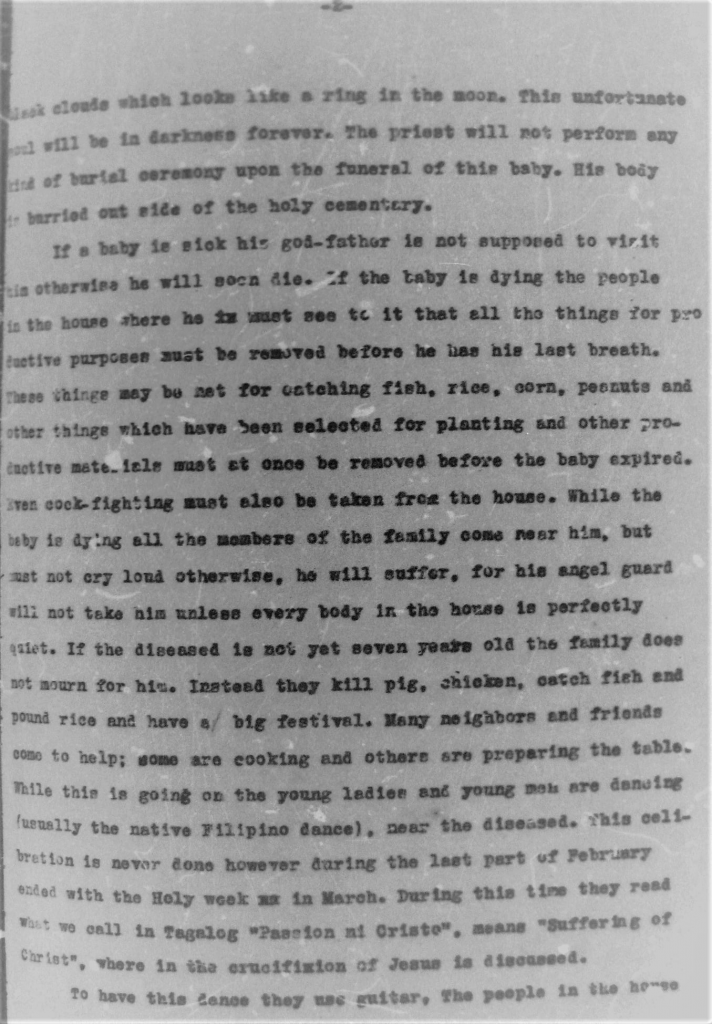
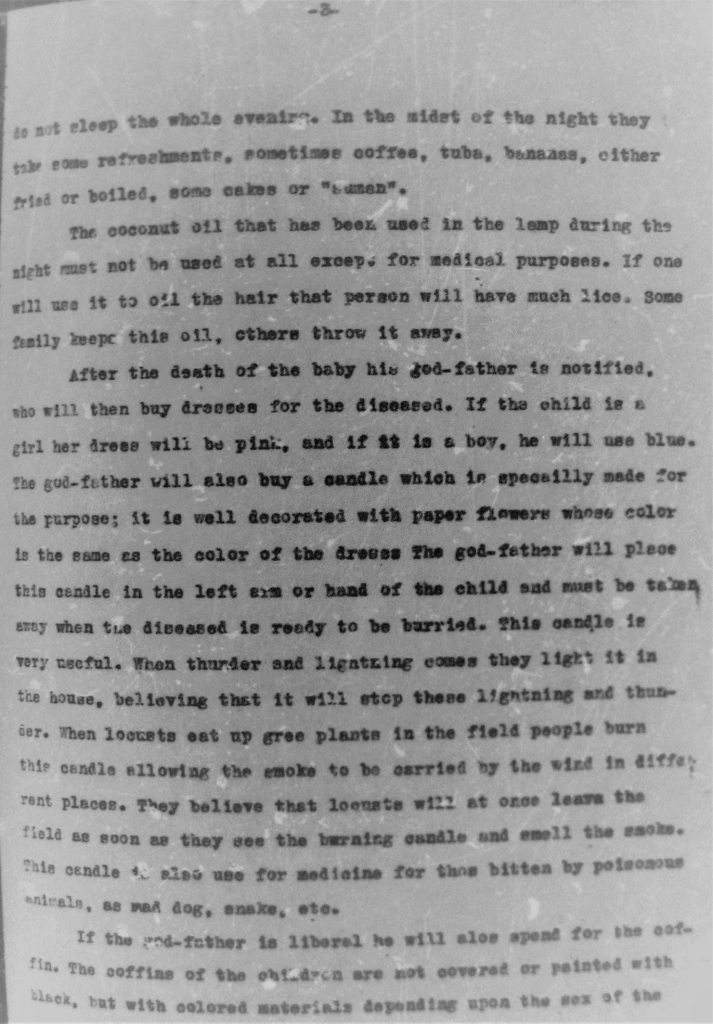
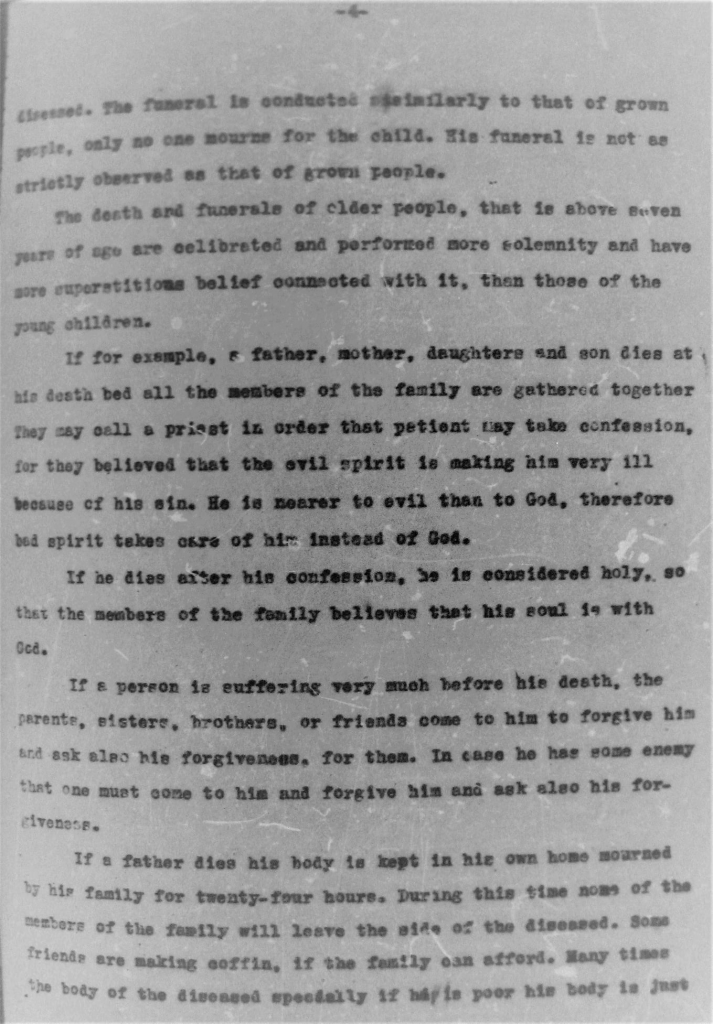
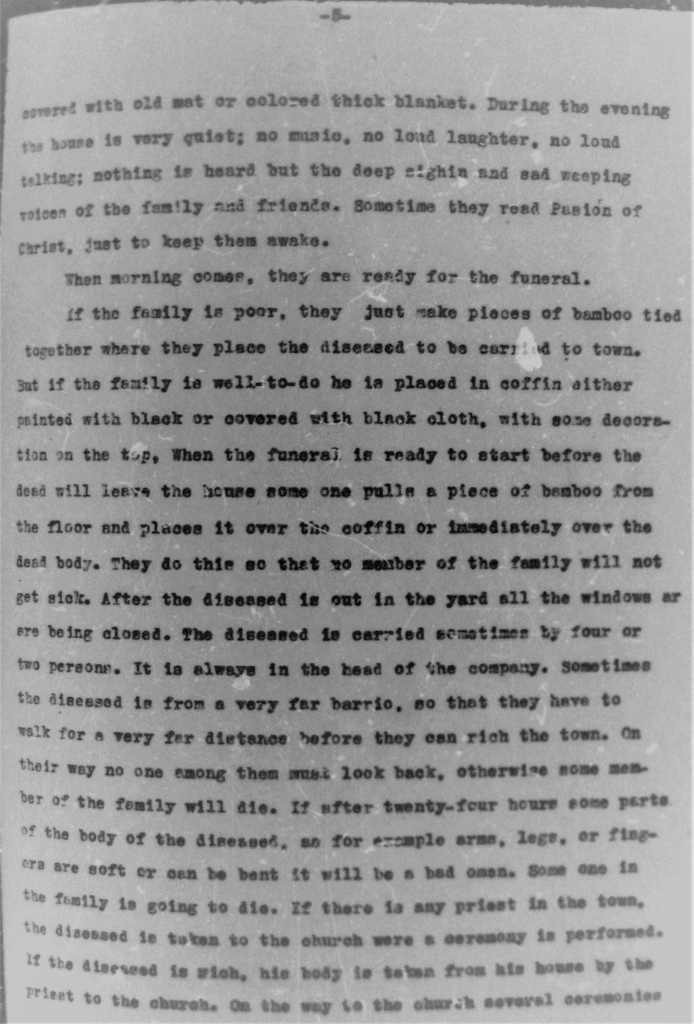
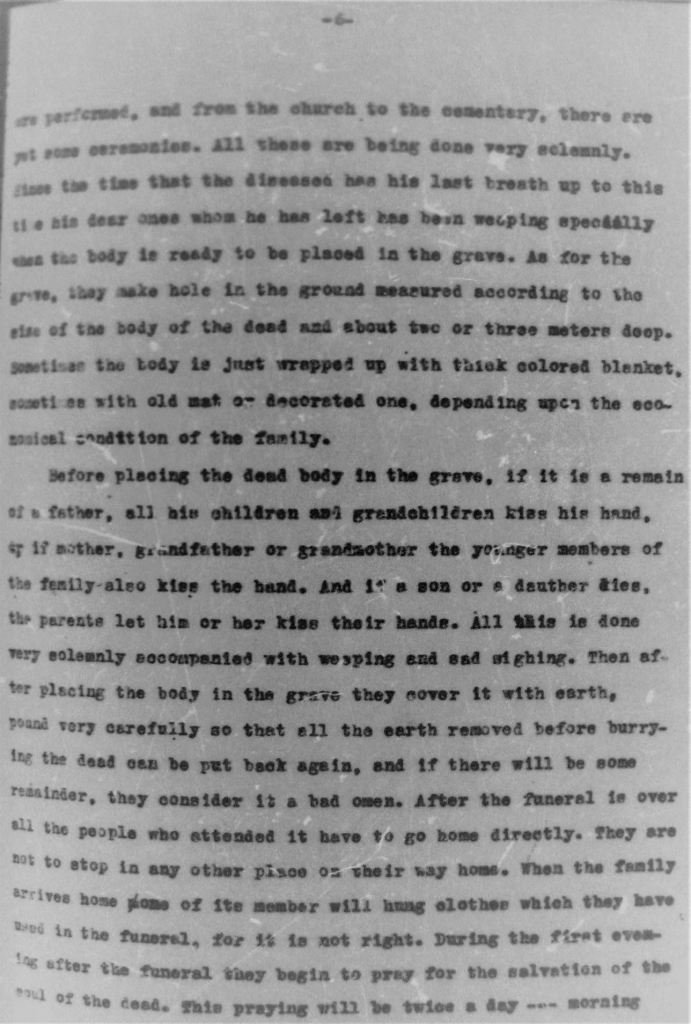
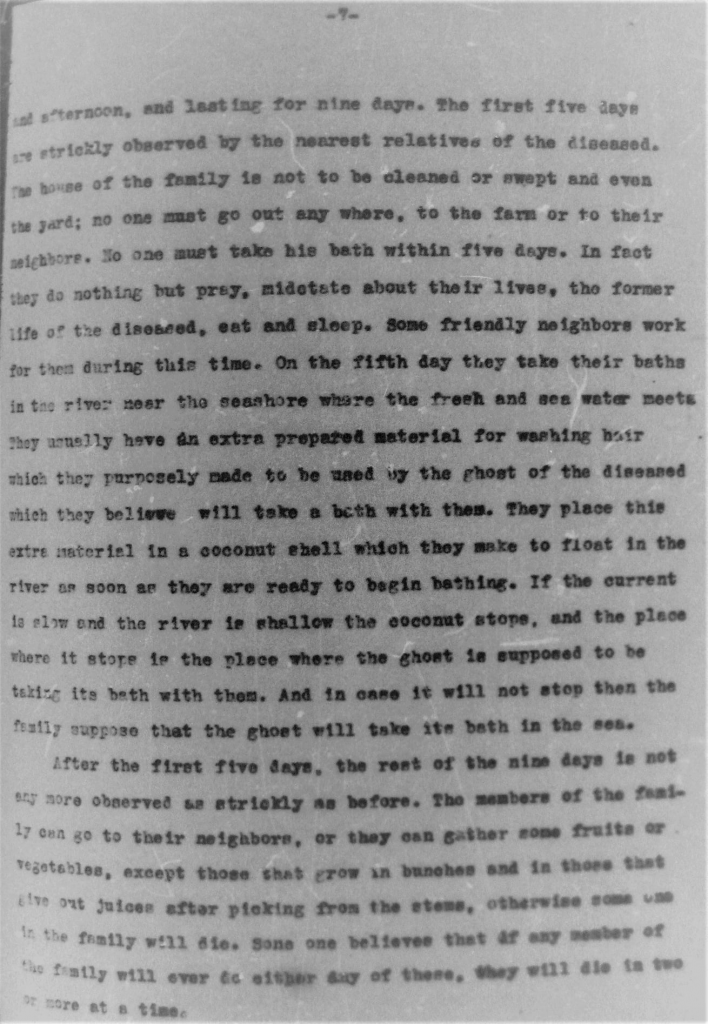
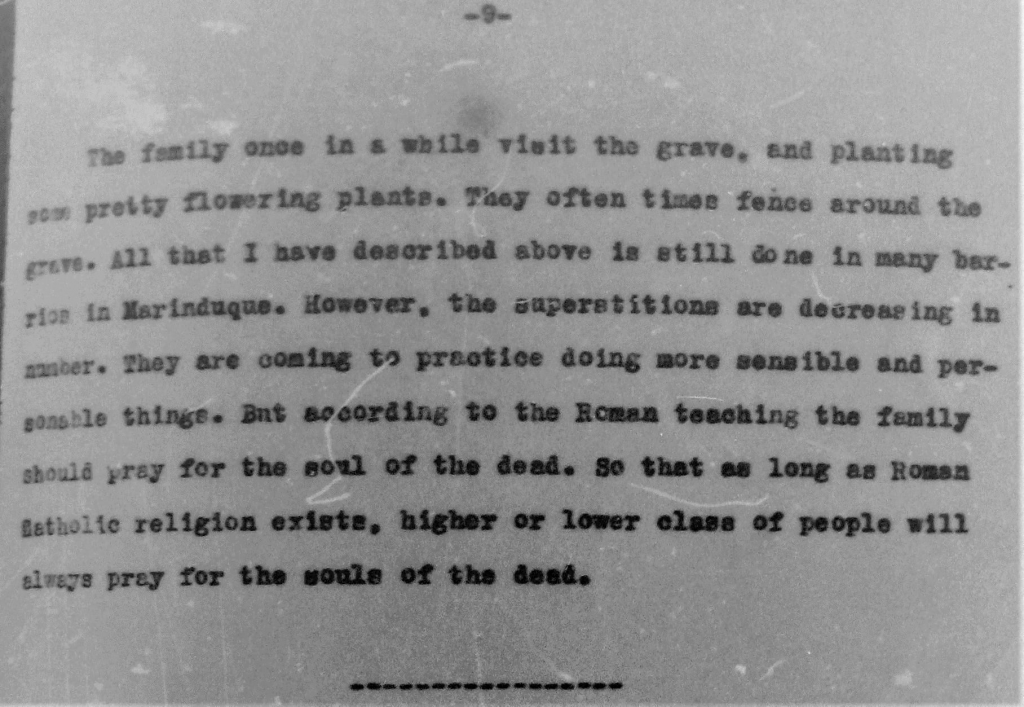
We are lucky to have a paper written by her from 1916 entitled “Primitive Beliefs Regarding Death and the Ceremonies Connected With It In the Island of Marinduque”.

From the book The Legends, Chapter 3, Legends about Supernatural Beings

Kapre by Rosita L. Nieva as narrated by her grandmother

Once upon a time there lived a couple who had three children. They lived in a big house in Gazan, Marinduque. The father and mother died within a week. The children believed that there were evil spirits in the house. So they decided to go to Sta. Cruz, Marinduque and asked a woman to stay in their house.

Every evening when the woman could not control herself anymore, she shouted for help. But no one went to help her. At about twelve o’clock the falling of stones on the roof of the house and knocking at the doors became frequent. So she shouted again and said: “Whoever you are, please go away because I am afraid of you.” The she heard many heavy steps in the attic. After a few minutes one leg fell on the floor where the woman was. Then another leg, then the trunk, the arms, and the head. After that they were all joined together and became a very tall man with black clothes. He had long black hair and a white hat on his head. The woman covered her face and did not look at him. The man said to her “Oh woman, do not be afraid of me. I am a cafre. I came here just to tell you a very important matter. The people who died in this house asked me to come and say that you must get the box of gold which they left in their garden, and give it to their children.” The woman answered, “Yes, yes, I will do it, but go away.” His body separated again into many parts and were scattered over the floor. They were changed into long cigars. When the woman saw these cigars she ran away from the house to the forest. After three days she went to the garden and took the box of gold and gave it to the children. But she did not return to the house anymore because she was afraid of the cafre.