The first of articles to be presented this month. An early piece entitled “The Mask of Longinus” by Alfredo R Roces, April 1961 Philippine Studies Vol 9. The article was written after a field trip by Roces and others.
Be sure to check out the photos of old masks and participants at the end, especially the photo from Tiguion, Gasan from 1960.
Filipino Alfredo Roces is an award-winning veteran journalist who has worked in newspapers, magazines and also authored several books on the Philippines and its art. He holds a Bachelor of Fine Arts from the University of Notre Dame in the USA. …For more on his career visit:
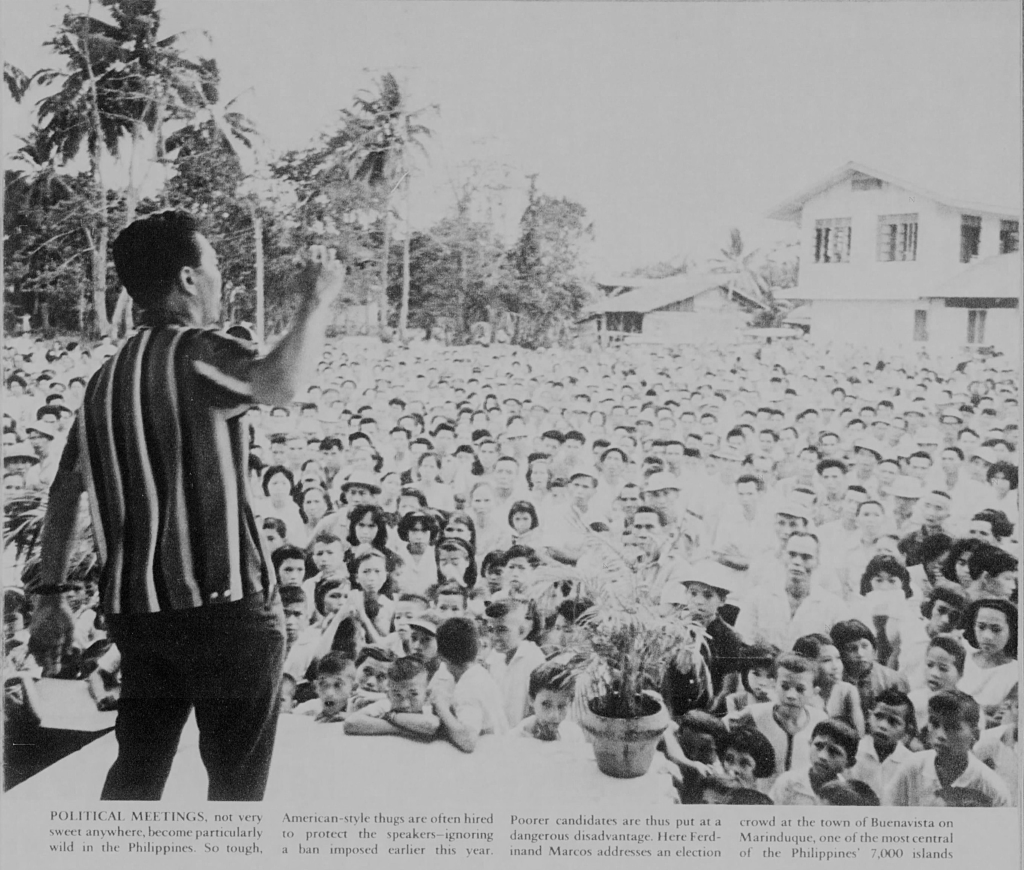
From the October 29, 1965 edition of the Daily Telegraph, London England. Ferdinand Marcos addressing a crowd in Buena Vista. Interesting note under the picture, who are the “thugs” in the crowd?
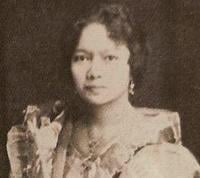
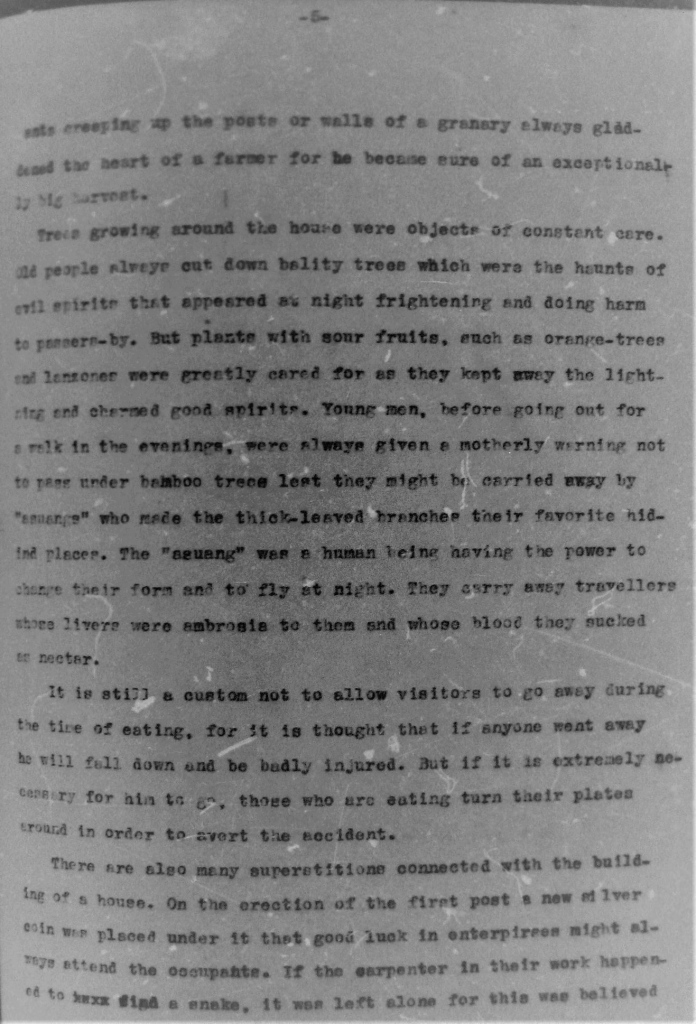
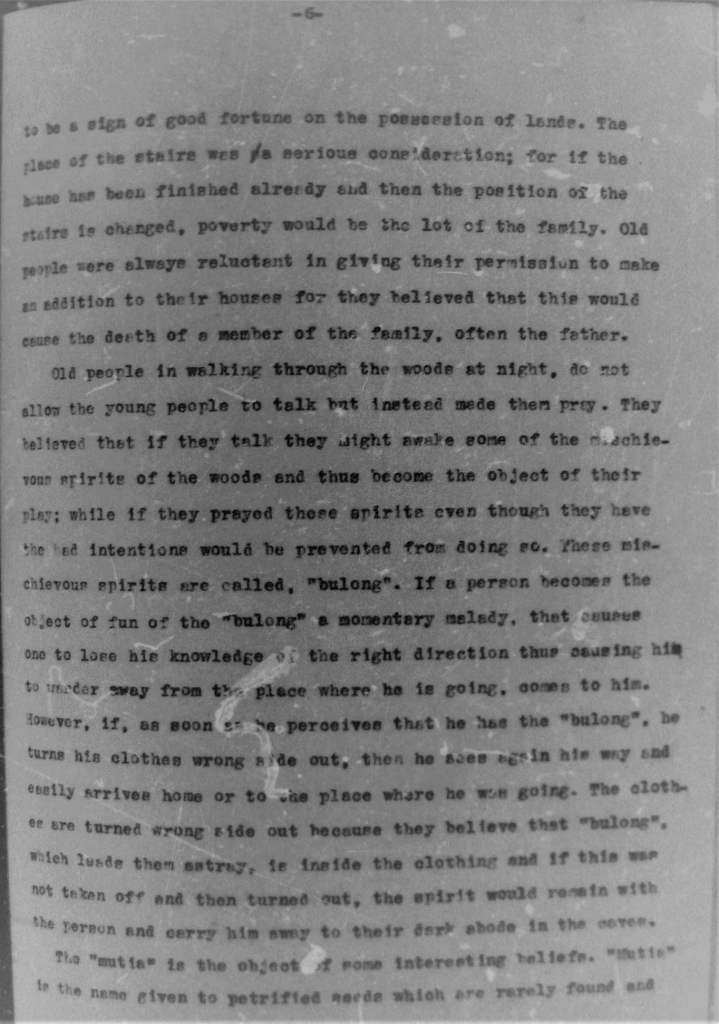
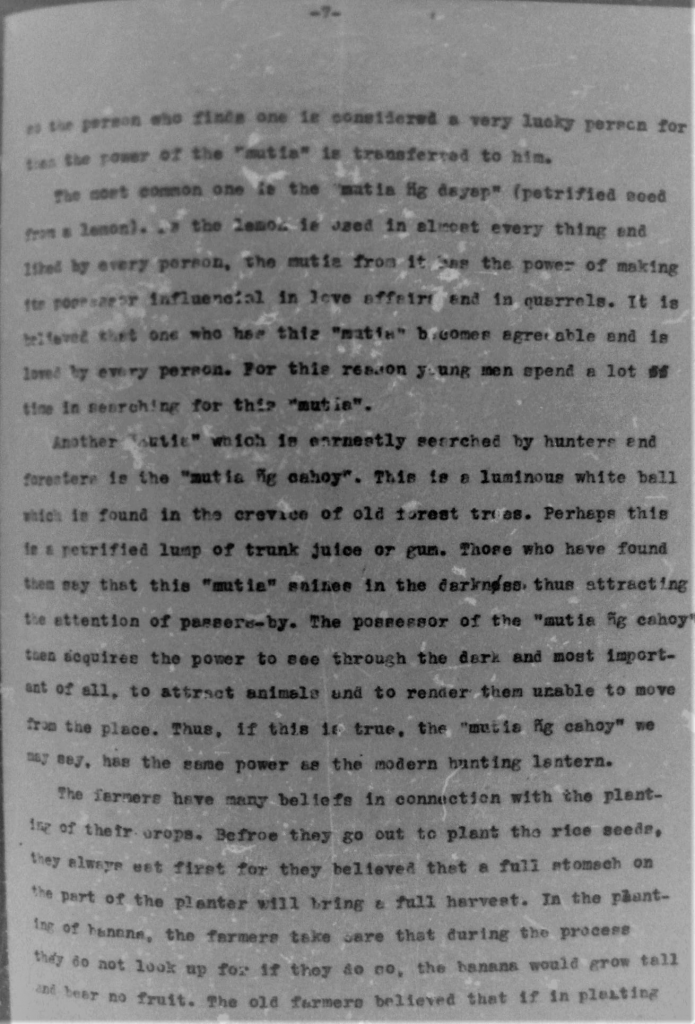
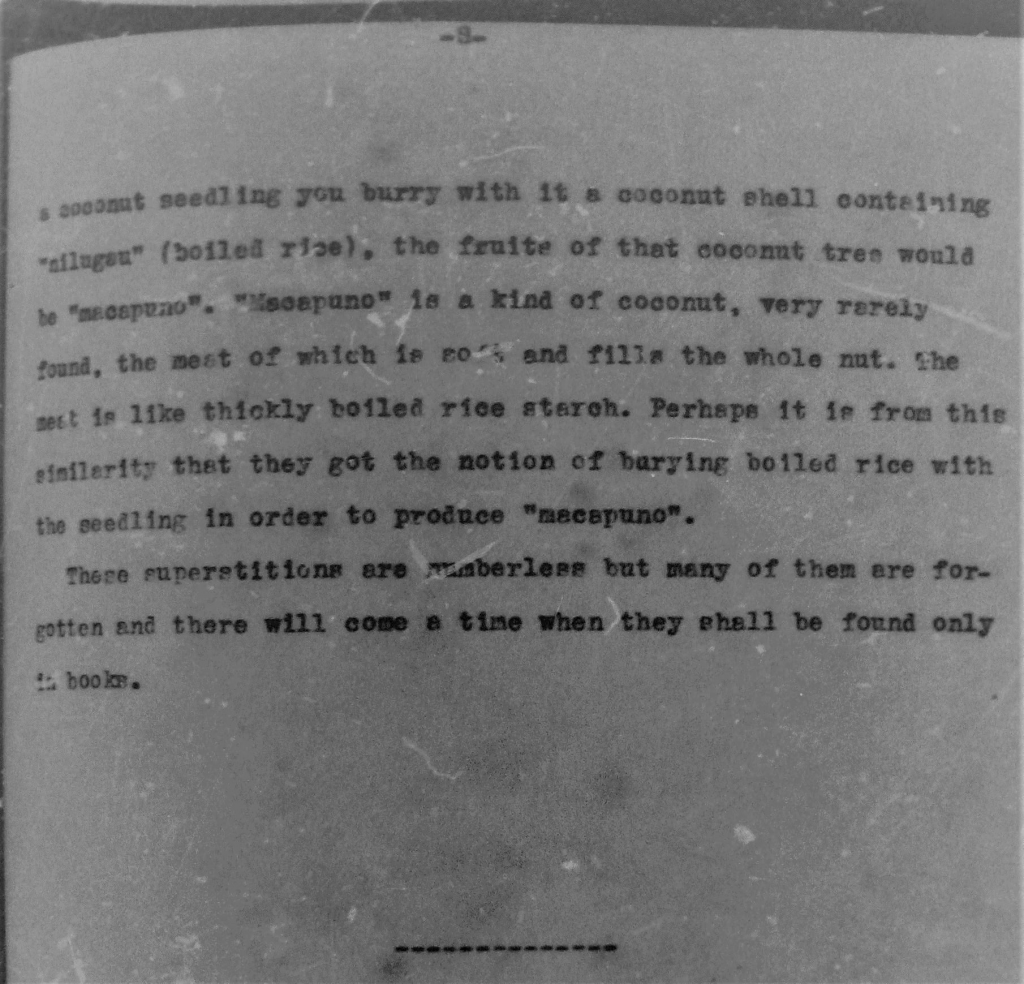
Written in 1917 by a then college student Nieves Hidalgo of Boac, Marinduque. Later in life to be known as a famous Philippine feminist.
She ends her paper writing “These superstitions are numberless but many of them are forgotten and there will come a time when they shall be found only in books”. And today we can add on the internet……
Josefa graduated the University of the Philippines in 1924 with a Degree of Bachelor of Science in Education.
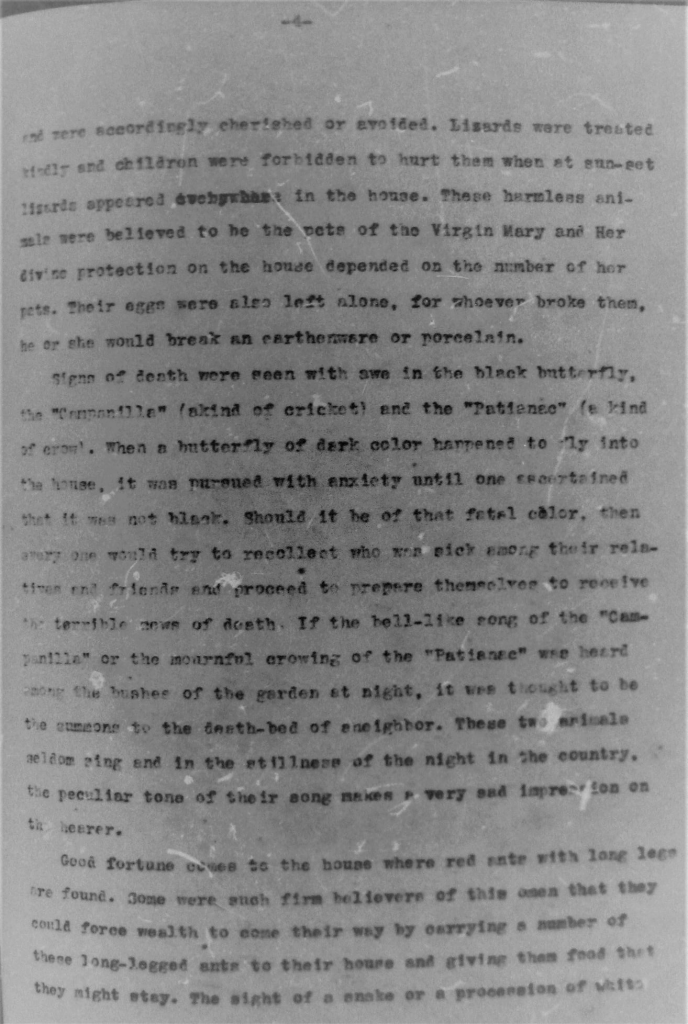
Some of the topics covered in her paper are: Asuang, Beliefs about the Pregnant, Beliefs in Building Houses, Beliefs in Christening Babies, Beliefs in Planting, Capre, Culture, Customs and Superstitions about Marriage, Customs and superstitions practiced about the dead, Encantades, Fairies, Patianac, Tigbalang
She culminated her paper by saying, ” Our province is rapidly progressing not only in agriculture and commerce but also in education; and the time is fast approaching when the masses will all be educated and these superstitions which I mentioned will soon be effaced.
Was she correct or do will still have these in our memories today?
Asuncion Arriola-Perez was born on August 15, 1895 in the Gasan, Marinduque province of the Philippines. She was the oldest child in a family of six children. Her parents were Quirico Arriola and Severina Mandac. After graduating from high school in 1915, she completed her bachelor’s degree at the University of the Philippines in 1917. In 1926 she completed a master’s degree in sociology at the University of Wisconsin. Arriola-Perez began her career in 1920 as a high school teacher. From 1926 to 1930 she was Executive Secretary of Associated Charities. From 1941 to 1942, she was director of the Bureau of Public Welfare. After the Second World War, she held this position again until she was appointed Commissioner of Social Welfare in 1947. This position was upgraded in 1951 to Administrator of Social Welfare, a position at cabinet level. She was the first Filipino woman at that level. After President Elpidio Quirino lost the election, she resigned from the government. Asuncion Arriola-Perez died in 1967. She was married to Cirilo B. Perez, who was held captive by the Japanese in Fort Santiago during World War II and eventually executed. Together they had two sons and a daughter.
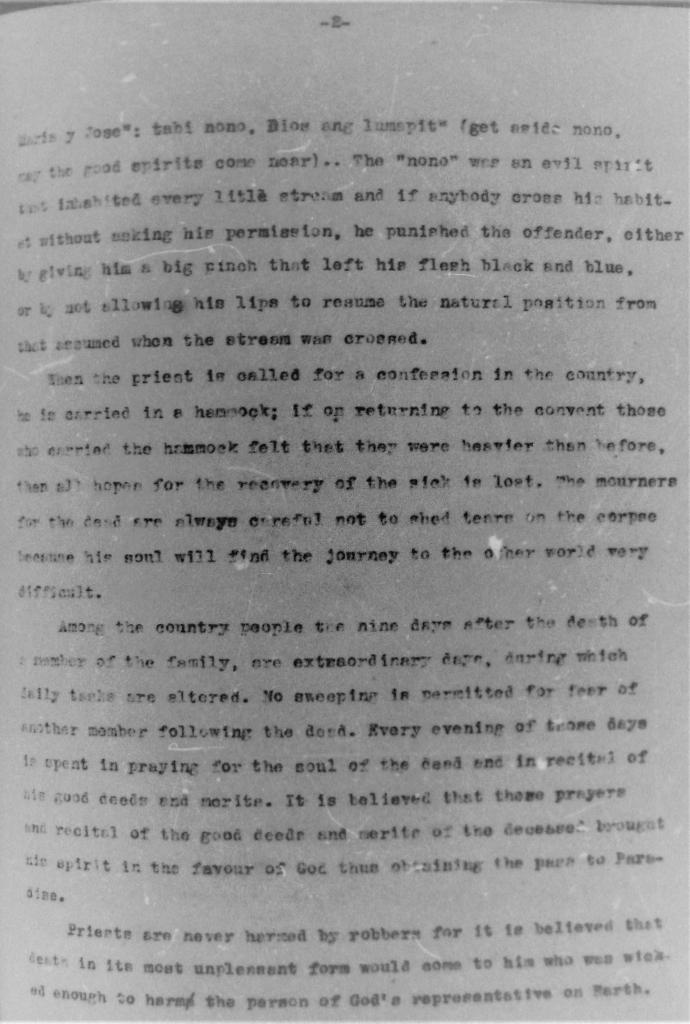
We are lucky to have a paper written by her from 1916 entitled “Primitive Beliefs Regarding Death and the Ceremonies Connected With It In the Island of Marinduque”.
On May 24, 1893, educator and civic leader Pilar Hidalgo-Lim was born in Boac, Marinduque. Recognized as one of the leaders of the women’s movement before World War II, she also served as one of the founders of the Girl Scouts of the philippines (GSP).
At a young age, she exhibited exceptional excellence when she graduated as valedictorian in 1910 at Manila High School. She completed her Bachelor of Arts in 1913 at the University of the Philippines (UP), where she was recognized as the first woman to graduate with honors. He taught mathematics at UP and at Centro Escolar University (CEU). She was also active in the women’s movement in the Philippines, where she served as President of the National Federation of Women’s Clubs of the philippines (1931-1941). Under her leadership women earned their right to vote. Like his better half, General Vicente Lim—who would later become a war hero, he supported the scouting movement by helping to establish the GSP.
Hidalgo-Lim was in the United States with his children when World War II broke out in the Philippines in 1941. He helped the war by selling war bonds and by actively participating in Red Cross campaigns. After the war, he continued his civic duties and was appointed by President Sergio Osmeña as a member of the Relief and Rehabilitation Commission. He was also part of the Board of Censors for Motion Pictures (now the Move and Television Review and Classification Board) and the Parole Board. As President of the GSP (1957-1963), he led several of its global gatherings, similar to the 1957 Regional Centenary World Camp, and the 1961 Asian Trainers Conference. He also served as President of the CEU from 1963 until he died of cancer on December 10, 1973.
In 1982, in recognition of his achievements, the National Syrian Historical Society (now the National Historical Commission of the Philippines) placed a memorial in the hometown of Pilar Hidalgo-Lim in Boac, Marinduque. The former Indiana Street in Manila and a CEU building in Malolos are also named after him. Troop Achievement Award presented by GSP was also followed in his honour. Meanwhile, the Philippine Military Academy continues the tradition of Mrs. Lim started way back in 1967, where General Lim’s descendants award graduating cadets second lieutenant, along with a letter reminding them to live honorably like the late general.