Who can recognize the young boy holding the mask in this 1965 S&S Manila article?


The History of Marinduque from Ulong Beach

Who can recognize the young boy holding the mask in this 1965 S&S Manila article?
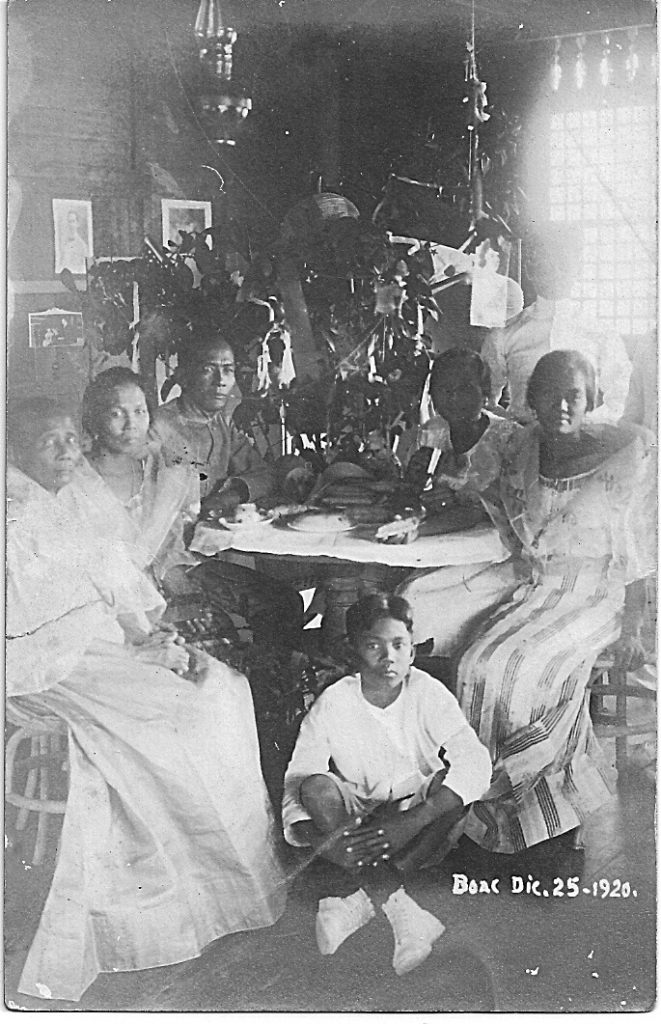
On the back there is a note:
Alaala ko ito sa aking ka patid. Maria de Leano, Boac Marinduque. It is addressed to: Mr. Martin Mogol, Boac, Marinduque, Barrio of Paras y Maria de Losantos. (During Xmas Times)
There are no other notes so not sure what family is actually pictured on the postcard.
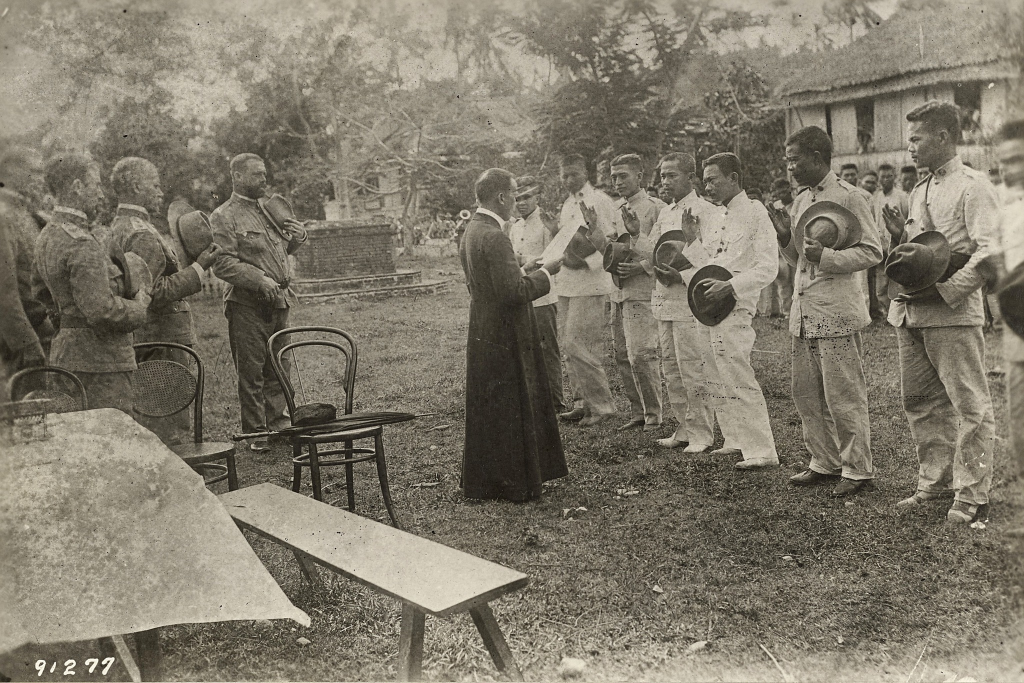
We will start the new year off with a newly discovered picture of the Maximo Abad surrender from the U.S. Archives. It provides us with a very clear face of Maximo Abad.
It is labeled: The priest of Boac, Marinduque, P.I. giving the oath of allegiance to Maxio Abad and some of his officers surrendering at Boac, May 1901
Officers U.S.A. – Left to right 1. Probably 1st Lt. Campbell King, 1st infantry 2. Captain H.H. Bandholtz, 2nd Inf. 3. Major Fred Smith, 1st Inf. Comdg. 4. Captain H.H. Benham, 2nd Inf.
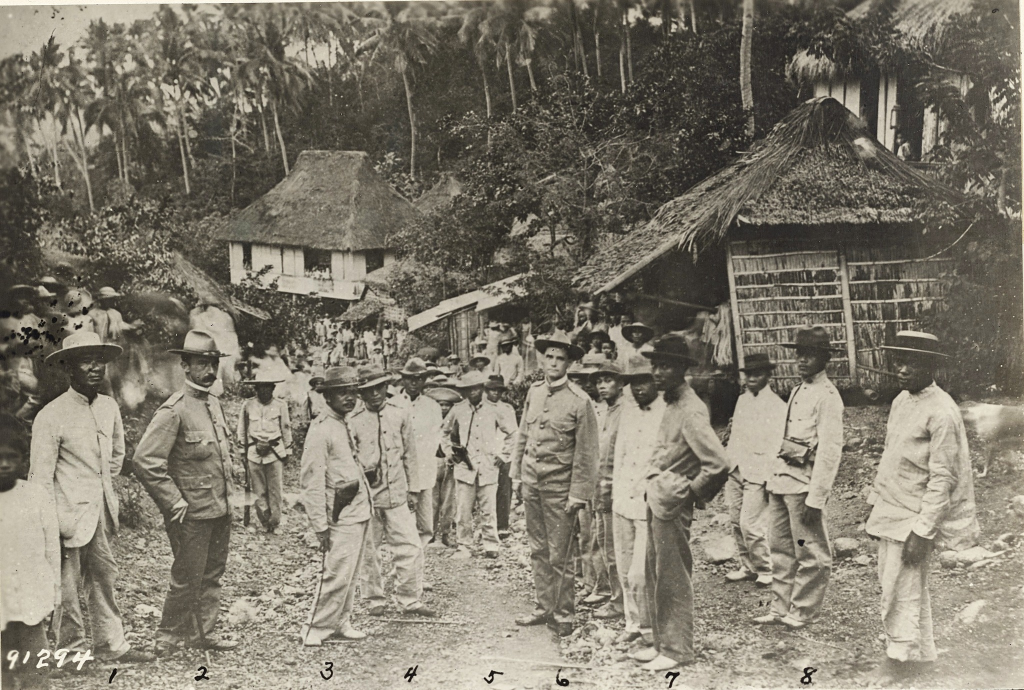
The next photo is labeled differently from the Archives then what I have in my collection. My photo is labeled: Abad on route to surrender Camantique , Bandholtz, Abad, Roque, Matajacon, King, Castaneda, Bugarin The archives photo is labeled: Picture taken at time of Surrender of Lt. Col. Maximo Abad and party at Boac, Marinduque, P.I. May 1901, Left to Right (there is no #1) 2. Capt. H.H. Bandholtz, 2nd Infantry 3. Maximo Abad, commander of Insurrectos on Marinduqe, P.I. 4. Capt. Roque his assistant 5. Lt. Simon –(not legible) insurrecto 6. Lt. Campbell King, 1st Infantry 7. Abad’s Adj. Exactly where this photo was taken in Boac is up to speculation.
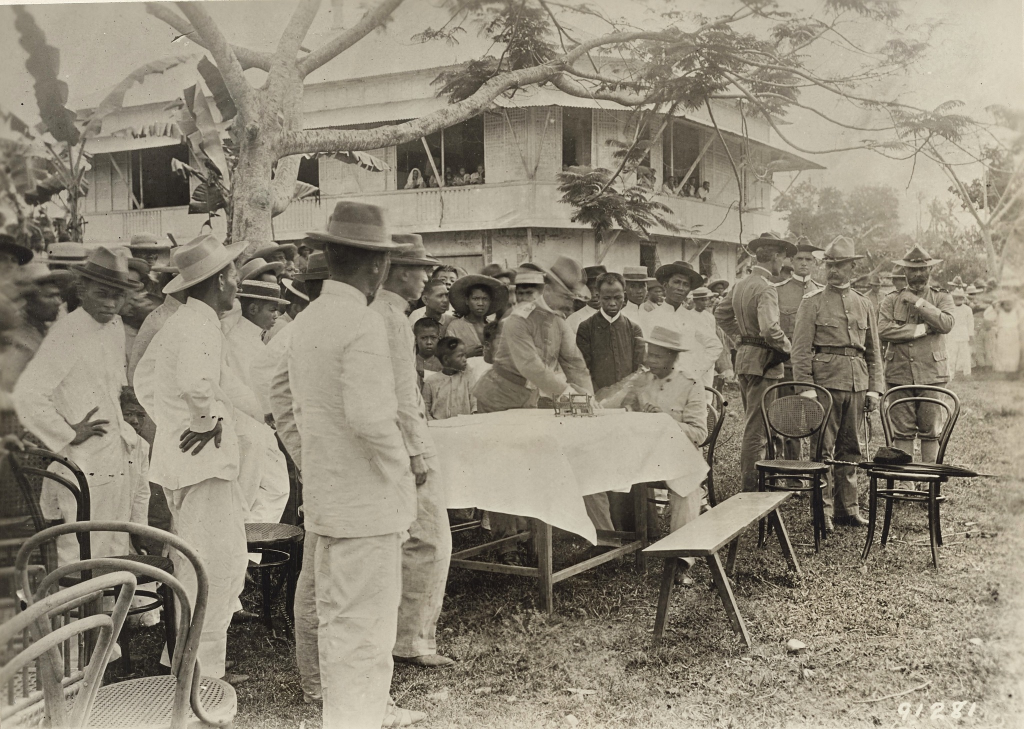
The next photo is labeled by the archives as: Maximo Abad, Insurrecto Leader, Boac, Marinduque, P.I. and officers taking oath of allegiance in Boac, Marinduque, P.I. May 1901 1. Captain H.H. Bandholtz 2. Unknown 3. 1st Lt. Campbell King, 1st Inf. 4. Major Fred Smith, 1st Inf. 5. Dr. Renn, acting Asst. Surgeon The building in the background is the present-day site of Bodettes Gift Shop. The actual signing took place in the present-day plaza. I have often wondered why no historical marker has been placed here since it marks a pivotal place in time for Marinduque.
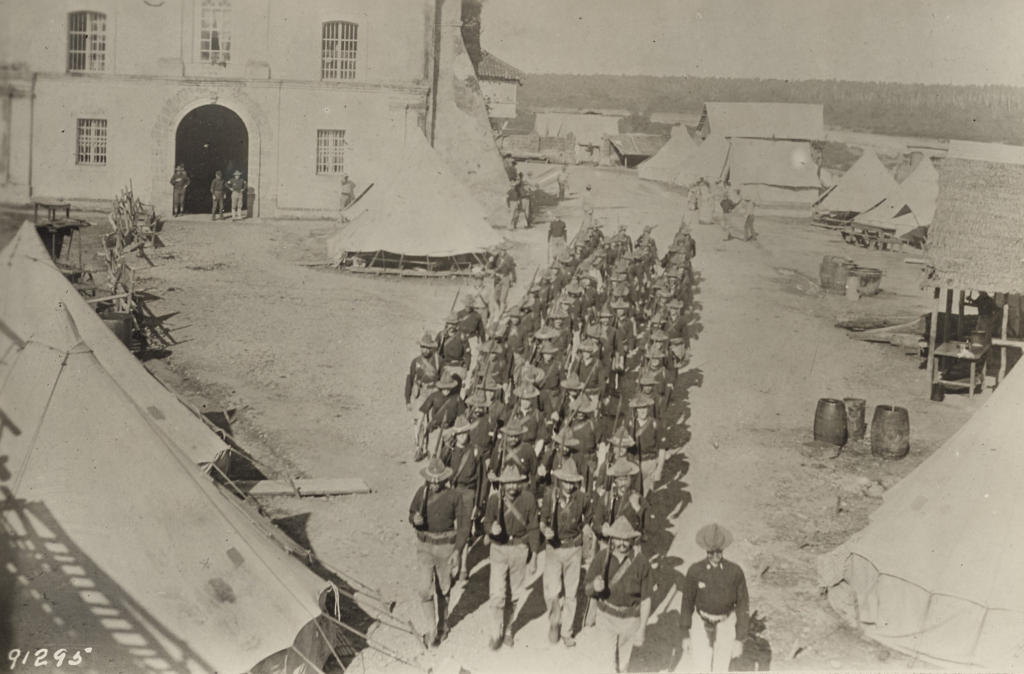
1st Lt. J.L. Hines, 2nd Infantry leaving the old convent at Boac, Marinduque, P.I. (where Hqtrs and 2 companies, 2nd Infantry were quarted) with a detachment 2nd Infantry after insurrectors. Probably February or March 1901.
Great view of the courtyard in front of the Boac church with the tents of the troops.
Lt. Hines would become a very important figure in the U.S. Army. In December 1922, Hines was assigned as Deputy Chief of Staff of the Army, and became Chief of Staff of the United States Army on 14 September 1924. In 1926, after completing his tour as Army Chief of Staff, Hines took command of the IX Corps Area in California, which he led until 1930. In 1930, Hines became commanding general of the Philippine Department. Hines retired in May 1932. He was promoted to the rank of full (4 star) general on the retired list by a Special Act of Congress on 15 June 1940.
Its Sunday so lets look at two old and undated photos of the Boac Church
View of old church at Boac


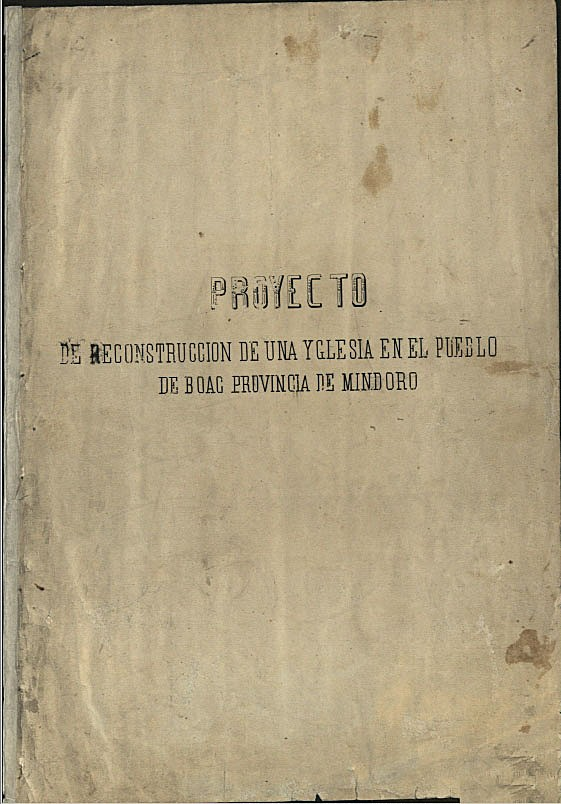
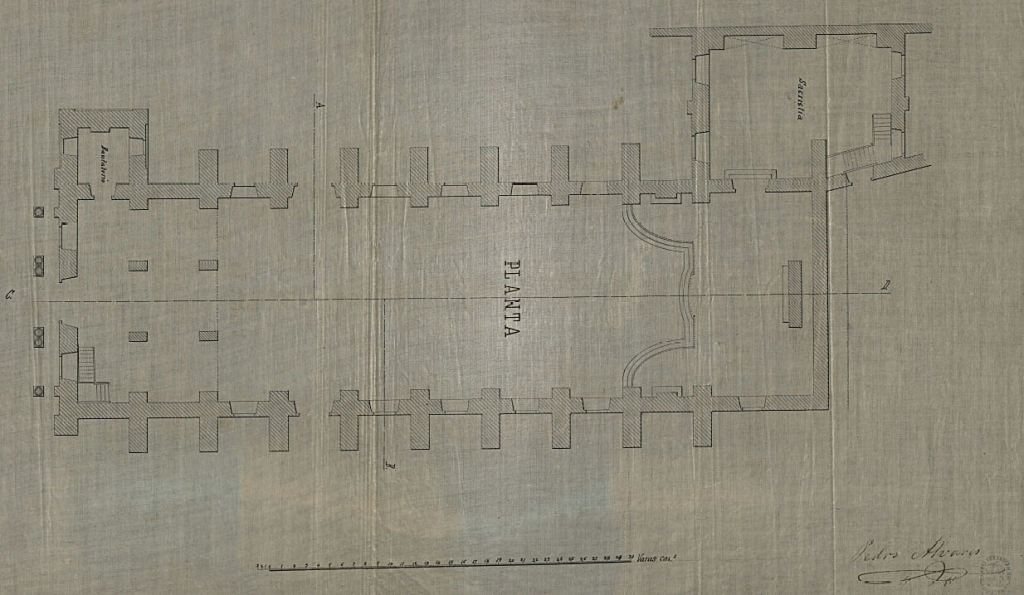
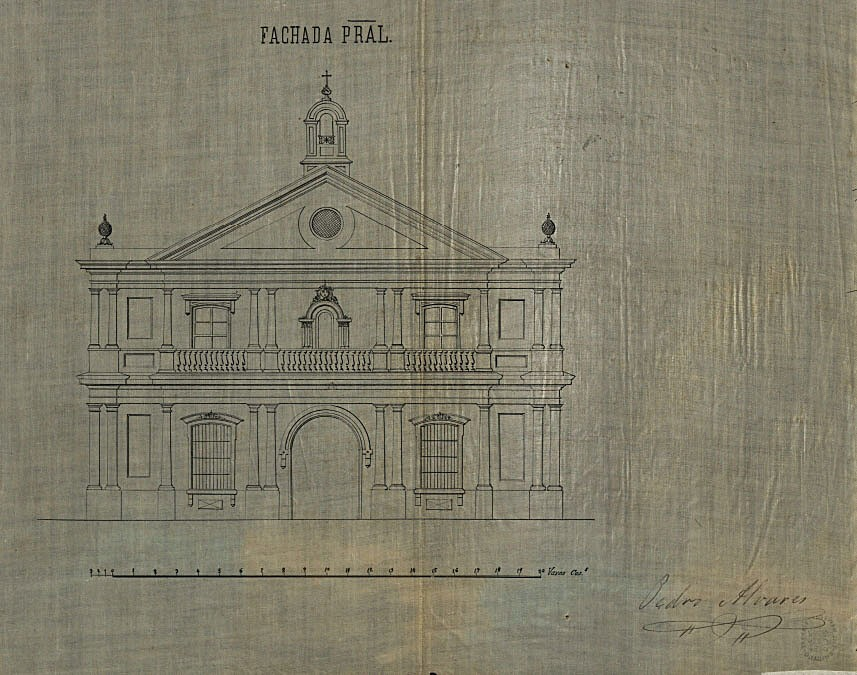
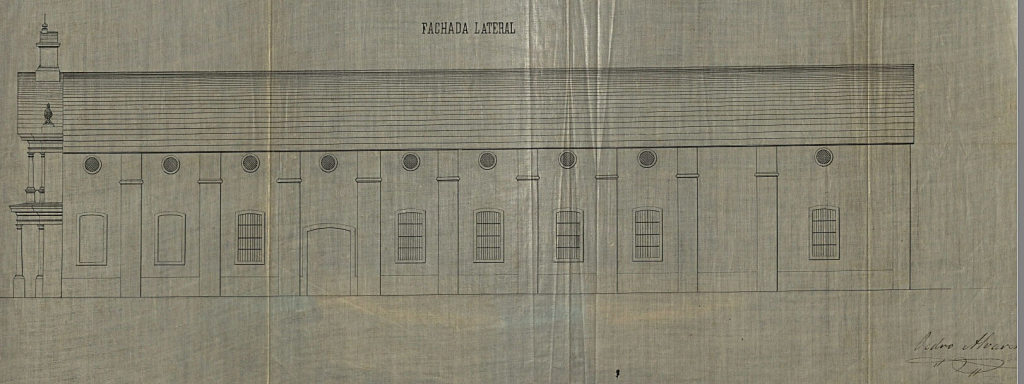
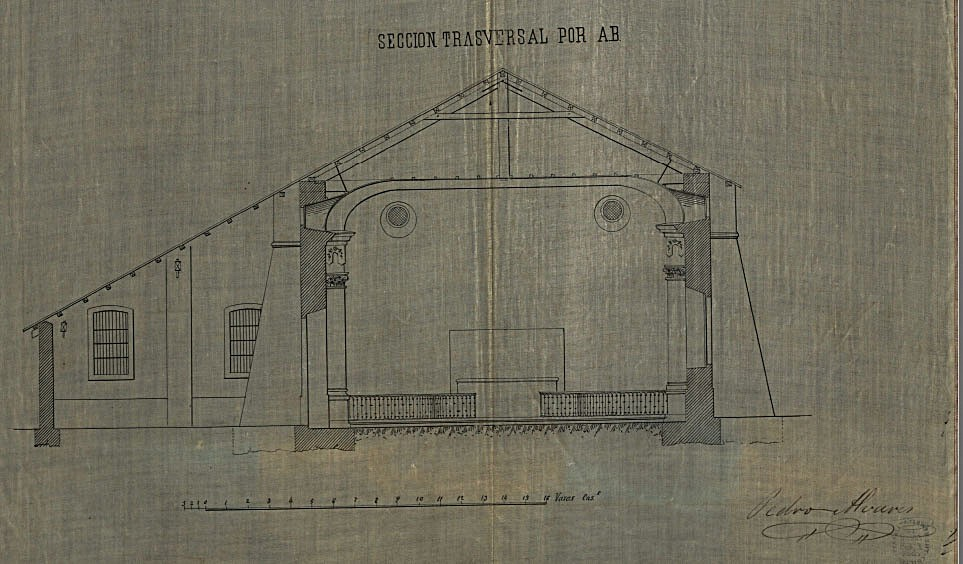
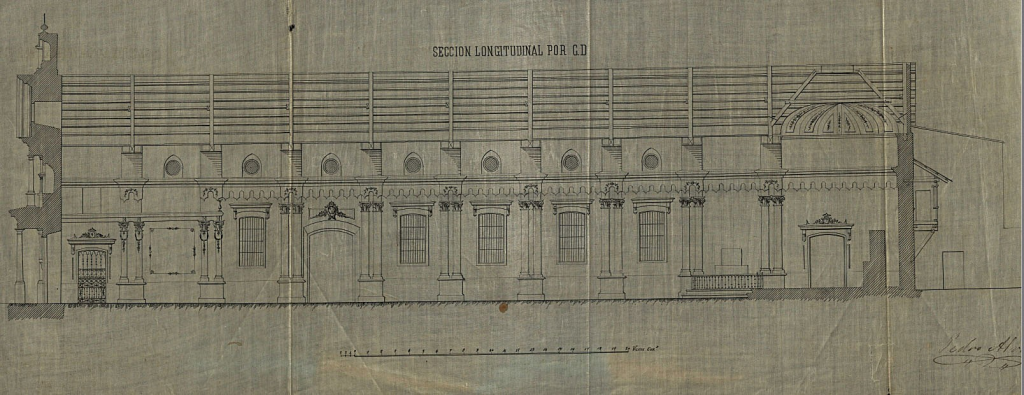
I was able to locate: Proyecto De Reconstrucction De Una Ygelsia En El Pueblo De Boac Provincia De Mindoro (Reconstruction Project of a Church in the Town of Boac, Mindoro Province).
It is a floor plan, front elevation, cross section, and 2 lateral elevations of the Boac church Signed by Pedro Alvares and disbound from paper title page. Pen-and-ink. 5 technical drawings on cloth sheets 310 x 697 mm or smaller. The plans are undated.
The church plan was donated to the Newberry Library collection by Holman G. Purinton. Purinton served in many capacities in the Philippines. Captain in Company C 29th Regiment United States Volunteers (2). Various elements of the 29th USV were stationed in Marinduque during 1900 and 1901 and were known to have quartered In the church in Boac.
As a Captain with the 29th he served as the Superintendent of Carcel de Bilbid, relieving Alcalde M. Benitez. Captain Purinton was also assigned as the Manila City Engineer, Department of Public Works and Water Supply, Military Government of the Philippines.
During the time Purinton was stationed in the Philippines he was also serving as Sir Knight Holman Greene Purinton, Eminent Grand Captain General of the Knights Templar of Illinois, USA.
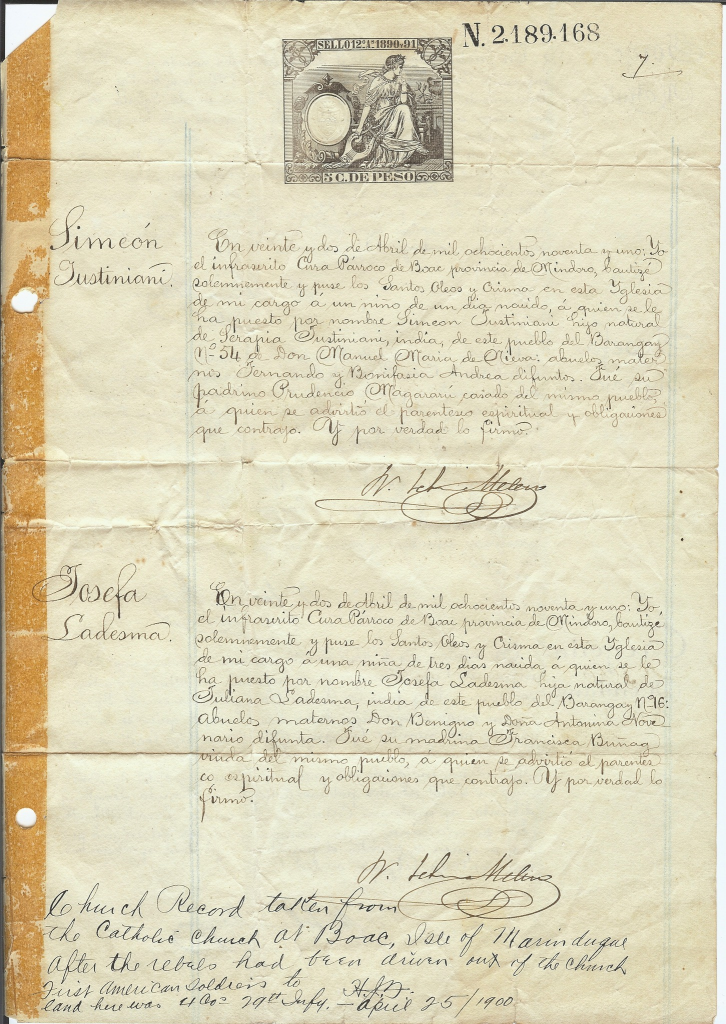
Besides donating the Church plan to the Ayers collection, Purinton also donated a Baptism document from the Boac Church and various letters from Bilbid Prison and the City of Manila. It is not known under what authority (if any) he obtained these documents and removed them from the Philippines.
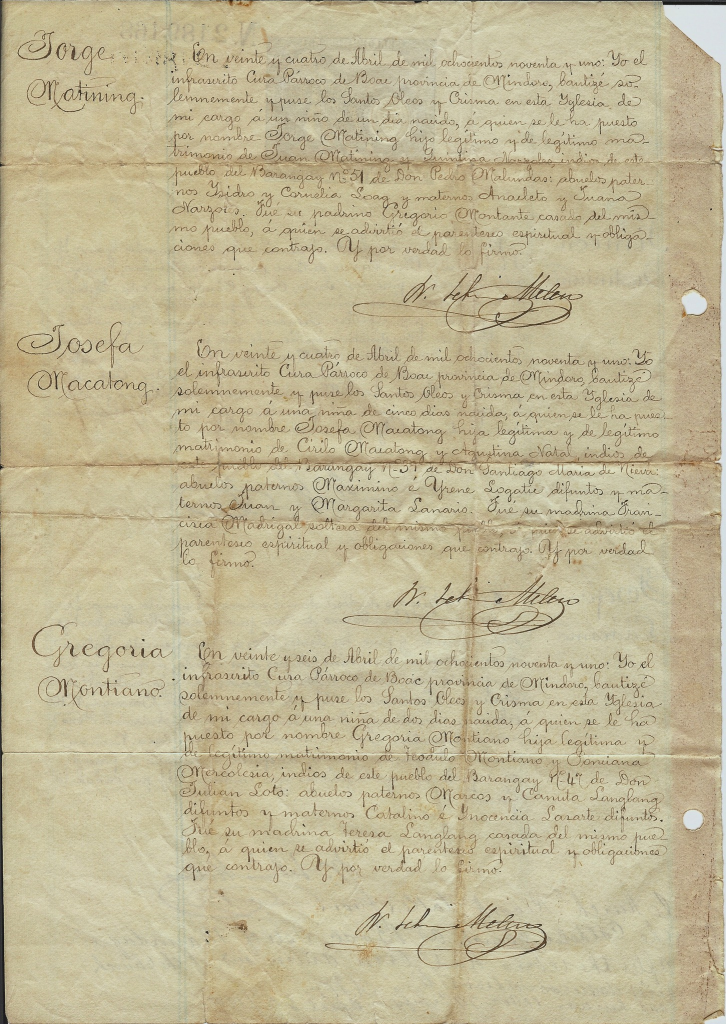
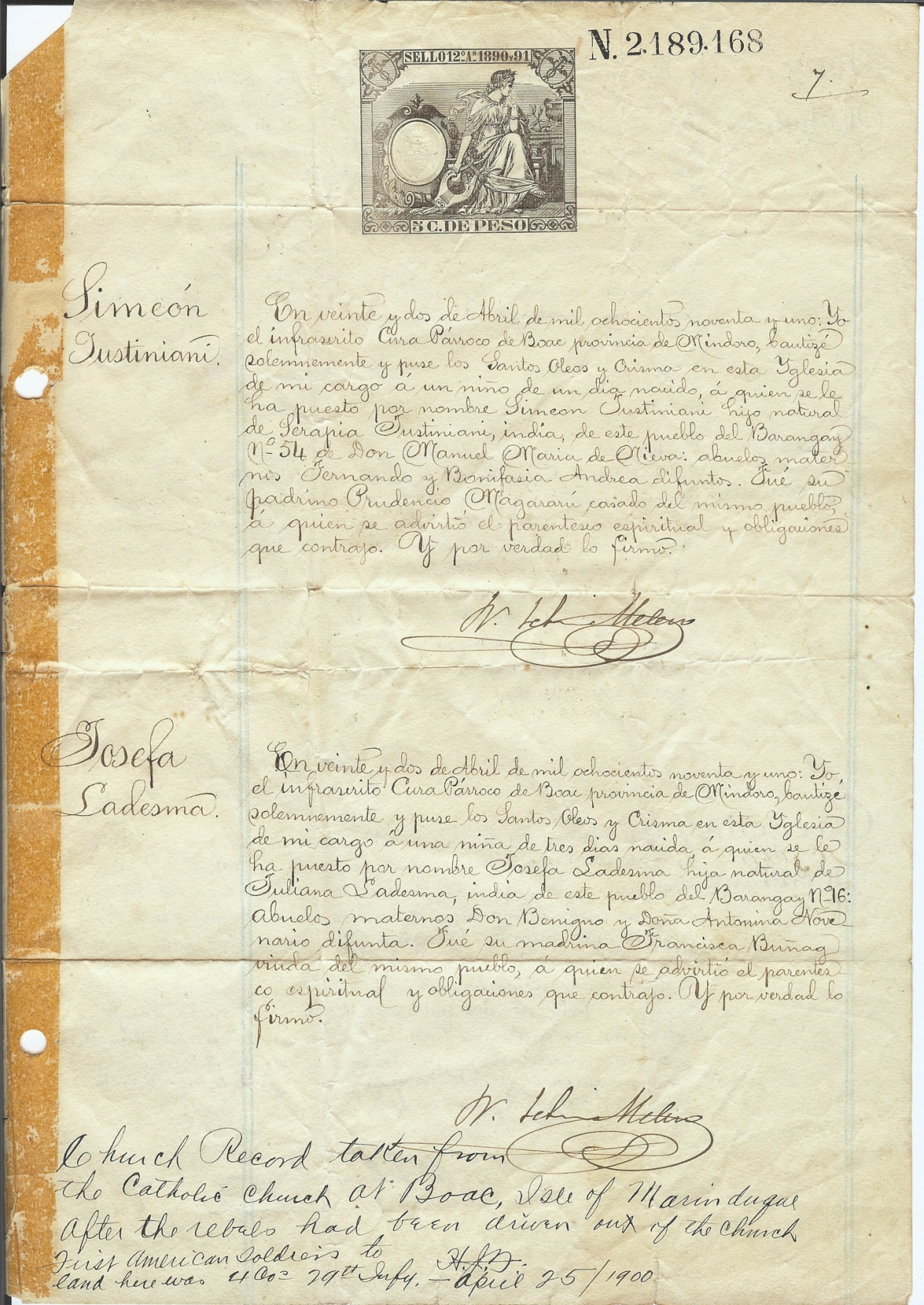
Sometime in April of 1900, Corporal Henry J. Flanagan of H Company, 29th United States Volunteers Infantry removed two pages from the Baptismal records of the Boac Church.
Flanagan was part of the 29th that were the first occupiers of the Church when they came ashore in Marinduque April 25th, 1900.
Flanagan had written on the bottom of one of the pages noting:
Church record taken from the Catholic Church at Boac, Isle of Marinduque after the rebels had been driven out of the church. First American soldiers to land here was H Co. 29th Inf. April 25 1900. He initialed HJF.
The two pages contain 5 baptismal records from 1891. The names on the pages are Simeon Justiniani, Josefa Ladesma, Jorge Matining, Josefa Macatong and Gregoria Montiano.
These two pages remained lost until the early 2000’s when I located them at an auction in the United States. I was able to retrieve them and they were brought back to Marinduque. Upon consultation with the church, it was decided that the best location for them was the National Museum here in Boac, where hopefully they still exist today. At the time they had no way to display them and were put in a drawer.
I was able to isolate from a group picture, Corporal Flanagan himself so we are able to get a glimpse of him. I also located in a U.S. newspaper dated July 19, 1900, a letter published by him which had details about his time in Marinduque. No mention of the records taken by him are mentioned. I would caution in reading his account that there is a defamatory use of words to describe Filipinos and was in common use during that time in the U.S. to describe persons of African heritage.