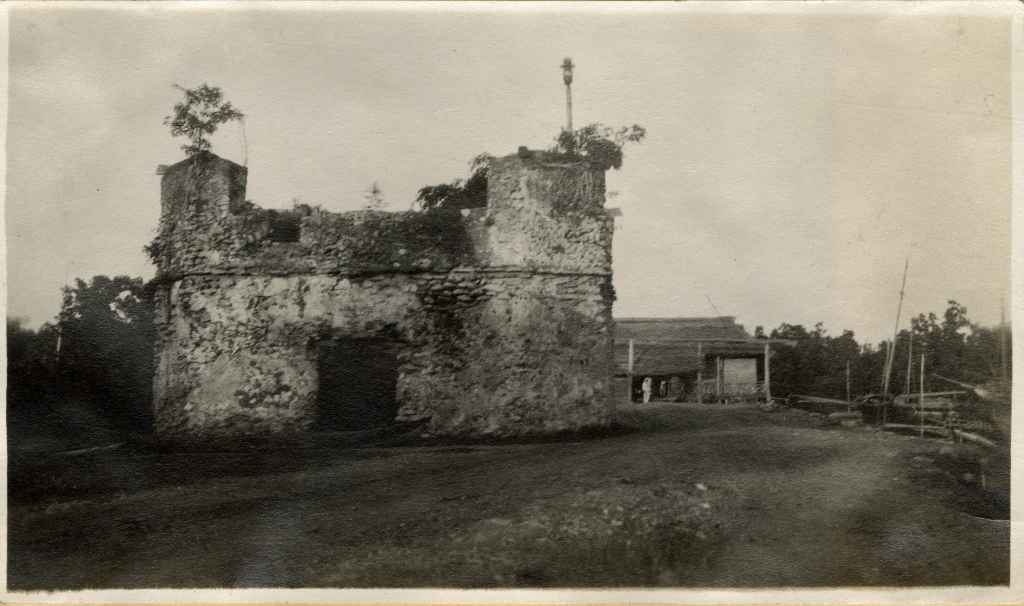
Picture is titled Old Watch Tower at landing point at Sta. Cruz Marinduque Island.
The History of Marinduque from Ulong Beach

Picture is titled Old Watch Tower at landing point at Sta. Cruz Marinduque Island.
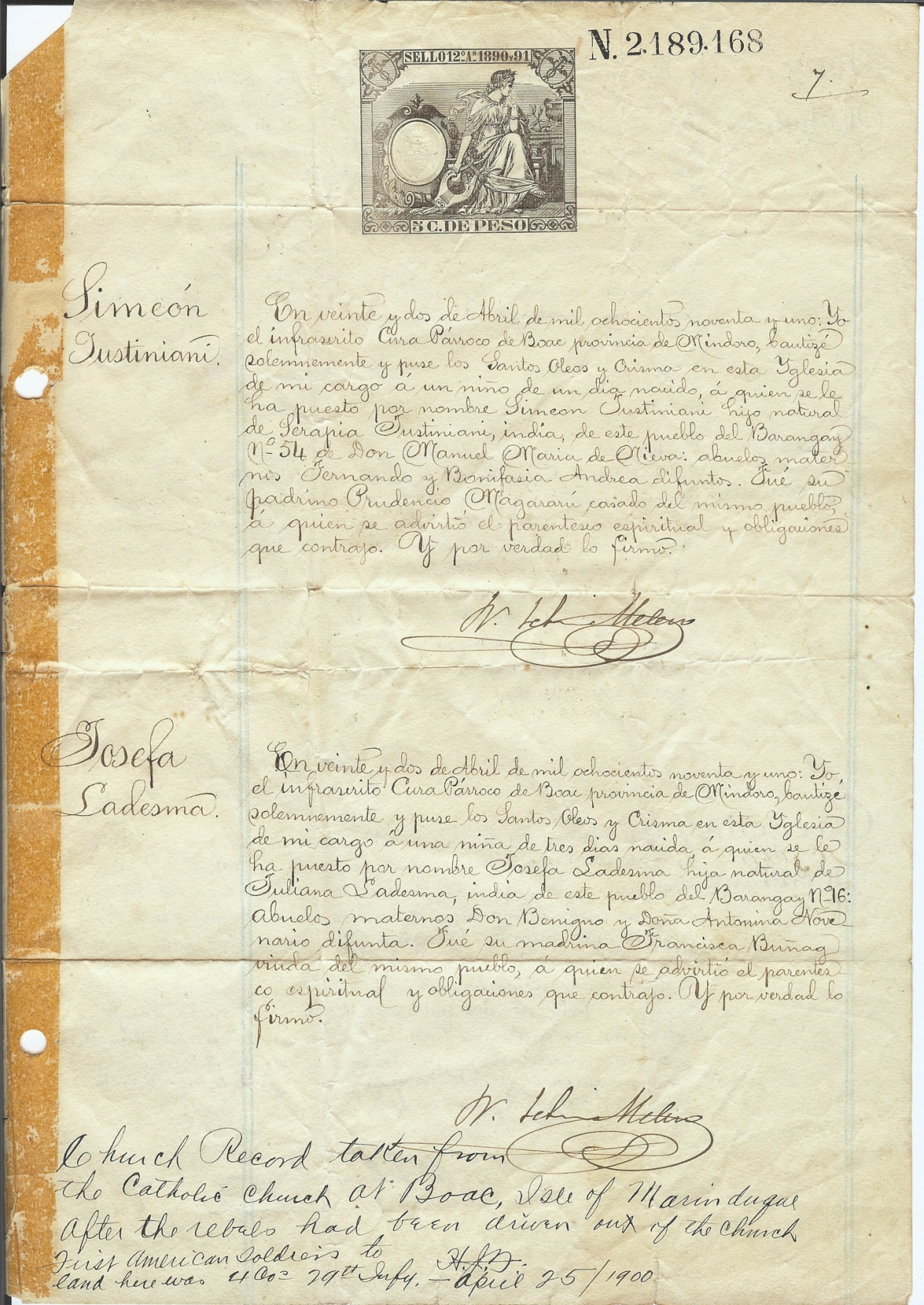
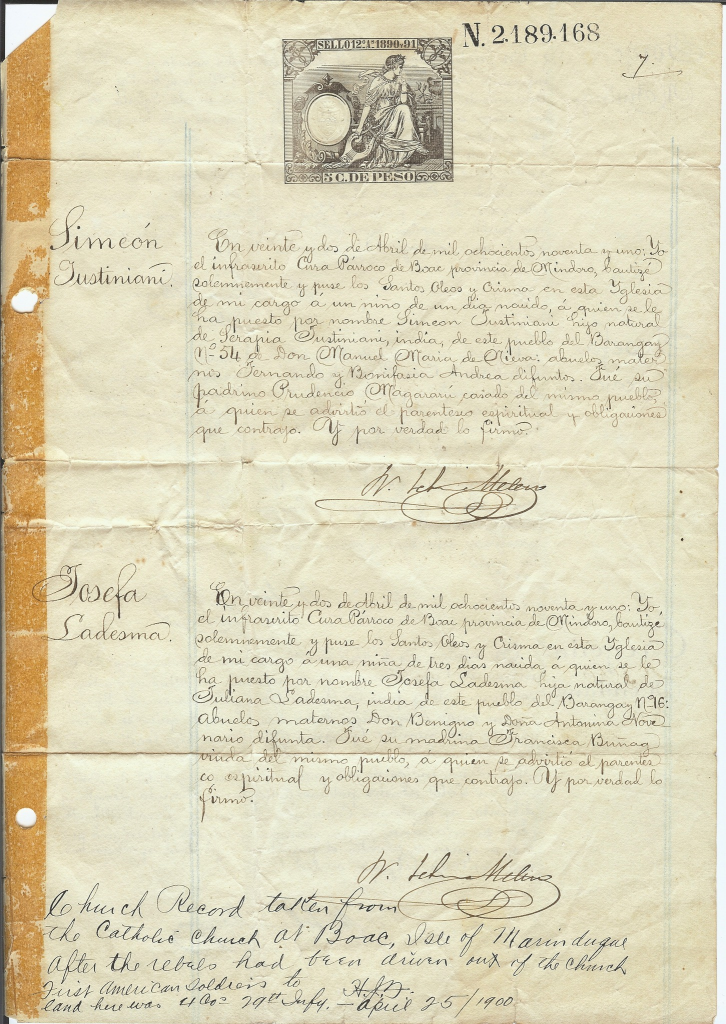
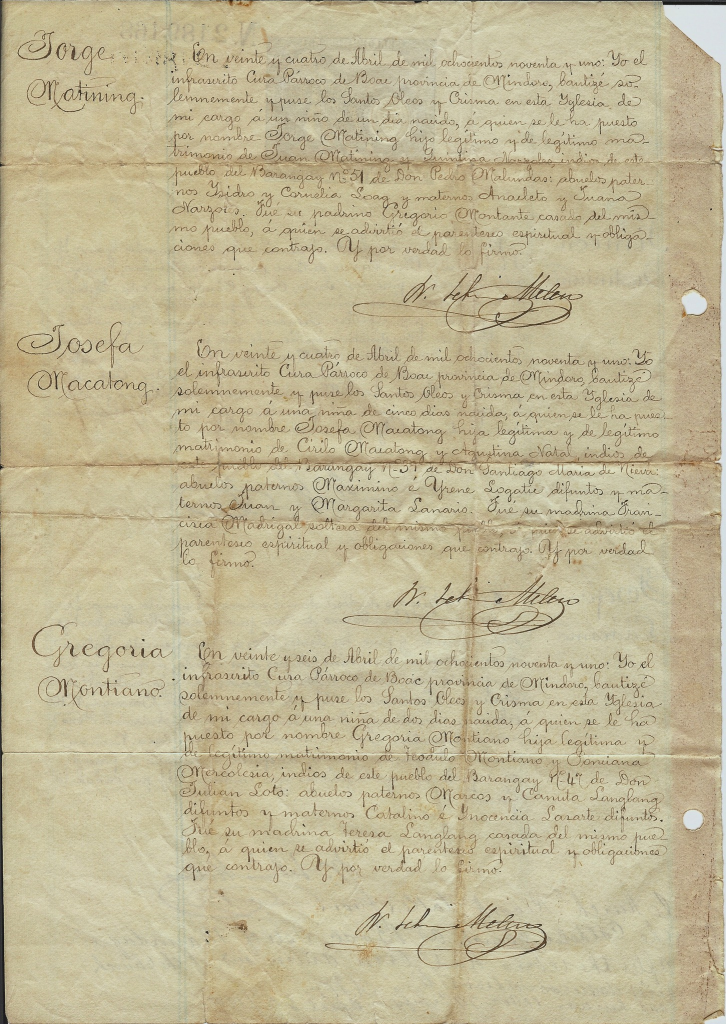
Sometime in April of 1900, Corporal Henry J. Flanagan of H Company, 29th United States Volunteers Infantry removed two pages from the Baptismal records of the Boac Church.
Flanagan was part of the 29th that were the first occupiers of the Church when they came ashore in Marinduque April 25th, 1900.
Flanagan had written on the bottom of one of the pages noting:
Church record taken from the Catholic Church at Boac, Isle of Marinduque after the rebels had been driven out of the church. First American soldiers to land here was H Co. 29th Inf. April 25 1900. He initialed HJF.
The two pages contain 5 baptismal records from 1891. The names on the pages are Simeon Justiniani, Josefa Ladesma, Jorge Matining, Josefa Macatong and Gregoria Montiano.
These two pages remained lost until the early 2000’s when I located them at an auction in the United States. I was able to retrieve them and they were brought back to Marinduque. Upon consultation with the church, it was decided that the best location for them was the National Museum here in Boac, where hopefully they still exist today. At the time they had no way to display them and were put in a drawer.
I was able to isolate from a group picture, Corporal Flanagan himself so we are able to get a glimpse of him. I also located in a U.S. newspaper dated July 19, 1900, a letter published by him which had details about his time in Marinduque. No mention of the records taken by him are mentioned. I would caution in reading his account that there is a defamatory use of words to describe Filipinos and was in common use during that time in the U.S. to describe persons of African heritage.


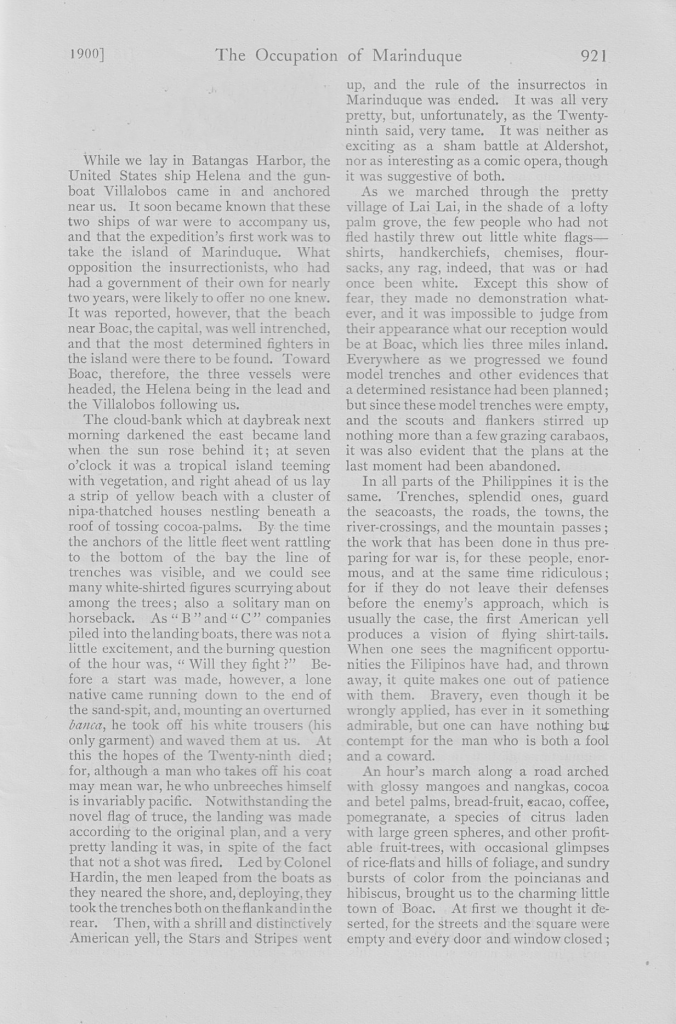
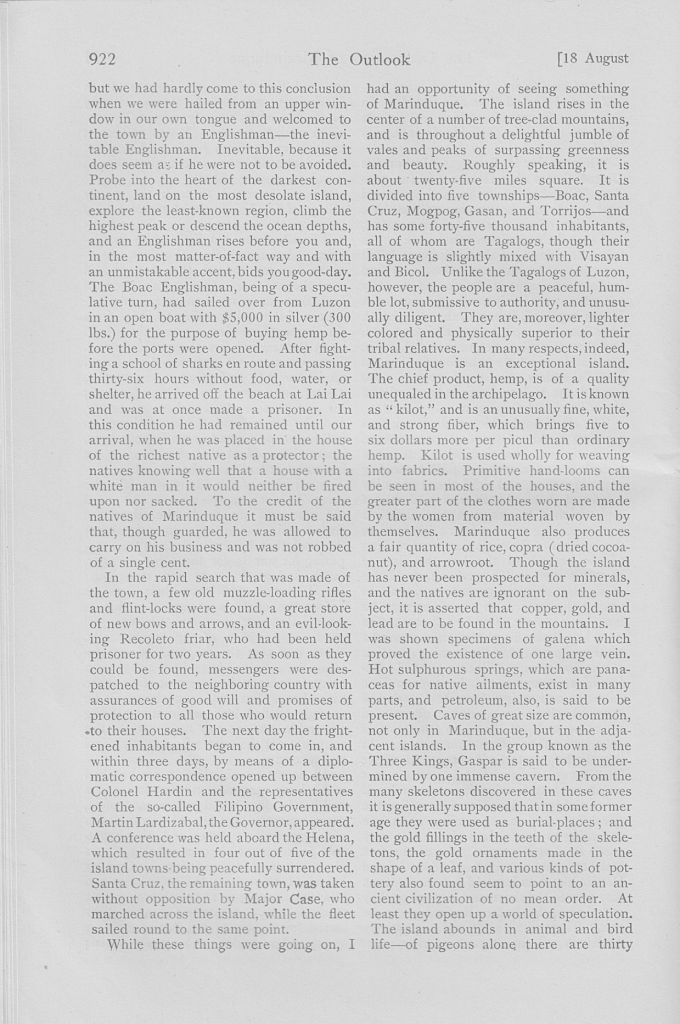
Today we present an article from the 18 August, 1900 edition of Outlook magazine, a U.S. publication. The article is called “The Occupation of Marinduque” by Phelps Whitmarsh.
Whitmarsh is Canadian-born journalist and author (1863-1935), living in Australia and USA before moving to the Philippines in 1899. He wrote his first book at age 21, The “World’s Rough Hand” in which he described his experiences as a sailor and miner in Australia. He was the author of many books during his life including The Golden Talisman which is an early science fiction piece.
He was hired as a Special Commissioner for the Outlook Magazine and wrote many articles about his adventures in the Philippines.
He was appointed as the first civil governor of Benguet province by Gov. General Howard Taft in early 1900.
He starts his article while aboard the ships containing the first U.S. soldiers to land in Marinduque. He describes landing in Lai Lai (Laylay) Researchers take note of this spelling when conducting searches.
In Whitmarsh’s description of Marinduque he mentions meeting an Englishman who was being held captive. I believe this would have been Mr. R. D. Mackey.
He also describes the church in Boac in some detail and describes sleeping on the floor in front of the altar with a “famous black Christ to my left”. What ever happened to this black Nazarene? Did the soldiers loot it? Was it taken by someone for safekeeping?
He writes about his adventure in tasting Tuba for the first time.

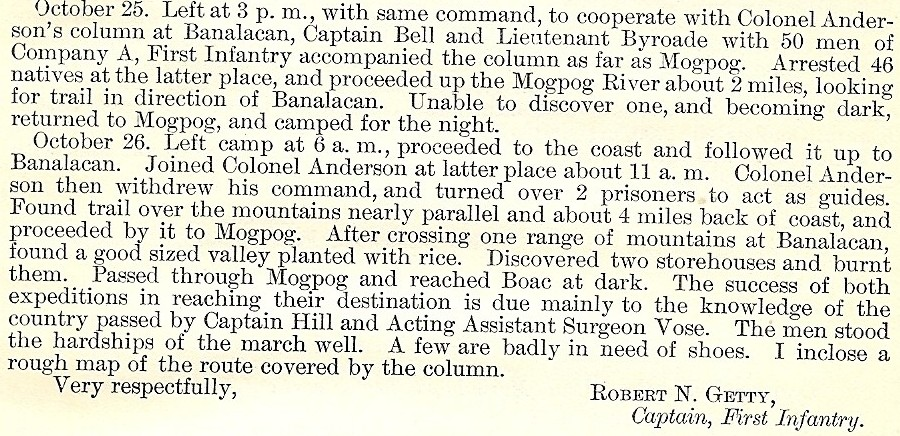
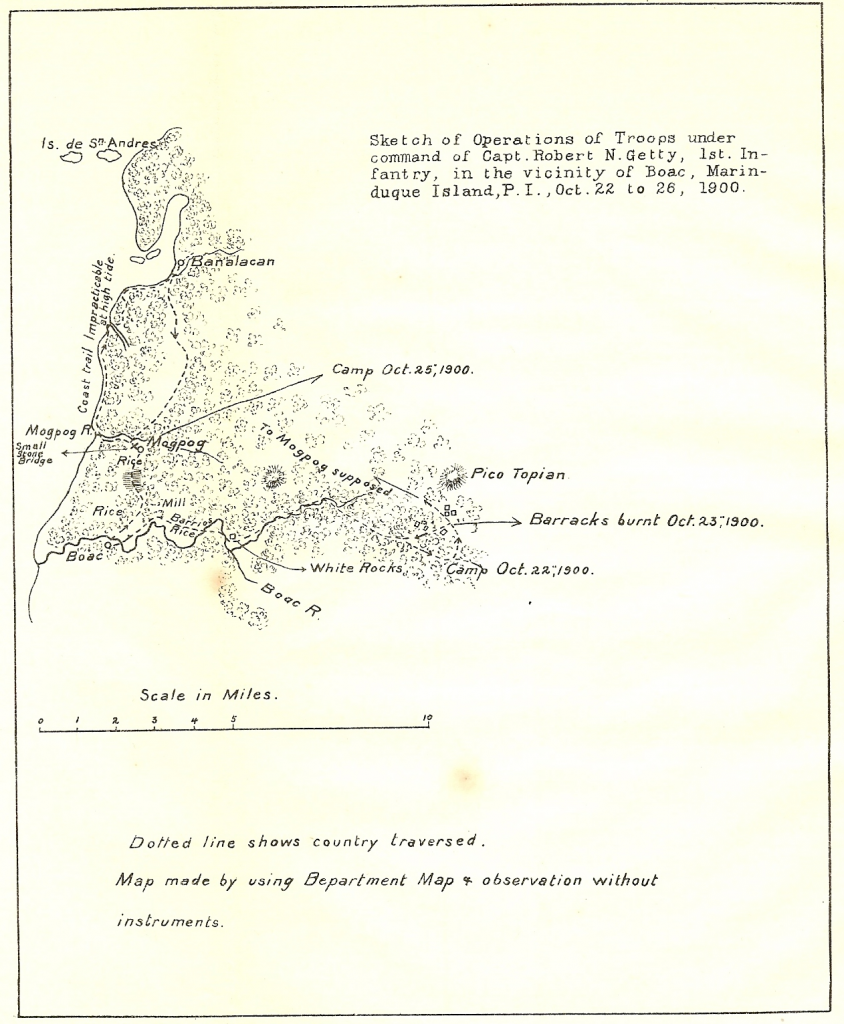
Back in 1900, the road to Balanacan as we know it today, did not exist. The U.S. Army marched along the coastline from Mogpog town to get there. This is shown on a map drawn by Captain Robert Getty and mentioned in his report. His trip back to Mogpog seems to describe the road from Balanacan to Mendez, Pili, Banto and then back to Mogpog town proper.