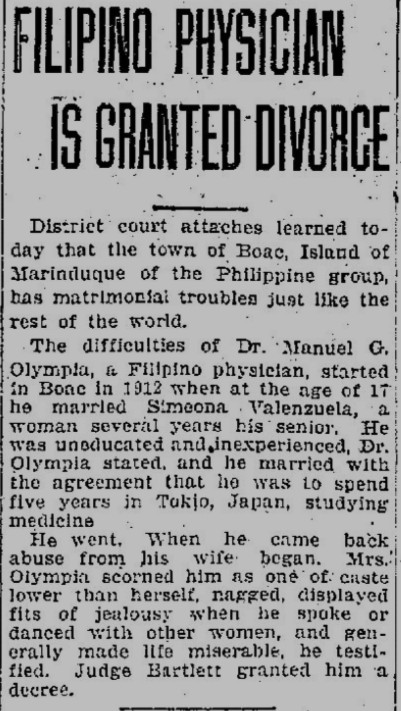
From the Nevada State Journal, January 18, 1924 (US Newspaper)
The History of Marinduque from Ulong Beach

From the Nevada State Journal, January 18, 1924 (US Newspaper)
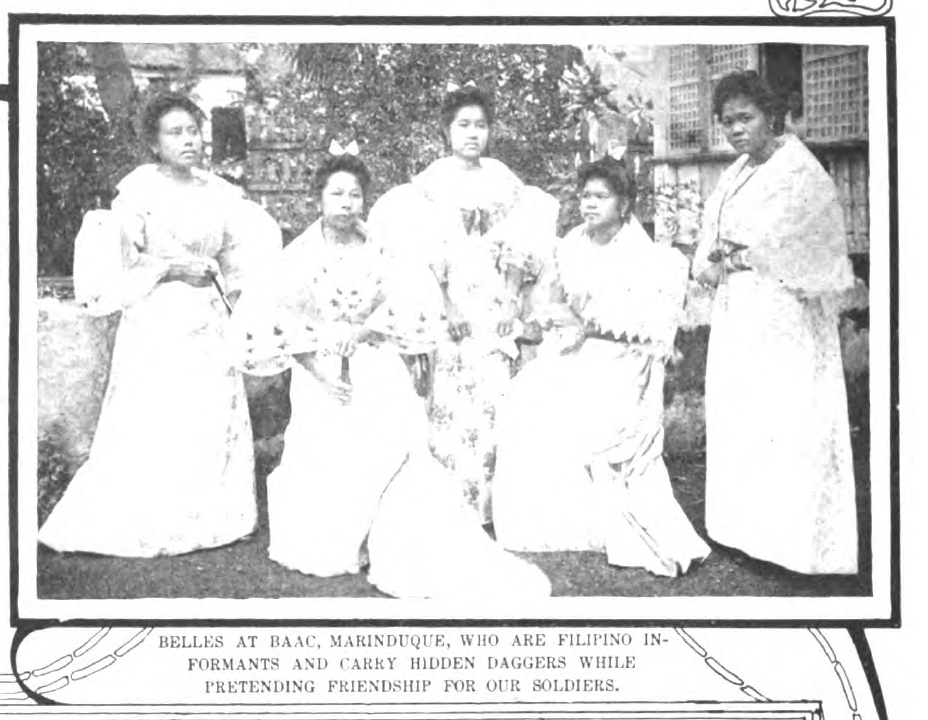
rom a U.S. Magazine, Leslie’s Weekly, July 1902 edition. Entitled Striking Glimpses of Filipiino land. Scenes of peculiar human interest in our far Eastern islands. Photo by R.J. Cleven Second Infantry Manila.
Trying to establish dates and information on the history of the Marinduque light stations and light houses. Below is what I have found from written sources. Please feel free to add to the list.
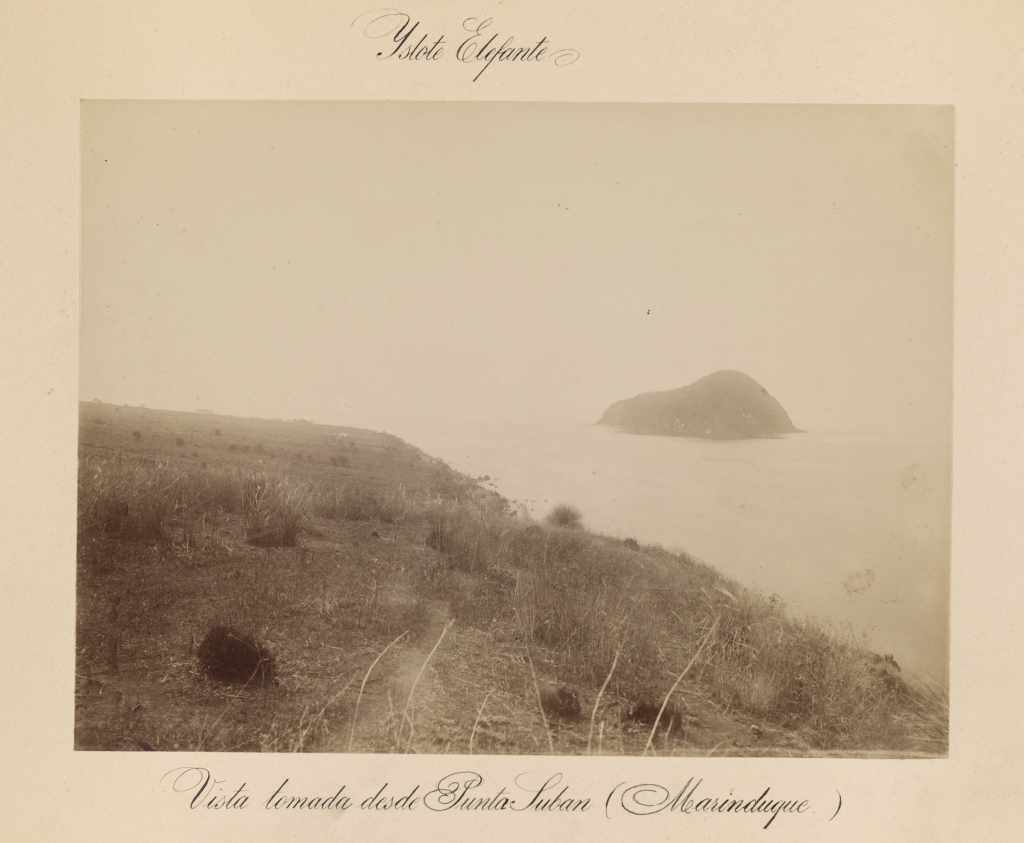
The earliest mention of a light house is contained in a book Presented to Major Charles McClure, Paymaster, U.S.A. The Lighthouses of the Philippines, by Manuel de Iriarte. Manila, April 17, 1899. Vista tomada desde Punta Suban (Marinduque). There is a lone picture of Elephant Island taken from the shore of Buena Vista. If there is a light house or light station it cannot be seen due to the poor quality of the picture. This is one of the earliest known photos to be taken in Marinduque.
Report of the Philippine Commision, List of Lights of the Philippine Islands April 1 1903 lists a light station in Boac which is displayed on a pole near the quartermaster house marking the entrance to harbor.
Lights and Tides of the World compiled by H.D. Jenkins, London England 1904 Lists a fixed red light on the west side of the island on point Datinuanua listed for the year 1903. Is Datinuanua an old name of somewhere here in Marinduque or is the place mis-spelled.
Notice to Mariners 1911 Hydrographic Office under the authority of the Secretary of the Navy states that the Laylay river light was moved and reestablished on a concrete pillar 32 feet back from its former position. See picture Puerto de Boac.
The Government of the Philippine Islands, Executive Bureau, Executive Order No.95 November 9, 1914 reserved 138 sq mtrs of land for the construction of a light house in Laylay.
Vol 6 No.2 July 1917, Quarterly bulletin bureau of public works states the lighthouse in Santa Cruz was repaired and a standard concrete beacon for acetylene light was constructed at Balancan(Balanacan)
List of Lights Vol II July 25 1920 hydrographic Office Secretary of the Navy lists a light in Santa Cruz Harbor, West side.
U.S. Coast and Geodetic Survey Notice to Mariners 1931, states in Marinduque, Tres Reyes isands Baltazar Island light to be established a flashing white light displayed from a 50 foot cylindrical tower.
A newspaper article from January 24, 1934 stated that Chief of Coast and Geodetic Survey prepares program of Lighthouse building in Marinduque, Three Kings Island, in the Baltasar group, 30 feet steel tower is now under construction.
Proclamation No. 314, August 24, 1938 by President of the Philippines reserved for lighthouse purposes a parcel of the public domain (120 sq mtrs) situated in the Barrio of Balanacan, Municipality of Mogpog, Province of Marinduque.
Republic Act No 1144, June 17, 1954 Appropriated funds for lighthouse stations of the republic of the Philippines. Baltazar Island, Marinduque was granted 1,000.00 pesos for repair of existing keeper’s dwelling.

The history of mining in Marinduque goes back a long way. Here is a 1937 newspaper clipping that shows there was an increase in activity.

Lucio Villaster was a former municipal president of Mogpog before WWII..His ancestral house located at now Quezon St, Villa Mendez Mogpog though was destroyed by a typhoon years ago was built on 1937. His a great great grandfather of one the Philippines topnotch educator
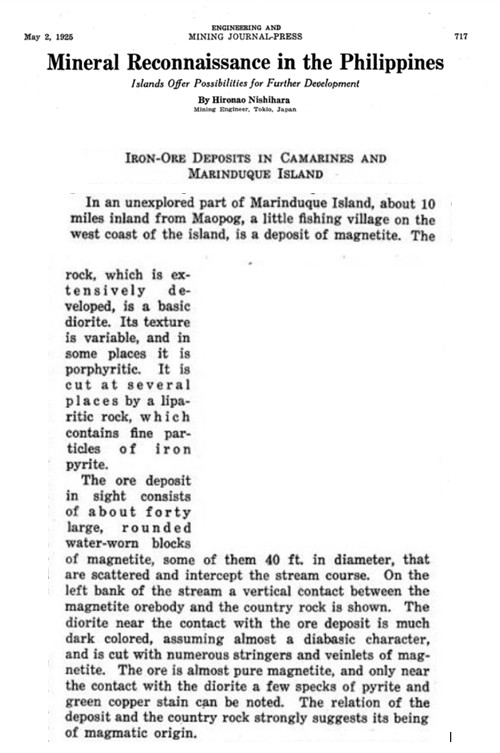
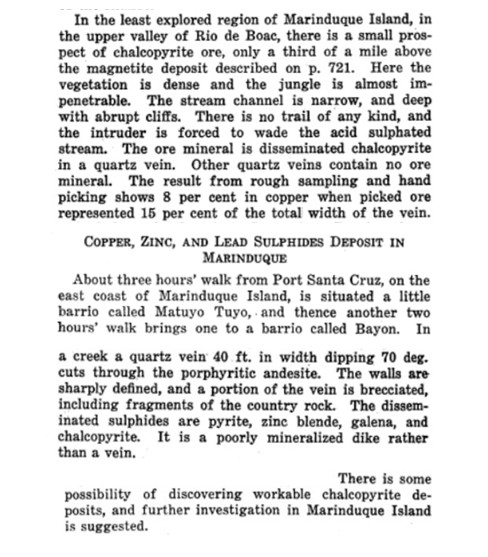
Today we have a report from a Japanese Mining Engineer dated May 1925. He discusses what he located in Marinduque. I’m hoping Joven Lilles will help out here to tell us where in modern days these sites are.
Joven Lilles – Actually the first description of a remarkable iron ore deposit of magnetite is what is now the Taluntunan Puting Buhangin Mogpog iron ore body, it was developed and mined on the later years before WWII by Gold star Mining Co. of Filipino Spanish industrialist family of Jesus Cabarrus and was named as Marinduque Iron Mines Inc of which it had its port operations facility at Bacud Balanacan Mogpog where it’s ruined facility is still accessible today. Some of the mine tunnels at Taluntunan Iron Mines can still be observed. Actually before WWII my mom on her teens together with other girls used to tell us that they go to the Taluntunan Mine Site to see the first movies available in the island Our great grand parents from Malabana side have a large track of land adjacent to the mine near Patay-Sahingan creek that is why they had the privileged of access to the mines complex. Even then the father of former Mayor of Sta Cruz Willy Red used to have a store near by the mine in our land parcel as was told by my grandmother. On the outbreak of WWII, a Japanese geologist named Takahashi was a friend of the then mining company nurse, Lola Efipania “Paning” Ma.Coll Labao, a UP nurse graduate, was gifted by the Jap geologist a ” Brunton compass” for a token of friendship for he knew his life will end cause Filipino guerillas have later taken him as captive and was executed. The Brunton Compass is still belongs to one of the grandkids of Lola Paning.
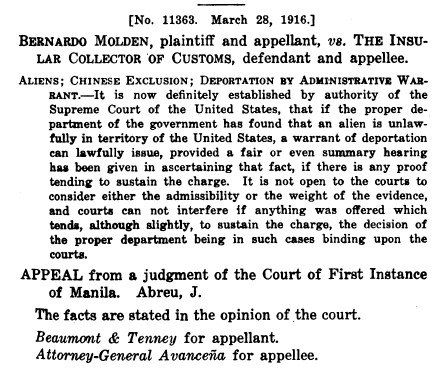
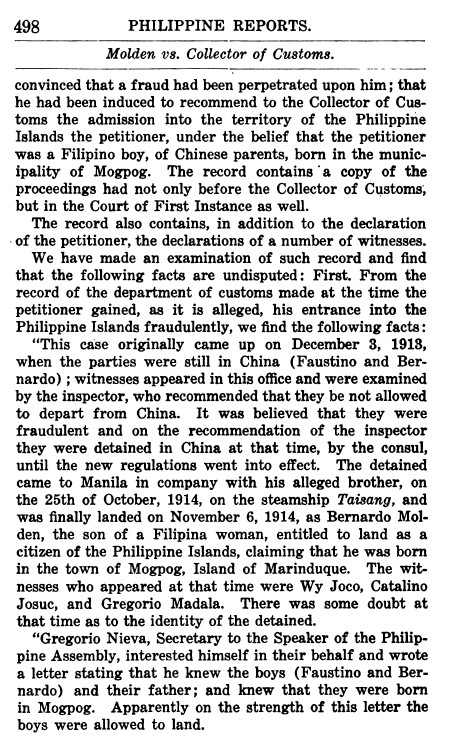
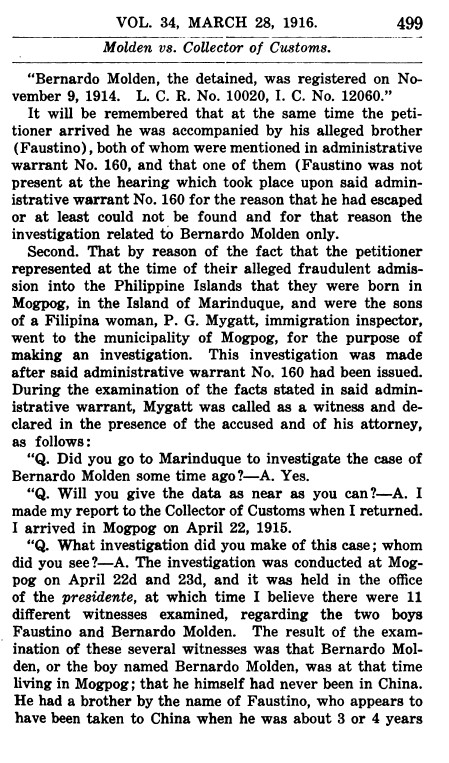
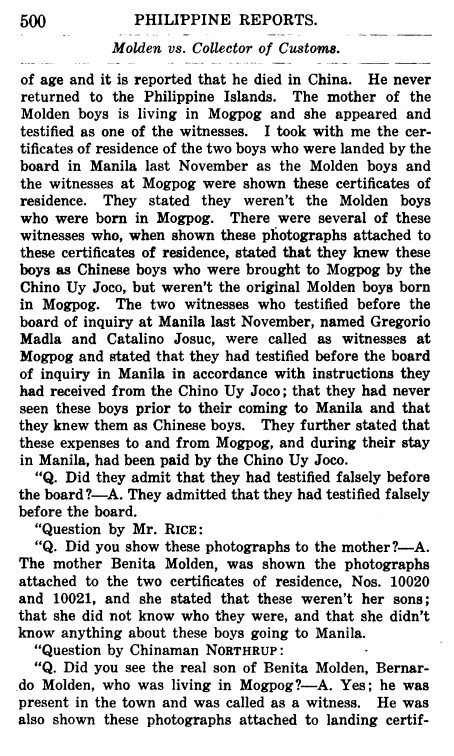
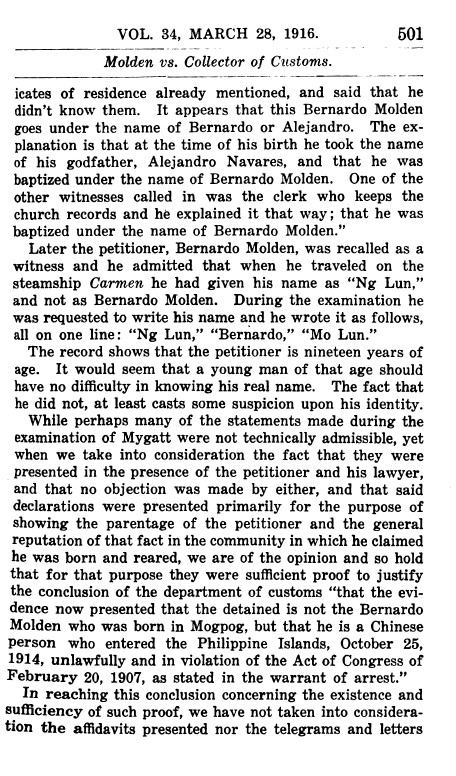
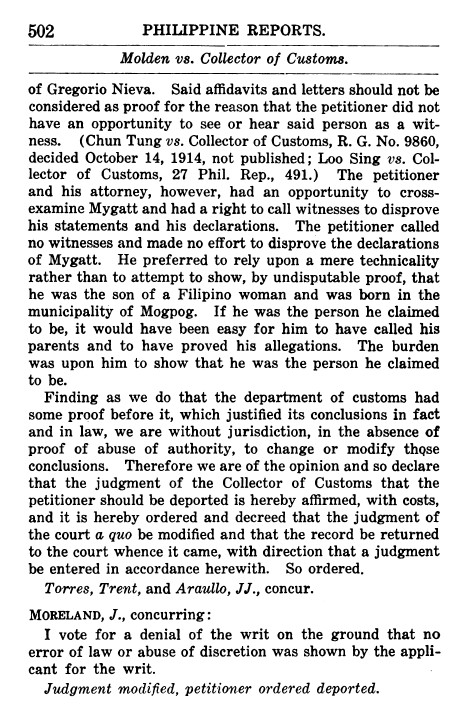
With all the news of Chinese immigration fraud this past year, did you know that in 1916 the Supreme Court of the Philippines heard an appeals case involving a Chinese man claiming to be a person named Bernardo Molden born in Mogpog. Witness’ in Mogpog denied that this man was actually Molden. This is a long legal brief and the appeals case involves a jurisdictional issue so if you are only interested in the details of the interviews and conclusion skip to the third paragraph on the page labeled 498 and start there.
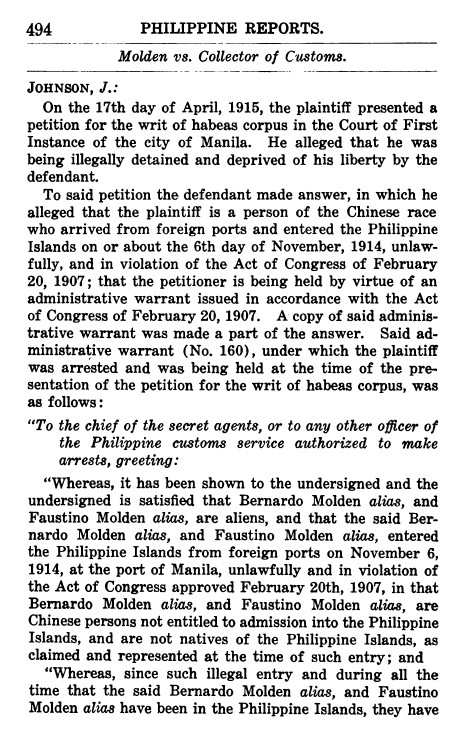
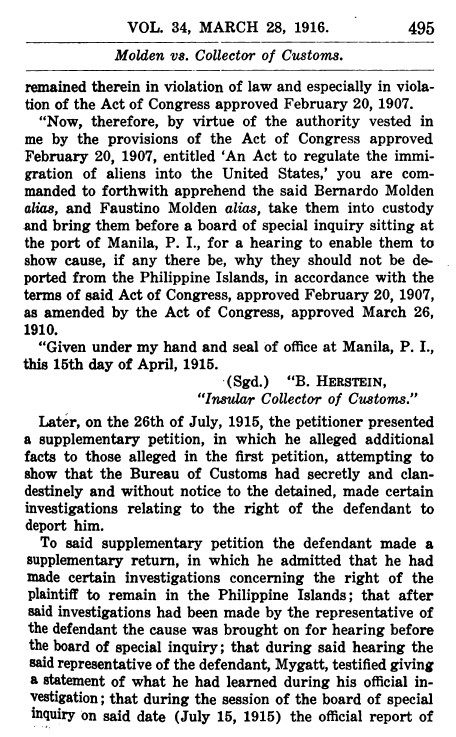
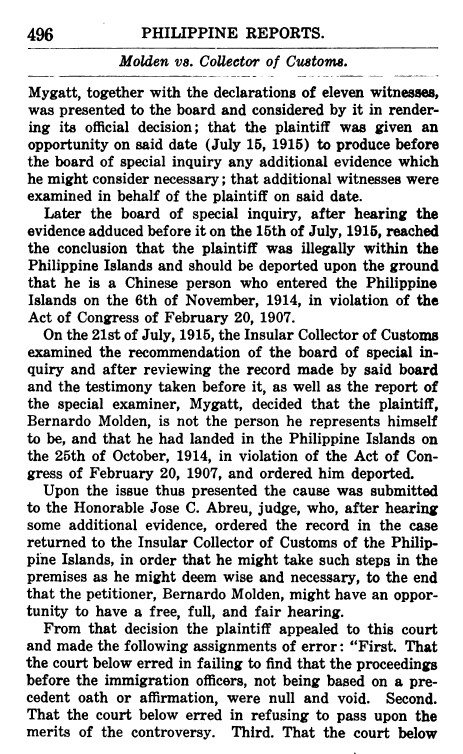
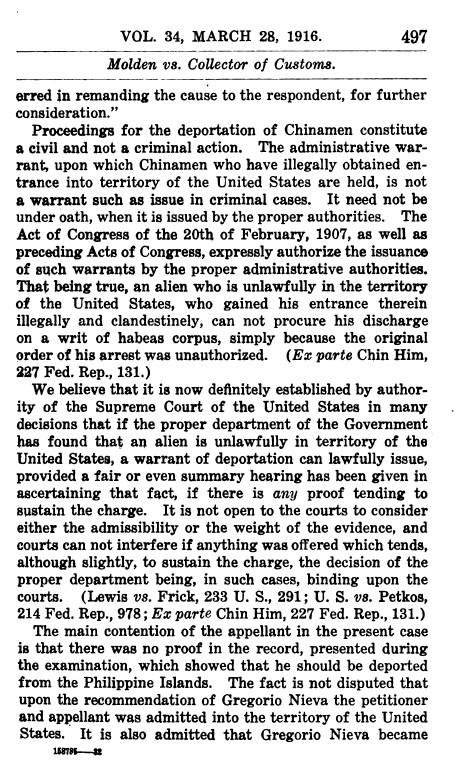
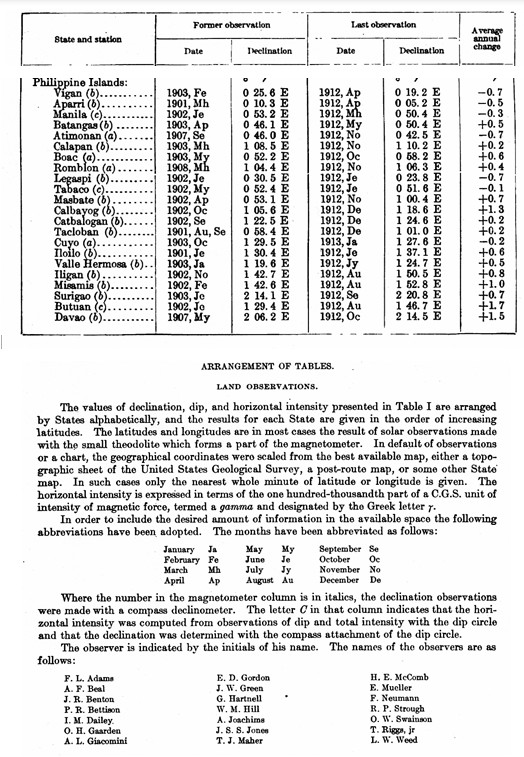
Who among you can locate this concrete marker which was home to the Laylay Magnetic Station? If it still exists, the clues to finding it are in the description below.


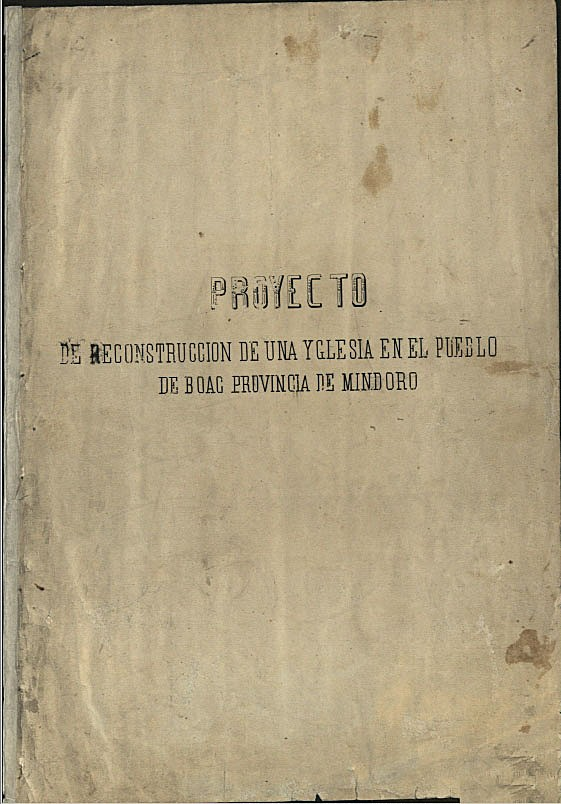
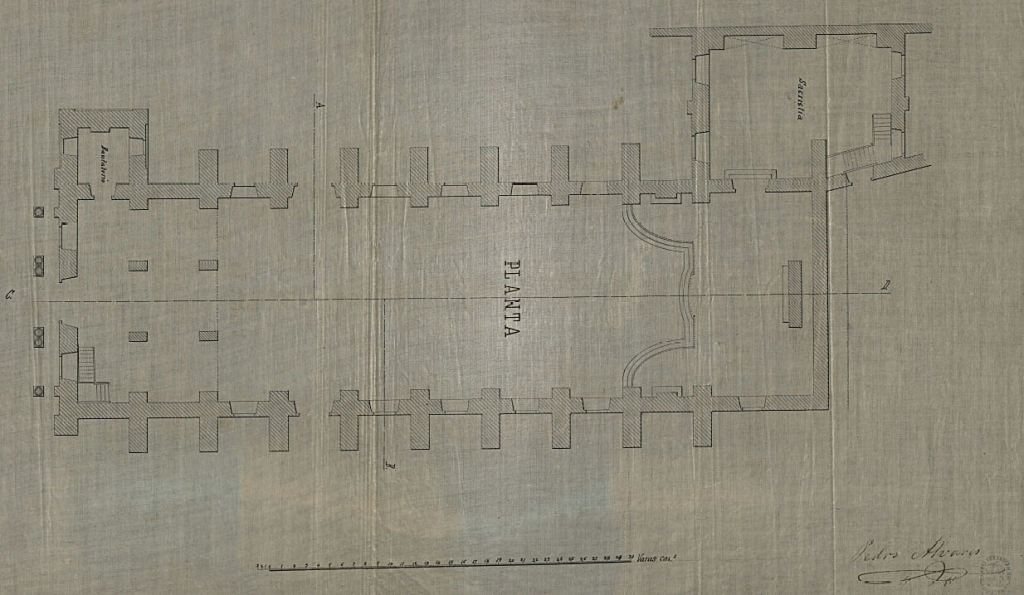
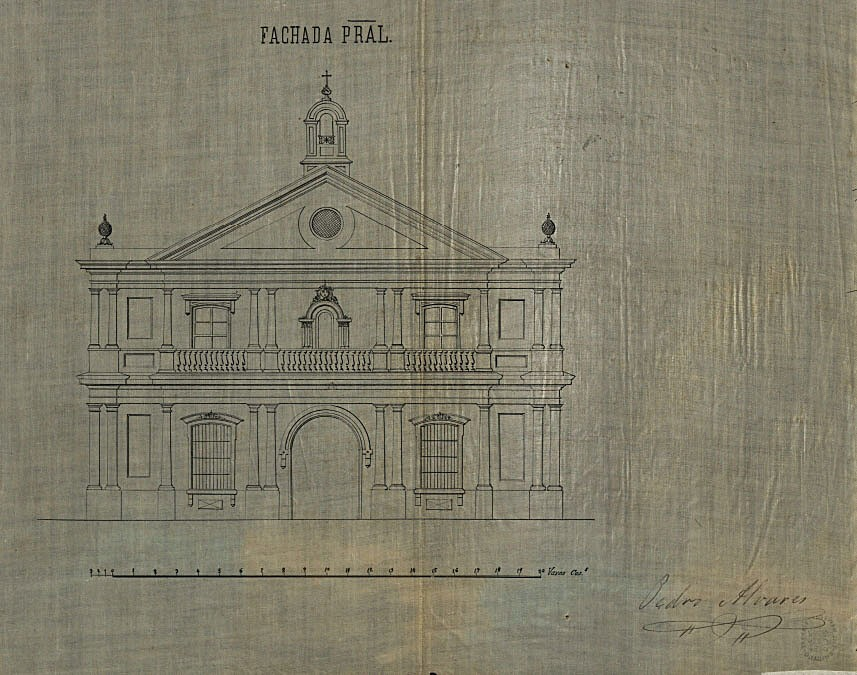
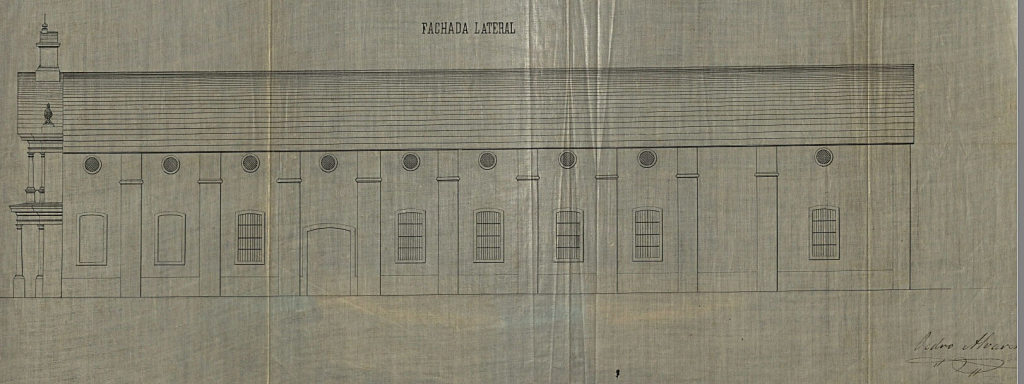
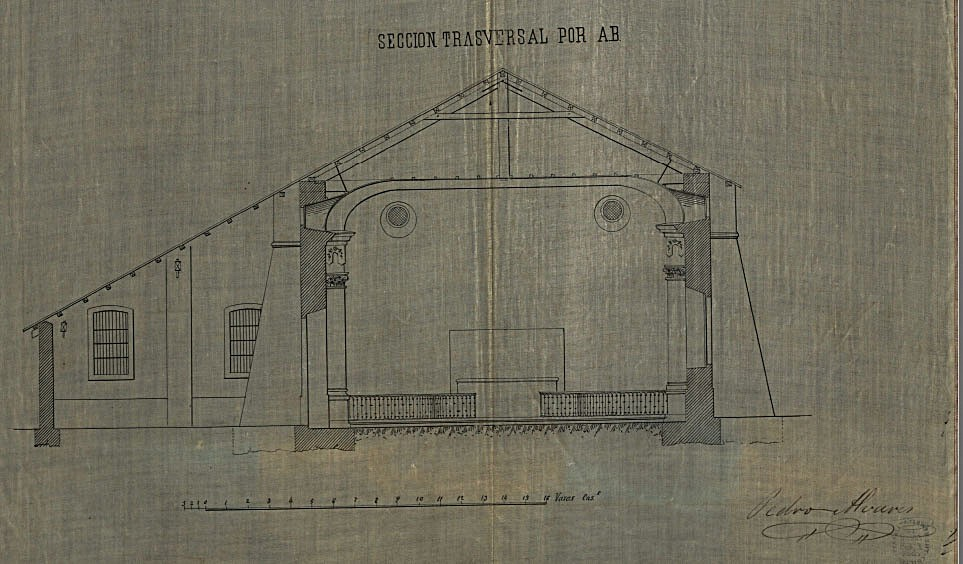
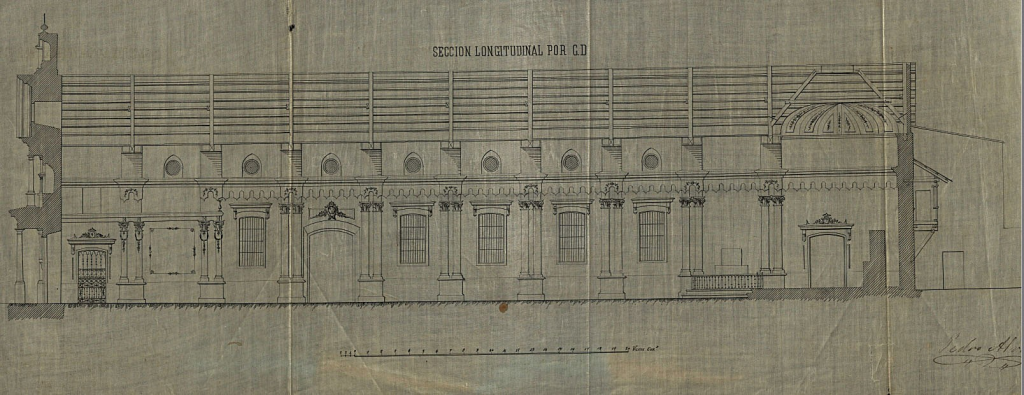
I was able to locate: Proyecto De Reconstrucction De Una Ygelsia En El Pueblo De Boac Provincia De Mindoro (Reconstruction Project of a Church in the Town of Boac, Mindoro Province).
It is a floor plan, front elevation, cross section, and 2 lateral elevations of the Boac church Signed by Pedro Alvares and disbound from paper title page. Pen-and-ink. 5 technical drawings on cloth sheets 310 x 697 mm or smaller. The plans are undated.
The church plan was donated to the Newberry Library collection by Holman G. Purinton. Purinton served in many capacities in the Philippines. Captain in Company C 29th Regiment United States Volunteers (2). Various elements of the 29th USV were stationed in Marinduque during 1900 and 1901 and were known to have quartered In the church in Boac.
As a Captain with the 29th he served as the Superintendent of Carcel de Bilbid, relieving Alcalde M. Benitez. Captain Purinton was also assigned as the Manila City Engineer, Department of Public Works and Water Supply, Military Government of the Philippines.
During the time Purinton was stationed in the Philippines he was also serving as Sir Knight Holman Greene Purinton, Eminent Grand Captain General of the Knights Templar of Illinois, USA.
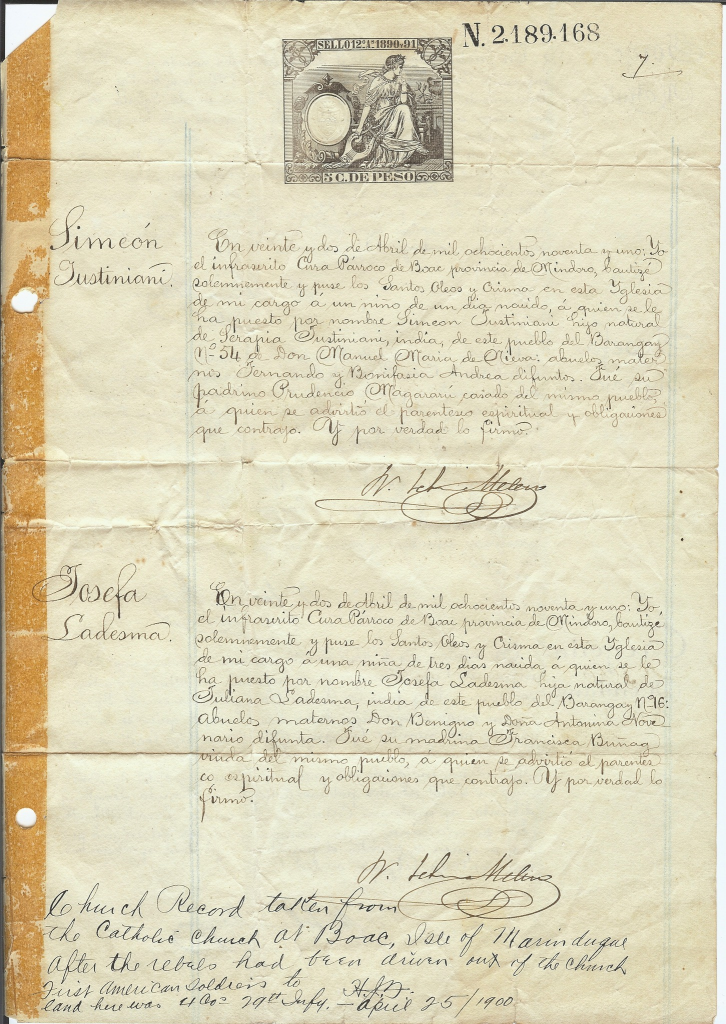
Besides donating the Church plan to the Ayers collection, Purinton also donated a Baptism document from the Boac Church and various letters from Bilbid Prison and the City of Manila. It is not known under what authority (if any) he obtained these documents and removed them from the Philippines.
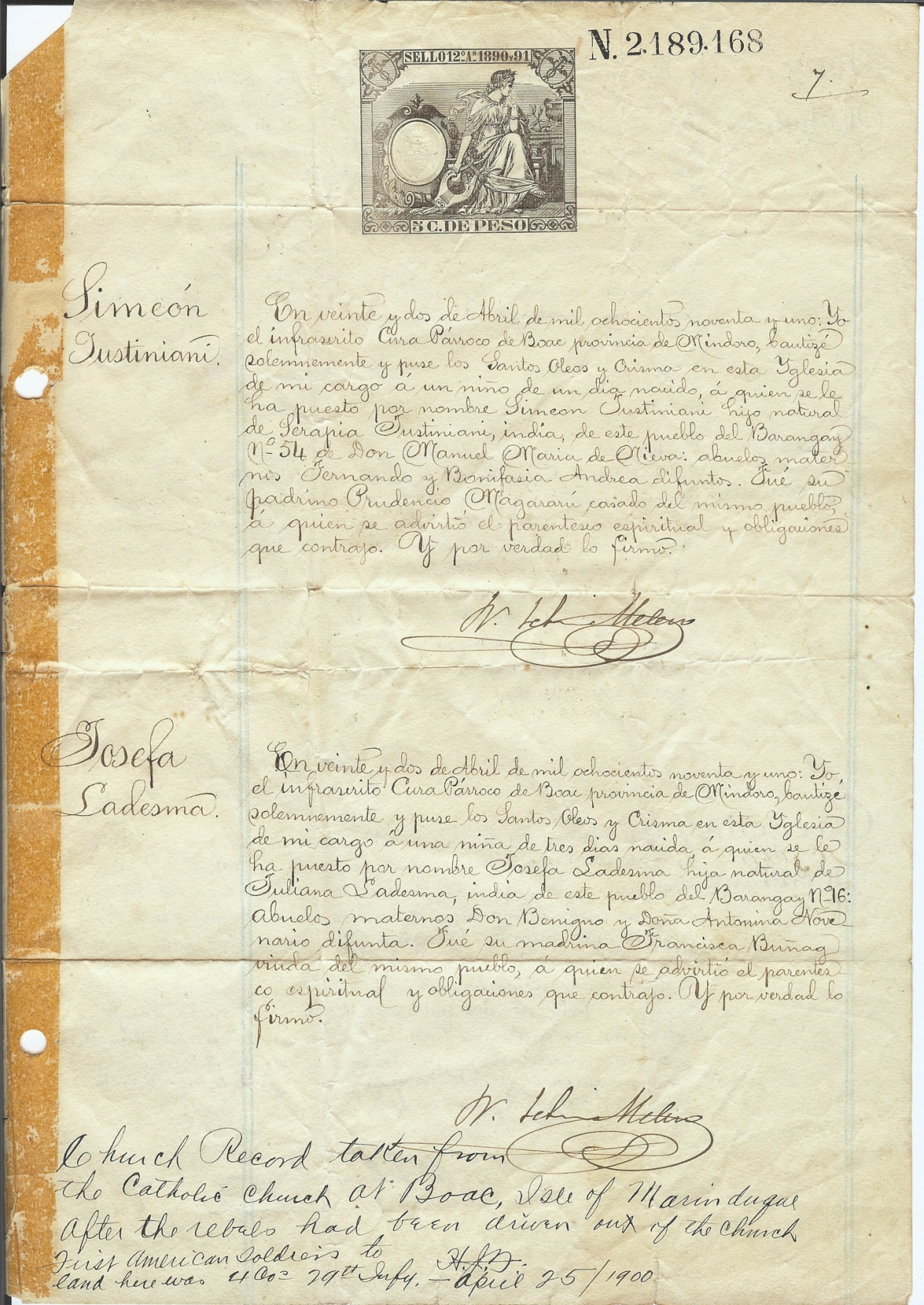
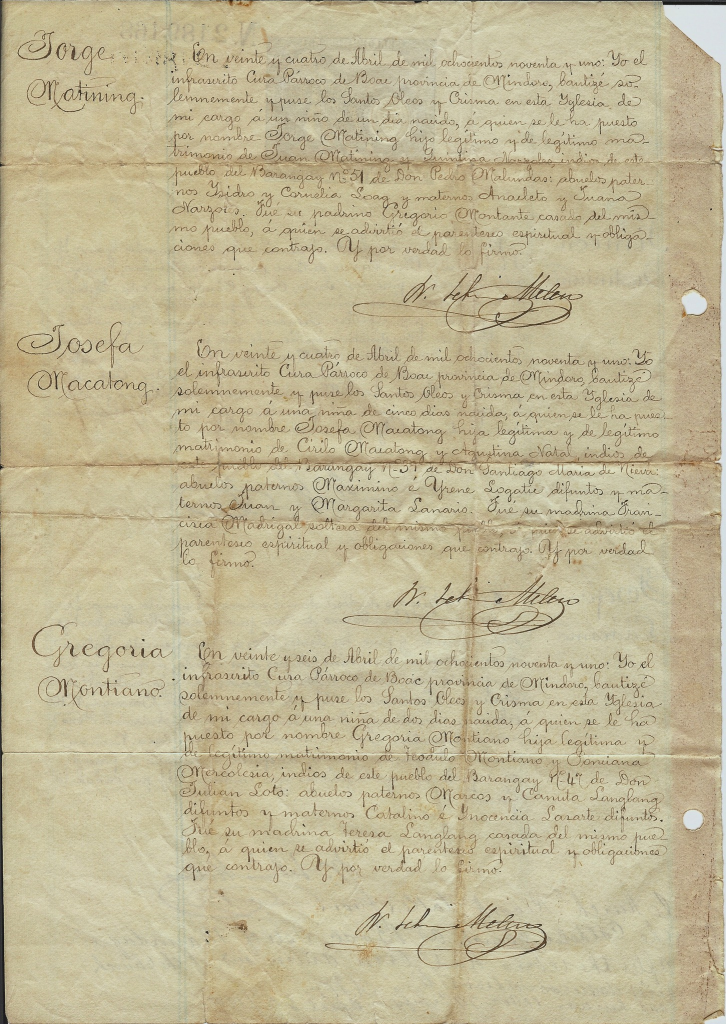
Sometime in April of 1900, Corporal Henry J. Flanagan of H Company, 29th United States Volunteers Infantry removed two pages from the Baptismal records of the Boac Church.
Flanagan was part of the 29th that were the first occupiers of the Church when they came ashore in Marinduque April 25th, 1900.
Flanagan had written on the bottom of one of the pages noting:
Church record taken from the Catholic Church at Boac, Isle of Marinduque after the rebels had been driven out of the church. First American soldiers to land here was H Co. 29th Inf. April 25 1900. He initialed HJF.
The two pages contain 5 baptismal records from 1891. The names on the pages are Simeon Justiniani, Josefa Ladesma, Jorge Matining, Josefa Macatong and Gregoria Montiano.
These two pages remained lost until the early 2000’s when I located them at an auction in the United States. I was able to retrieve them and they were brought back to Marinduque. Upon consultation with the church, it was decided that the best location for them was the National Museum here in Boac, where hopefully they still exist today. At the time they had no way to display them and were put in a drawer.
I was able to isolate from a group picture, Corporal Flanagan himself so we are able to get a glimpse of him. I also located in a U.S. newspaper dated July 19, 1900, a letter published by him which had details about his time in Marinduque. No mention of the records taken by him are mentioned. I would caution in reading his account that there is a defamatory use of words to describe Filipinos and was in common use during that time in the U.S. to describe persons of African heritage.


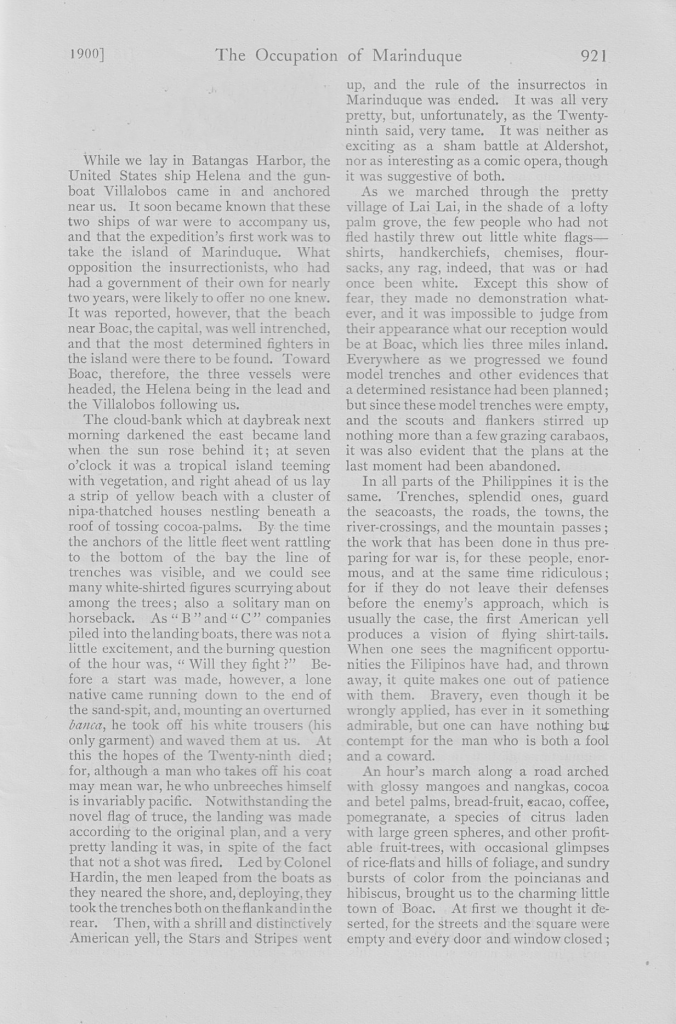
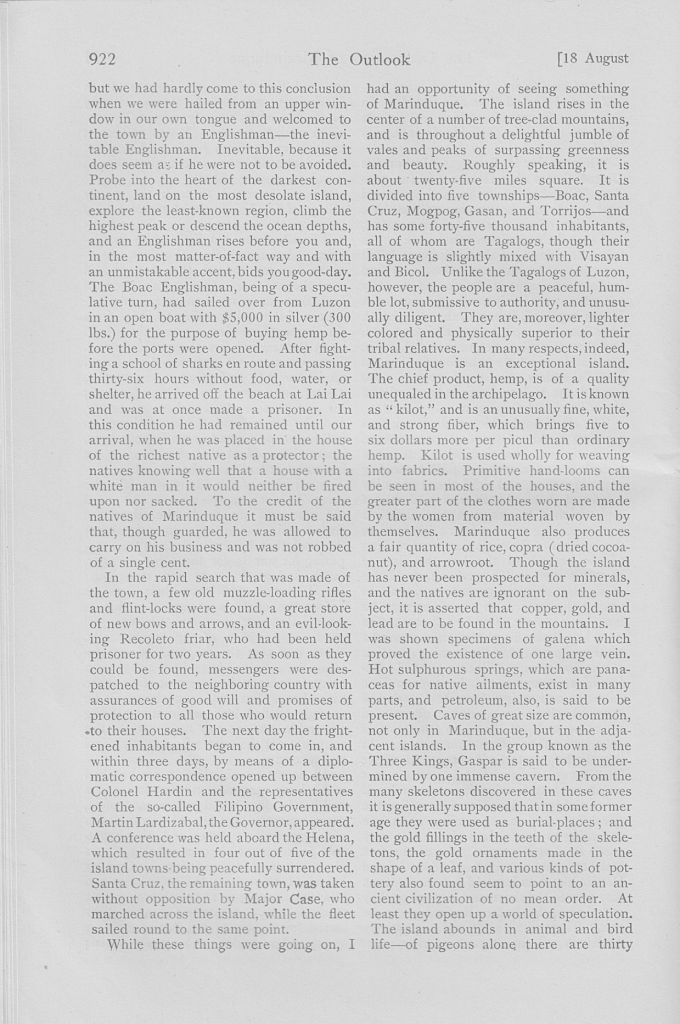
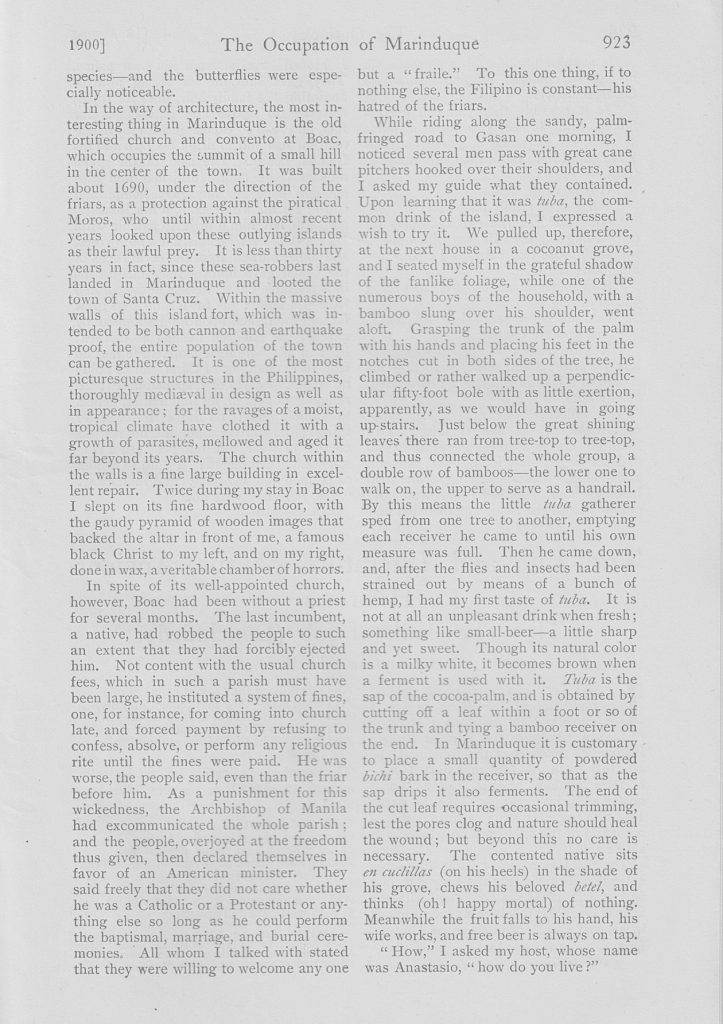
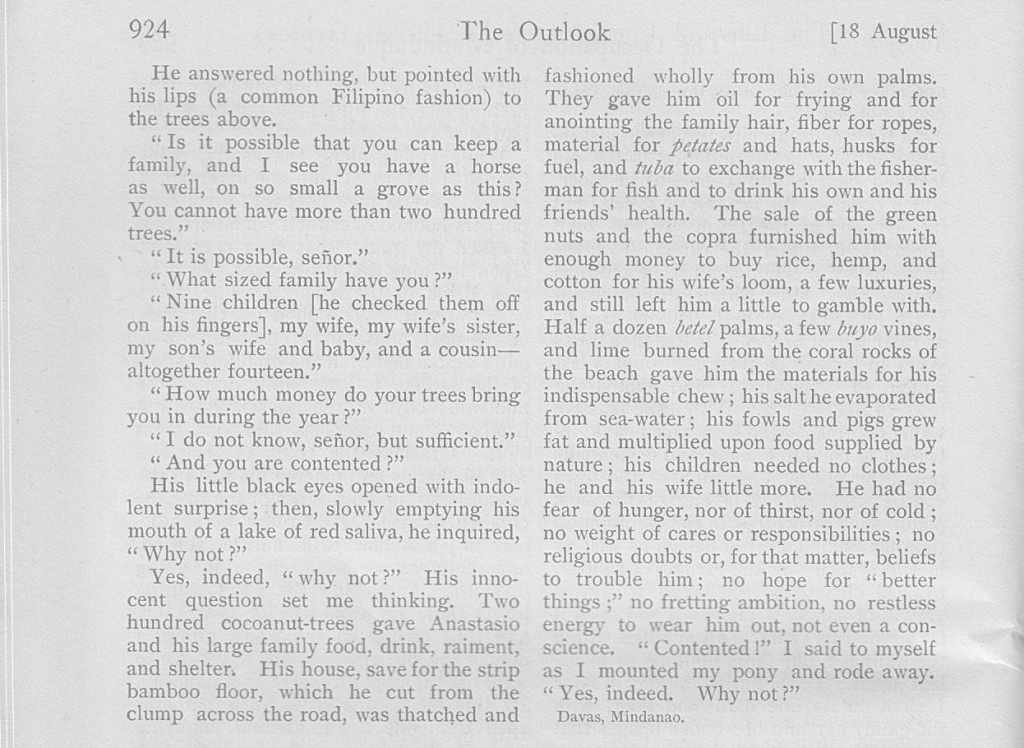
Today we present an article from the 18 August, 1900 edition of Outlook magazine, a U.S. publication. The article is called “The Occupation of Marinduque” by Phelps Whitmarsh.
Whitmarsh is Canadian-born journalist and author (1863-1935), living in Australia and USA before moving to the Philippines in 1899. He wrote his first book at age 21, The “World’s Rough Hand” in which he described his experiences as a sailor and miner in Australia. He was the author of many books during his life including The Golden Talisman which is an early science fiction piece.
He was hired as a Special Commissioner for the Outlook Magazine and wrote many articles about his adventures in the Philippines.
He was appointed as the first civil governor of Benguet province by Gov. General Howard Taft in early 1900.
He starts his article while aboard the ships containing the first U.S. soldiers to land in Marinduque. He describes landing in Lai Lai (Laylay) Researchers take note of this spelling when conducting searches.
In Whitmarsh’s description of Marinduque he mentions meeting an Englishman who was being held captive. I believe this would have been Mr. R. D. Mackey.
He also describes the church in Boac in some detail and describes sleeping on the floor in front of the altar with a “famous black Christ to my left”. What ever happened to this black Nazarene? Did the soldiers loot it? Was it taken by someone for safekeeping?
He writes about his adventure in tasting Tuba for the first time.