If you live in Marinduque or have ever visited the island you most likely have used the port facilities in Balanacan, Mogpog. You may also have taken a walk over to the statue of Our Lady of BIGLANG-AWA while waiting to board one of the ships. Hidden from view are the remains of Japanese warships that were sunk in the vicinity. What else could be hidden there? Maybe the true name of this harbor in Marinduque.
Did you know that Balanacan is not the original name of this area?
Although this port was recognized early on as a perfect area to shelter vessels, it was not widely used as a port of commerce until a paved road was completed in 1918. Up until that time only a dirt trail connected it with the nearest town, Mogpog.
Puerto de San Andres
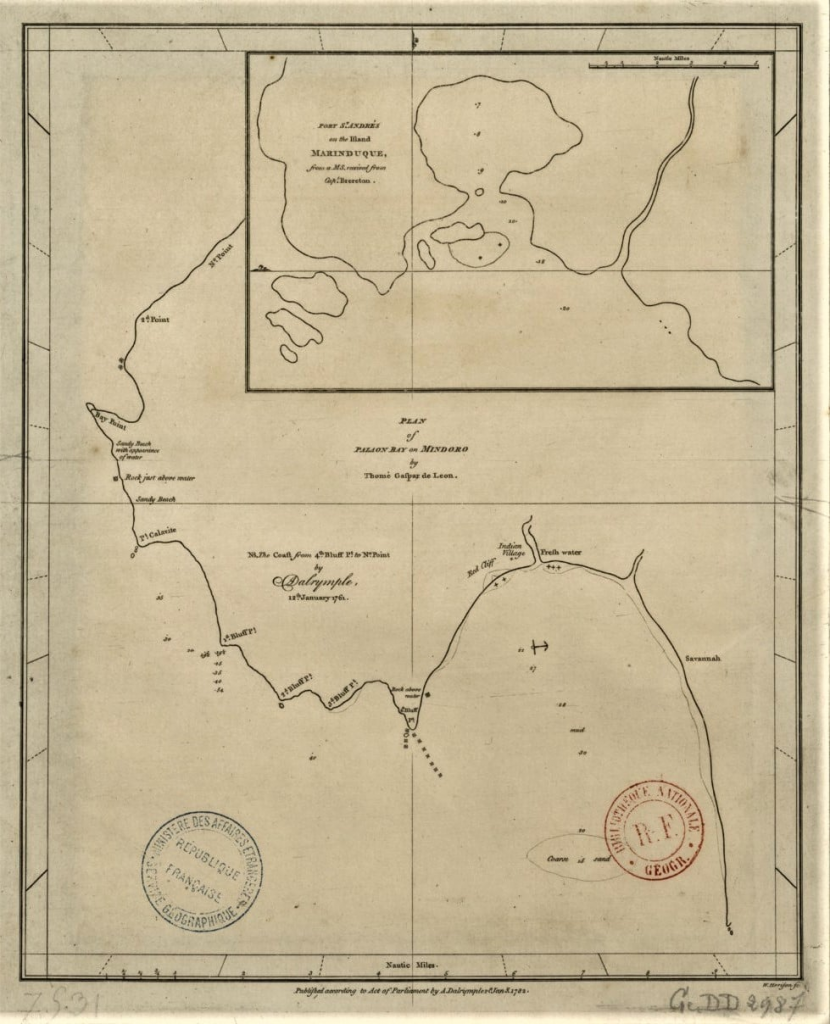
The first recorded name I could locate that is associated with this natural harbor area is that of Puerto de San Andres. The name was first published in a 1761 map by Captain William Brereton of the British Navy. It contains little detail other than soundings for the entrance channel. In a Spanish map from 1841 entitled De una parte de la cost sur de la Isla de Luzon we see the name and again it lacks detail but must be noted as important as it is one of only a few locations shown on the island of Marinduque.
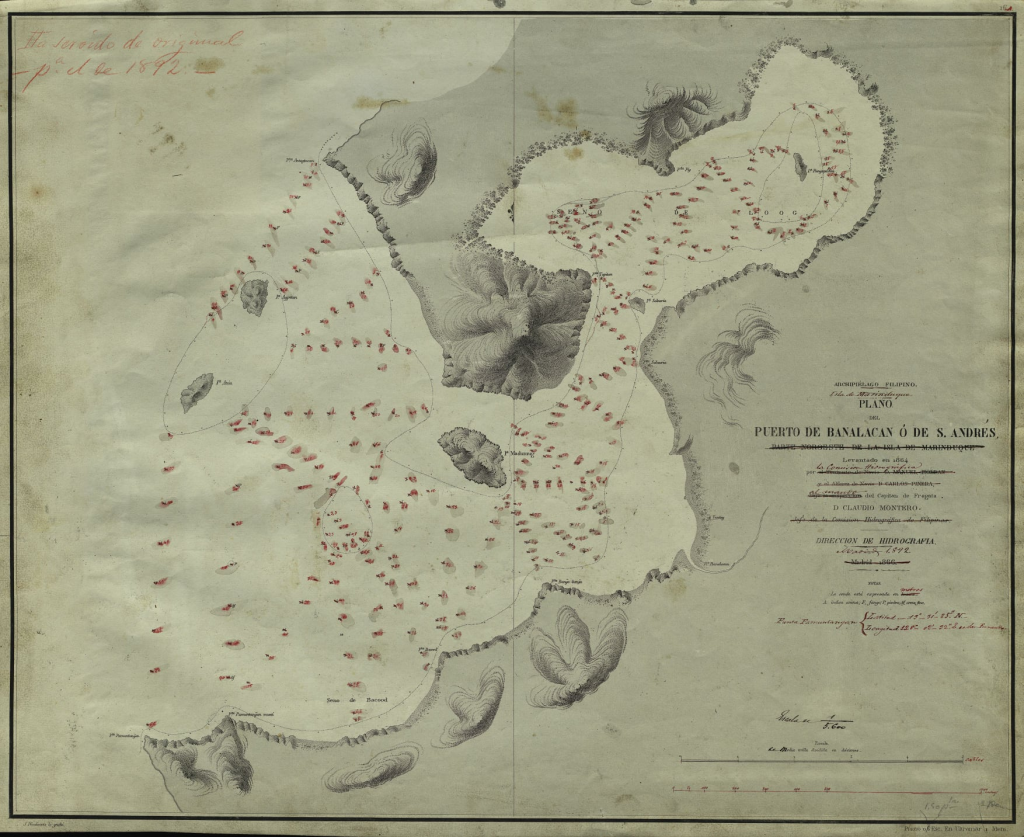
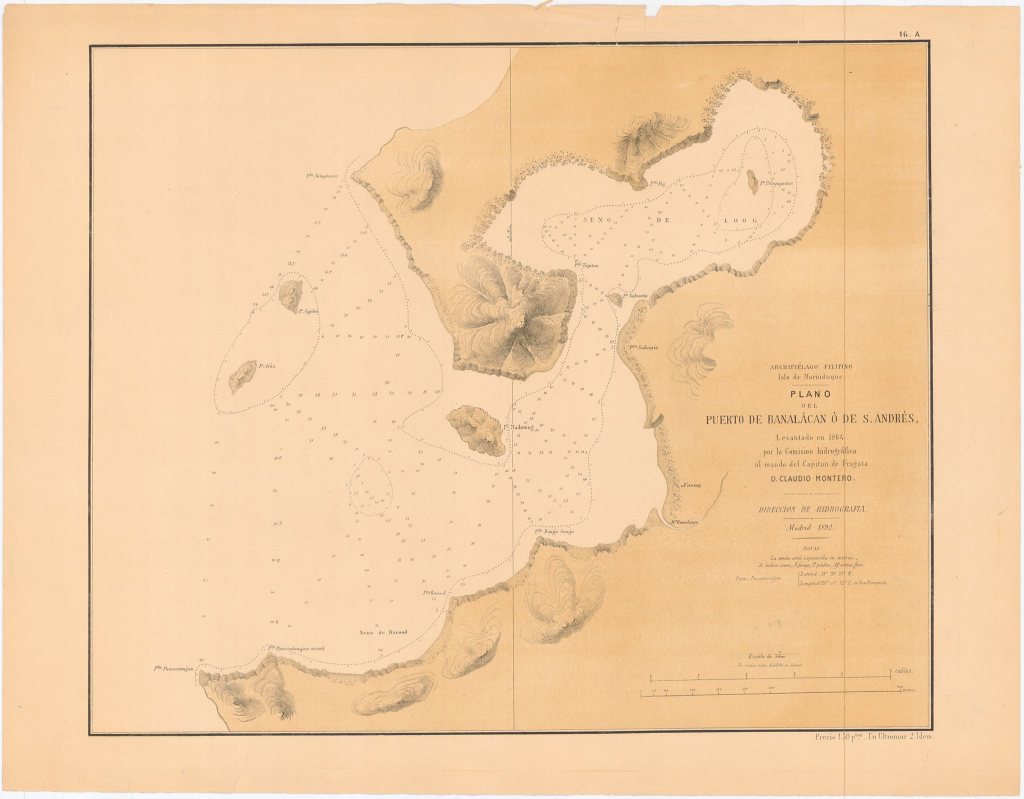
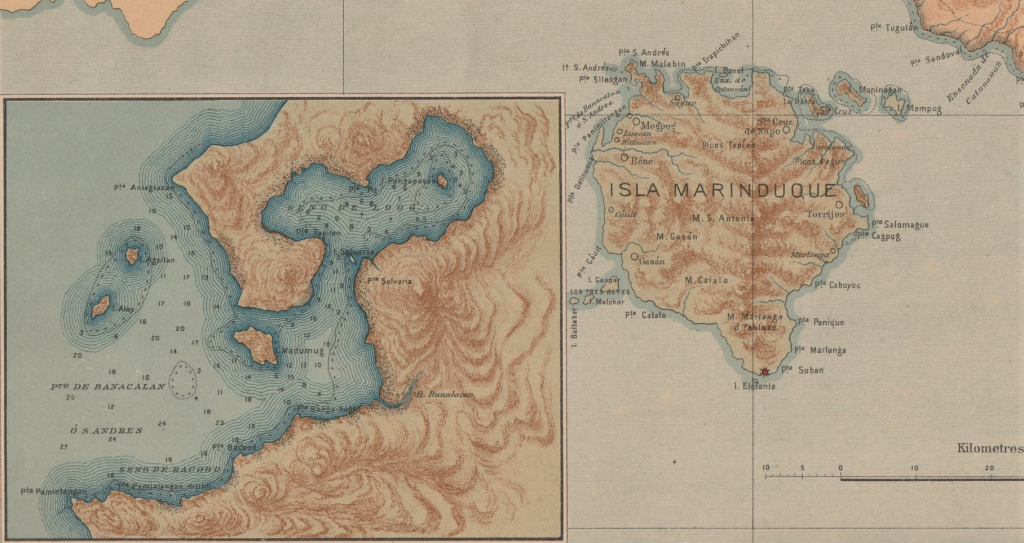
The name San Andres would be associated with the port up until the end of the 1800’s and could be found on Spanish maps from 1866, 1892 and a map from the Manila Observatory from 1899. The 1866 map is the first detailed map of the port with soundings, terrain features and place names.
Banalacan
The second name that could be found was that of Banalacan which was first used in 1866 and was associated with Puerto San Andres and could be used as either/or up until 1899. The Spanish 1866 map is entitled Plano Del Puerto de Banalacan o de St Andres and as is noted in the section for San Andres is the first detailed map of the port with soundings, terrain features and place names.
The name is used again in the revised edition of this map from 1892. In a 1900 sketch of operations by Capt Robert Getty 1st Infantry United States Volunteers the spelling Banalacan is used by Americans local on the island. It should be noted that American forces were dependent of Spanish maps so most place names were taken from those maps.
In 1901 in a publication from the United States Board on Geographic Names relating to The Geographic Names in the Philippine Islands Banalacan is still used.
The last reference to Banalacan I could locate was in a 1908 publication from the U.S. War Department Annual Report, volume 8.
Banacalan
The third name to be found and the oddball of the group is that of Banacalan. It is first found in an undated map from the Norris Peters Company, Washington D.C. and is noted as taken from a Spanish survey in 1864 which would most likely be the Spanish 1866 map is entitled Plano Del Puerto de Banalacan o de St Andres.
The 1899 map from the Manila Observatory Atlas of the Philippine Islands also lists the port as Pto de Banacalan o San Andres. I could not locate any other uses of Banacalan and maybe is a misspelling of Banalacan that was being used at the time.
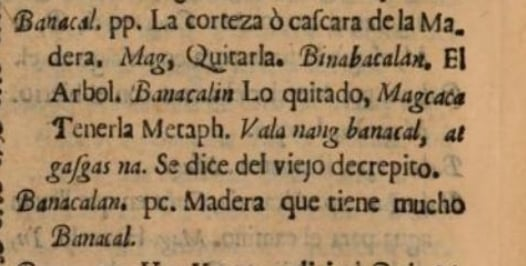
I did find Banacalan in the book entitled Vocabulario de la lengua Tagala written by the Jesuits in 1754. The English translation of the Spanish translation is “wood that has a lot of bark”.
If it is not a misspelling this may have some significance since there is speculation that the port was used by the Spanish to build and repair their Galleons.
Balanacan
The fourth name is what we know the port as today, Balanacan. When exactly and why the name was changed from the previous usage I could not determine.
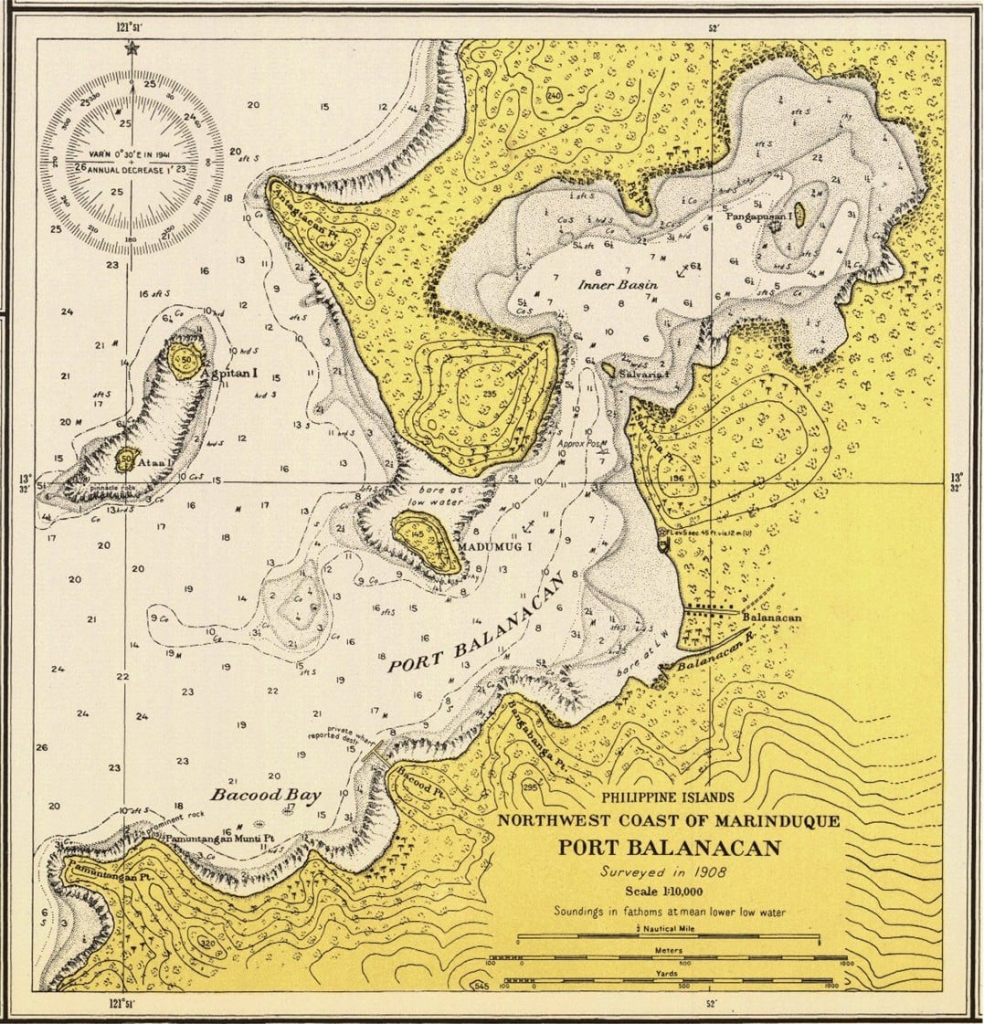
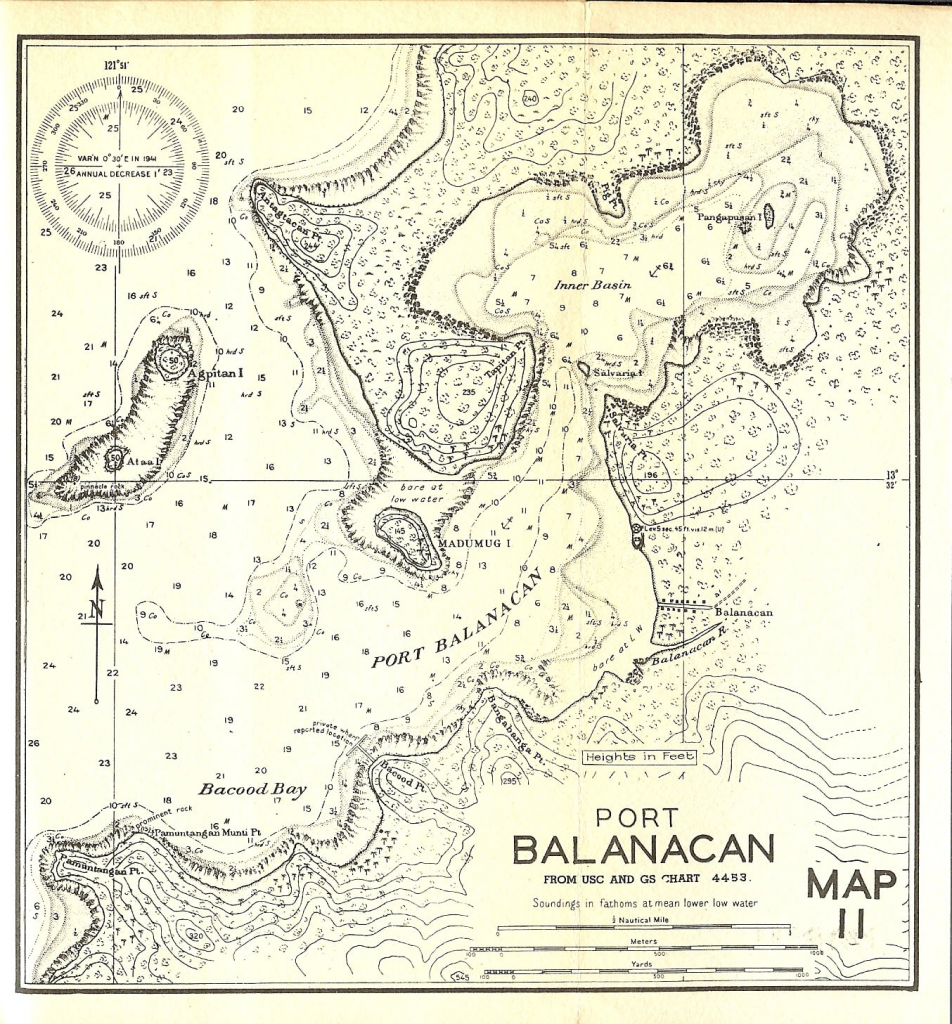
The first use was found in the 1896 Spanish publication Catalogo Sistematico de Toda La Fauna De Filipinas. The first and subsequent use by the Americans was found in the publication of the 1903 Census of the Philippine Islands. It could be found again in the 1905 Annual Reports of the War Dept. Volume 12. The first American map to use Balanacan was the 1908 map produced by the US Geodetic Survey. Balanacan was still use found in the US Army Map 11 dated 1944 during World War 2.
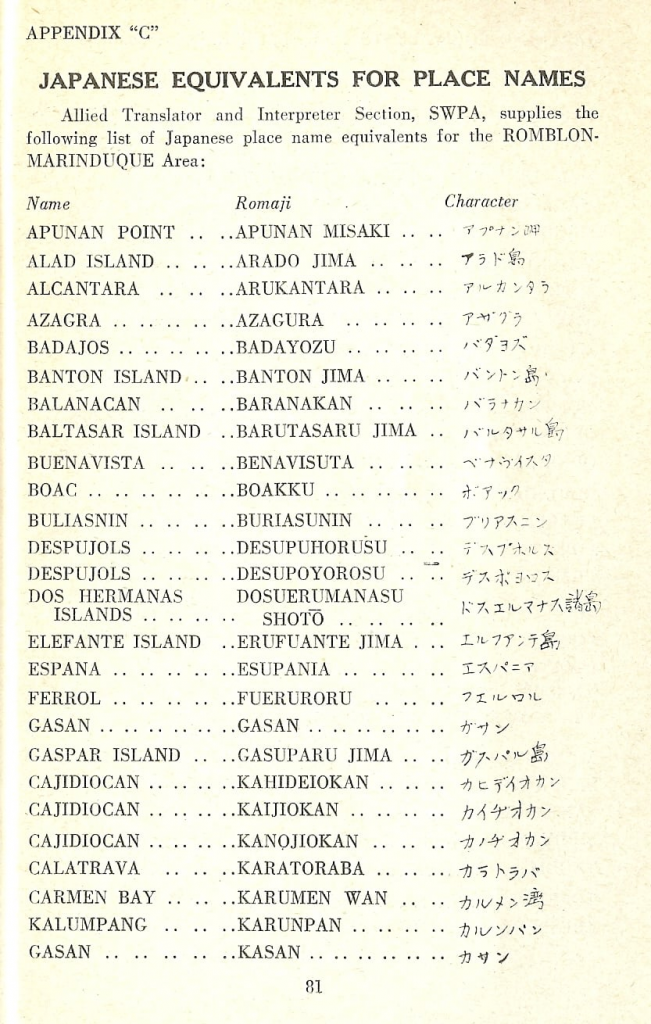
Baranakan
I would call this a “interesting side note” since I did not find any use of Baranakan other than in the U.S. publication from WW2 Japanese Equivalents for Place Names.