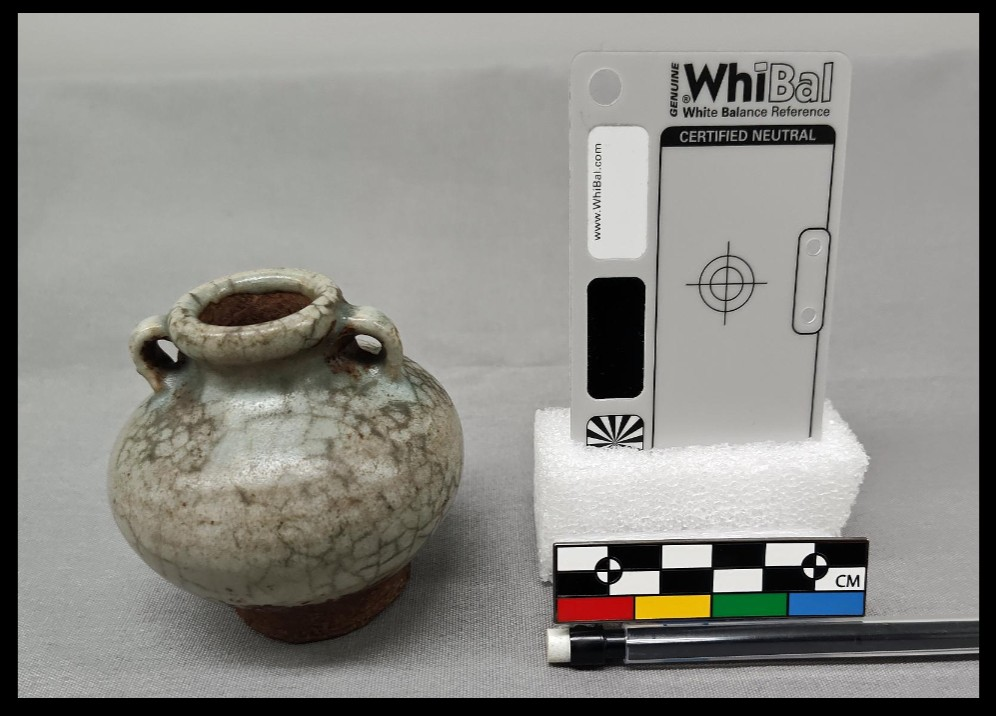
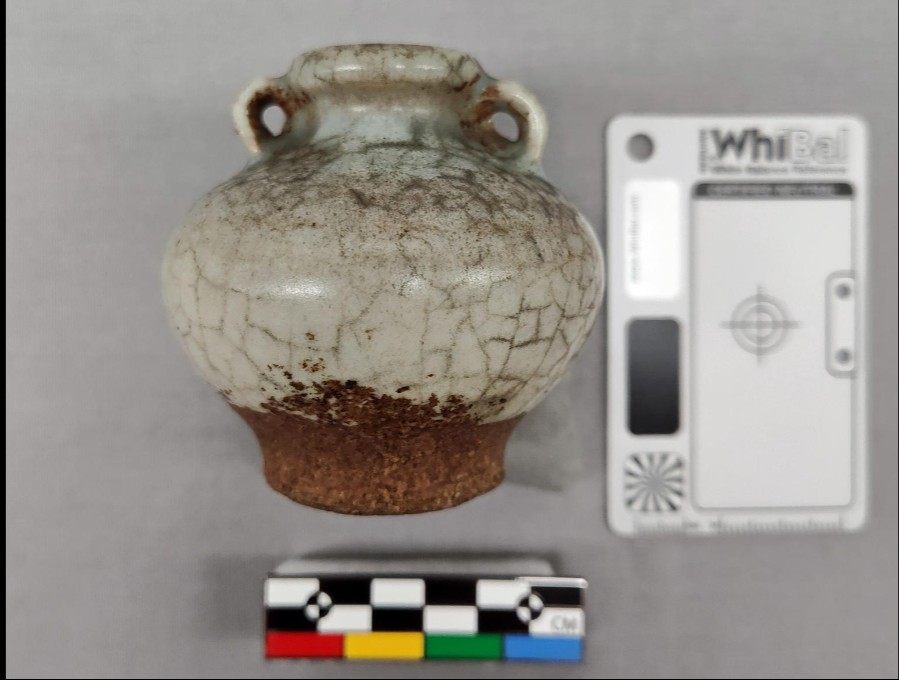
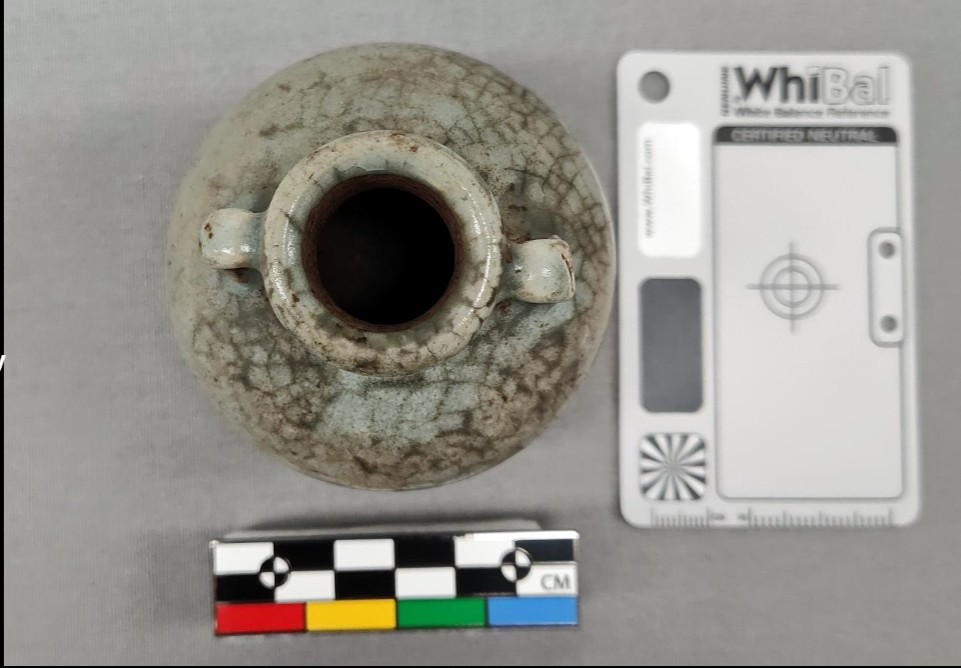
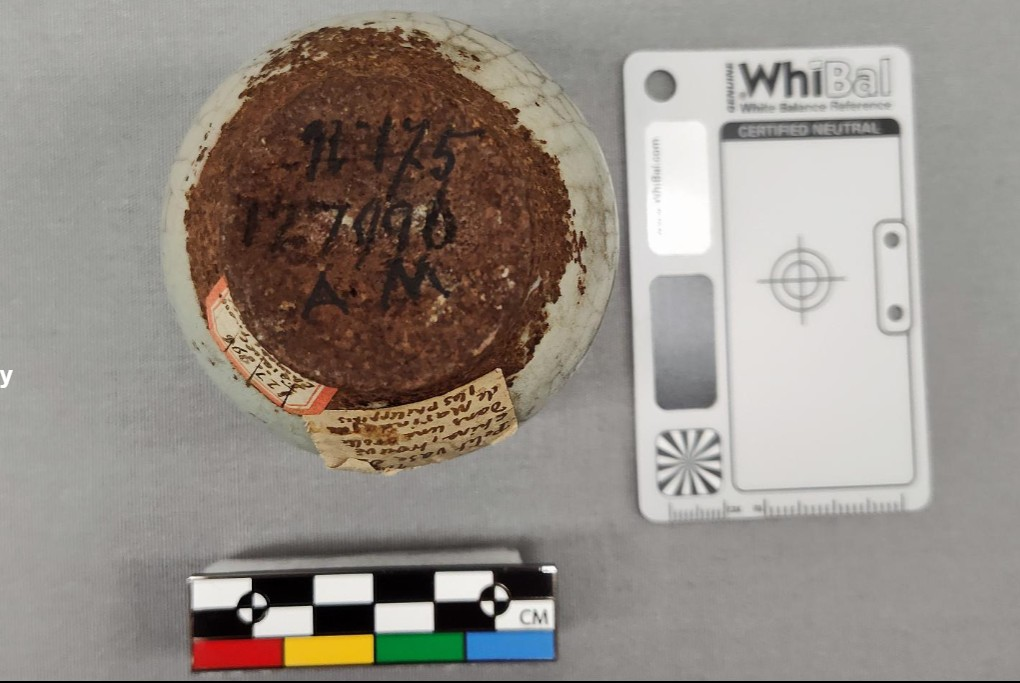
Have you ever seen the jar in the U.S. Smithsonian that was found in Marinduque by Alfred Marche?
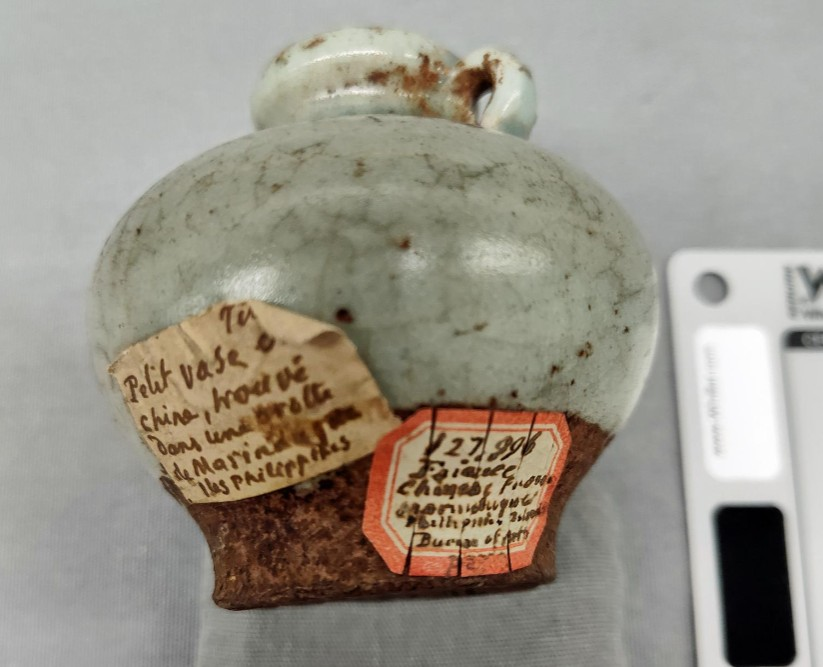
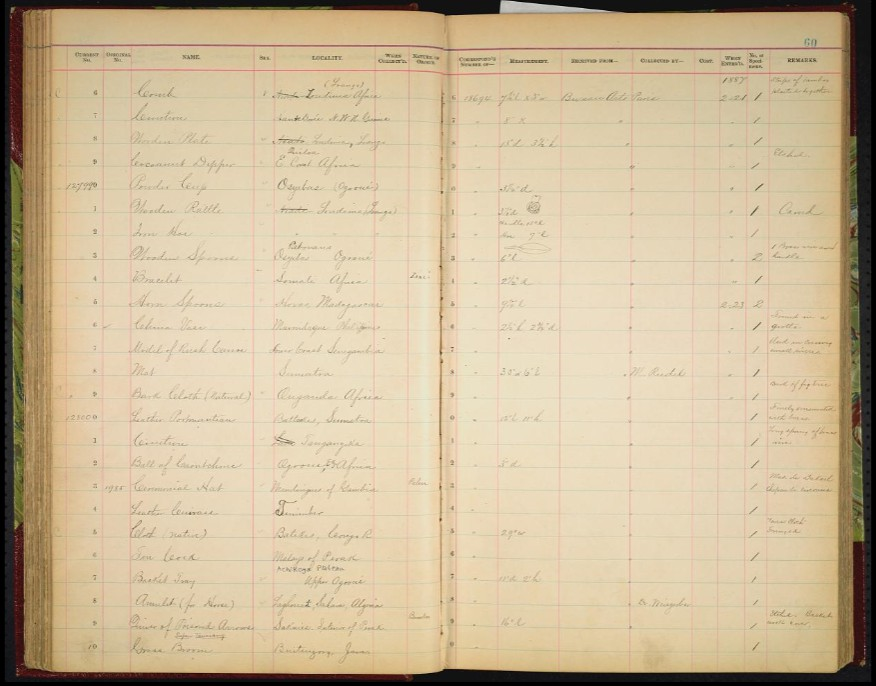
Below are the description and photos of the “jarlet”. Line 6 of the logbook describes the item.
Collector
Antoine-Alfred Marché
Donor Name
Musée d’Ethnographie du Trocadéro, Paris (later the Musée de l’Homme)
Notes
From card: “Glazed Stoneware made of a grey clay colored brown and covered with a bluish grey glaze [celadon?] of Chinese manufacture. Form: The lower part of body has a bell shape with a convex shoulder sloping to the neck which is short and concave and has a thickened rounded rim and two small loop handles. it was found in a grotto on Marinduque Island, Philippine group.”
Bottom of this small jar or jarlet is marked: “R-175. A.M.” Jar has two labels glued on the side. First label, in French: “Tibor. Petit vase de Chine, trouvé dans une grotte de Marinduque Iles Philippines.” The second label, in English: “Faience. Chinese. From Marinduque Philippine Islands. Bureau [sic] of Arts, Paris.”
From April – July 1881, Alfred Marché (Antoine-Alfred Marché), a French naturalist and explorer, explored and excavated caves in Marinduque, Philippines, and brought back a collection, some of which was deposited in the Musée d’Ethnographie du Trocadéro, Paris (later the Musée de l’Homme). In 1887, the Smithsonian received a collection from the Musée d’Ethnographie du Trocadéro, including jar # A127996, which was identified as being from a cave in Marinduque.
It therefore may be speculated that the jar # A127996 may be part of the material collected by Alfred Marché. Note also that the jar has the initials “A.M.” marked on its base.